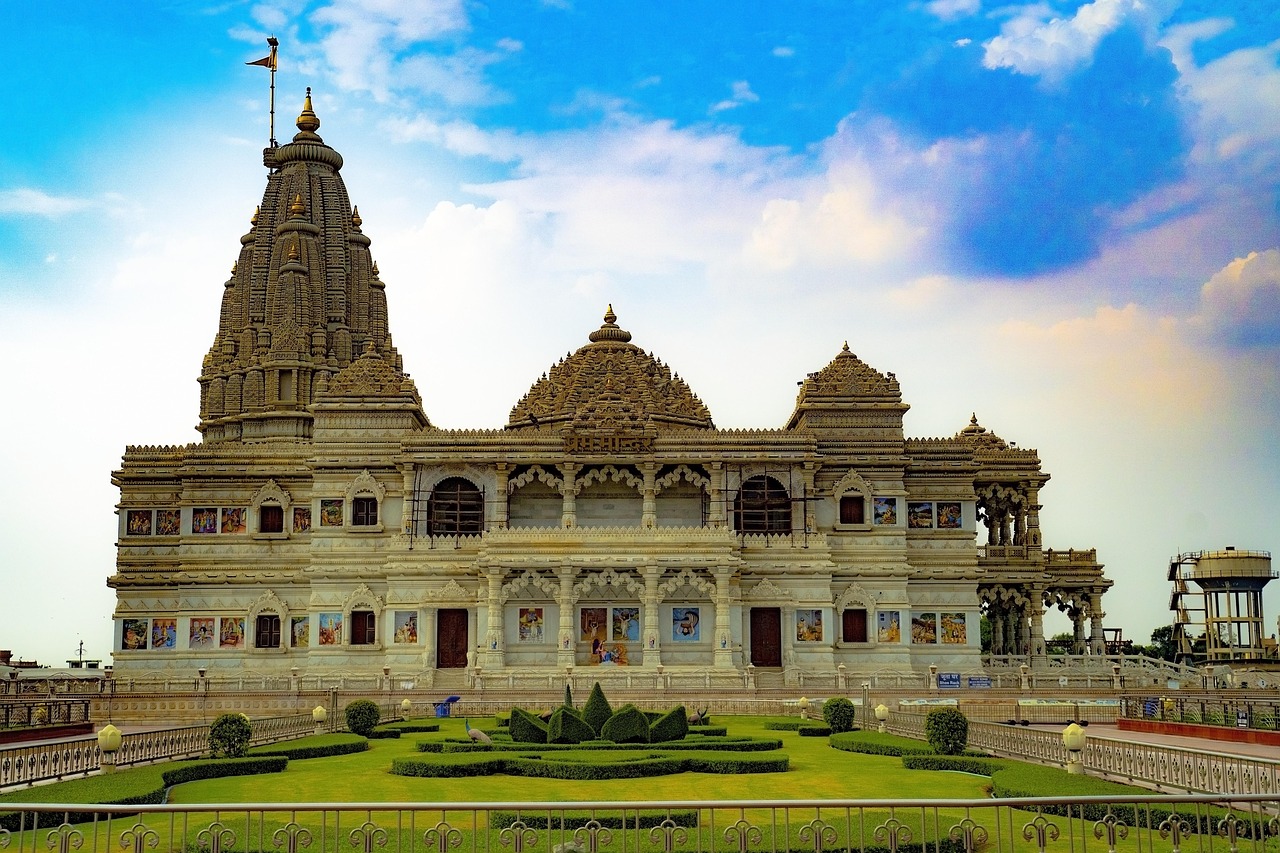
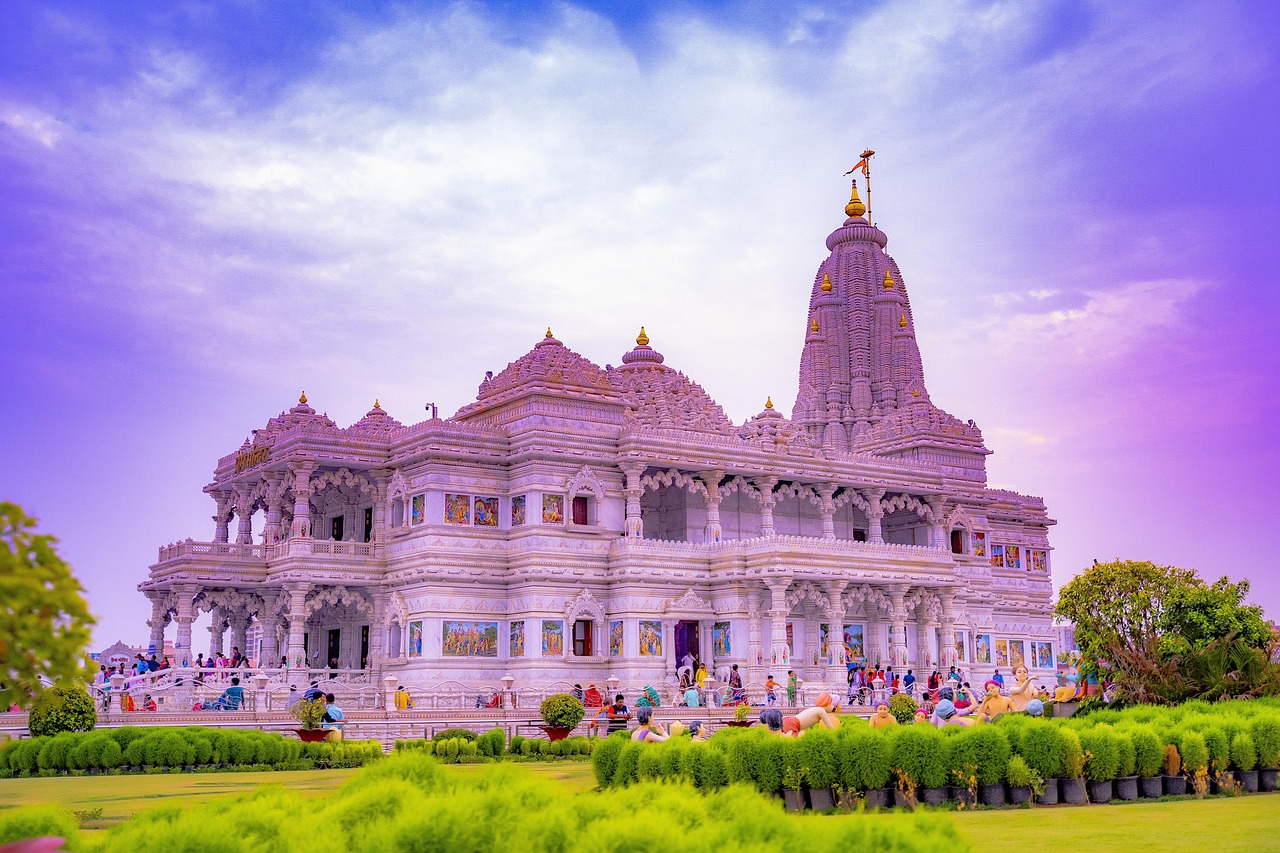
Shri Krishna Janmasthan
Central Mathura
The temple complex at the site revered as Krishna's birthplace, with the Keshav Dev temple and a shrine recalling the prison cell. Heavy security.
Open in Google Maps (opens in a new tab)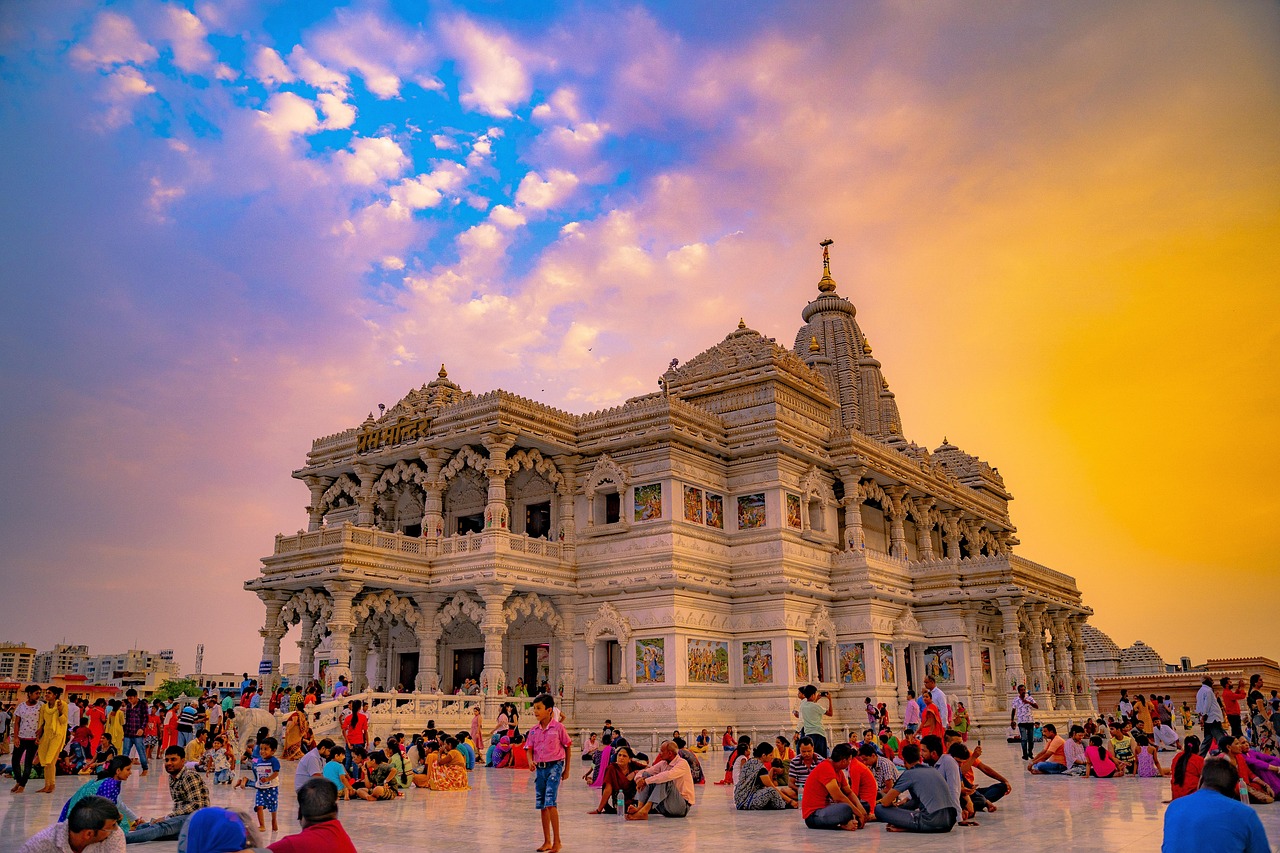
 Mathura, India
An ancient city on the Yamuna, revered as the birthplace of Lord Krishna and the heart of the Braj country: the Krishna Janmasthan, Dwarkadhish Temple, the evening aarti at Vishram Ghat, a great museum of early sculpture, and Holi like nowhere else.
Central Mathura
The temple complex at the site revered as Krishna's birthplace, with the Keshav Dev temple and a shrine recalling the prison cell. Heavy security.
Open in Google Maps (opens in a new tab)Old city, near Vishram Ghat
A 19th-century temple with painted ceilings, famous for its swing festival in the monsoon and its Holi celebrations.
Open in Google Maps (opens in a new tab)On the Yamuna, old city
The main ghat, where Krishna is said to have rested after defeating Kansa. Evening Yamuna aarti with lamps and boats.
Open in Google Maps (opens in a new tab)Dampier Nagar
One of the great museums of early Indian sculpture: Kushan-era Buddhas, Jain tirthankaras and Hindu deities in red Mathura sandstone. Check opening days.
Open in Google Maps (opens in a new tab)About 22 km west
How to get there: By taxi or bus from Mathura.
About 45 km north-west
How to get there: By taxi from Mathura.
About 15 km south-east, across the Yamuna
The village where tradition says Krishna was raised in secret, with small temples and ghats.
Open in Google Maps (opens in a new tab)On the Yamuna, old city
The ruins of a riverside fort, linked by name to King Kansa but built much later, with views over the river.
Open in Google Maps (opens in a new tab)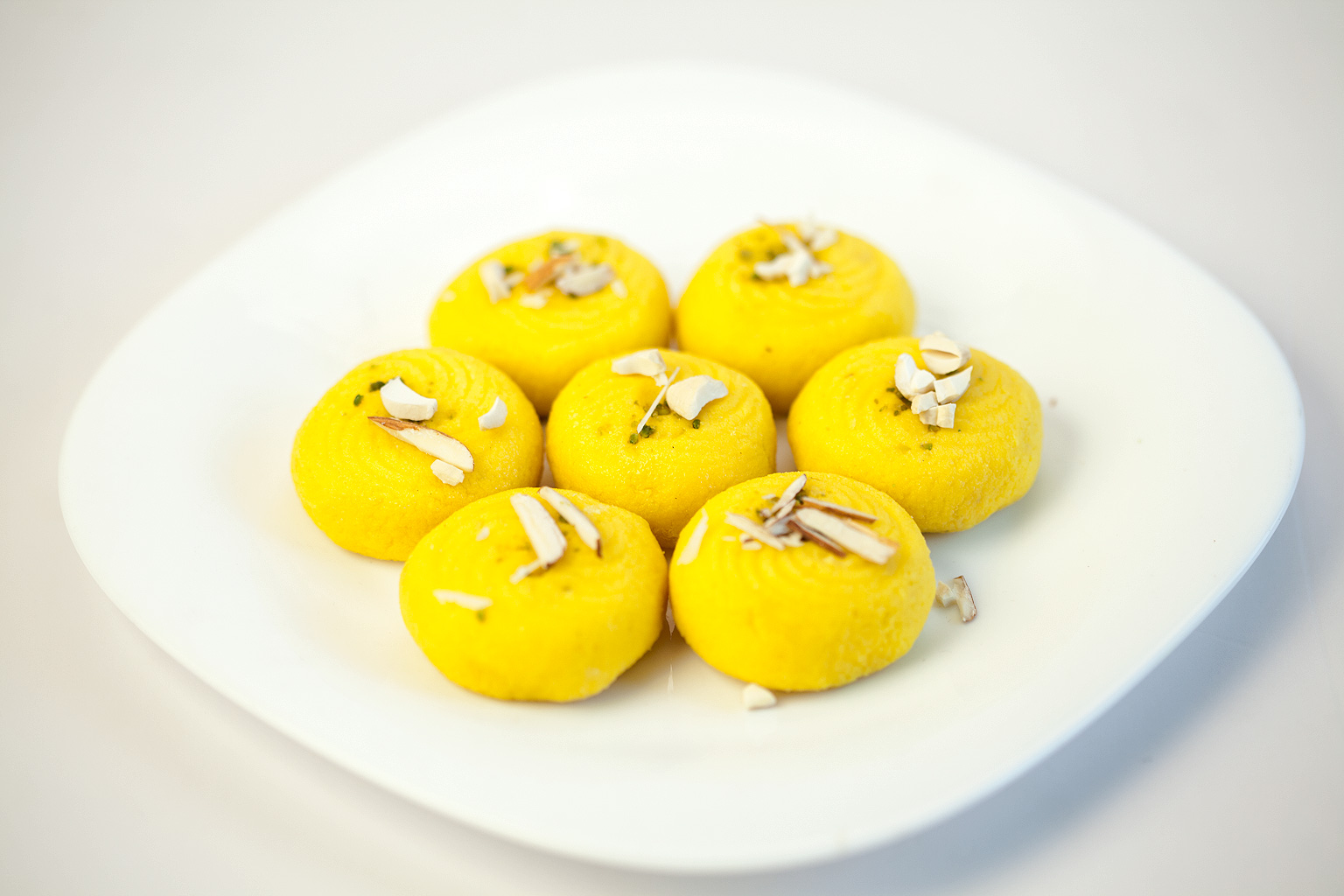
Mathura, India
Brown, grainy sweets of khoya slow-roasted with sugar and cardamom until caramelised. Mathura and Vrindavan sell them by the box in every bazaar; they are also offered at temples as prasad.
Mathura, India
Puffed fried breads stuffed with spiced lentils, eaten with potato curry and followed by jalebi — the breakfast of Braj, sold from shops around the Mathura and Vrindavan temples from early morning.
Mathura, India
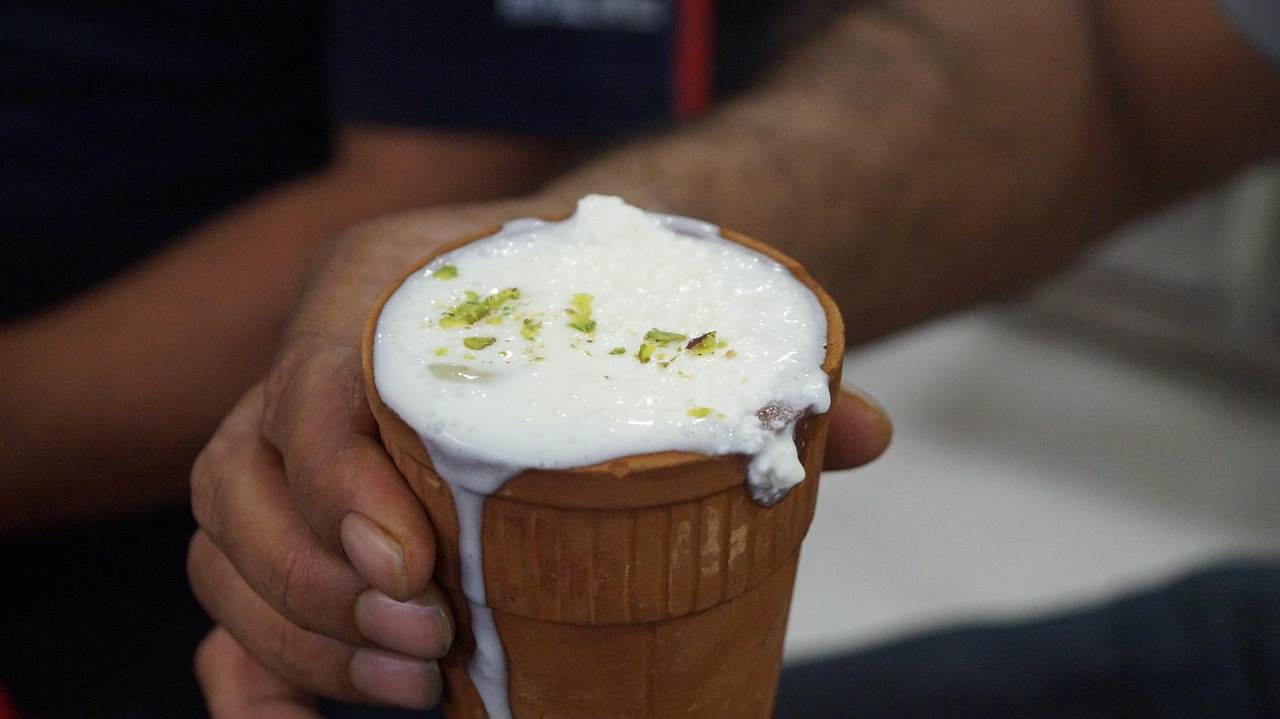
Thick churned yoghurt drink, sweet or salted, often topped with a layer of cream (malai) and served in a clay cup. Punjab and the Braj country around Mathura are particularly proud of theirs.
Mathura, India
Fresh white butter with rock-sugar crystals — Krishna's favourite food in the stories of his childhood, and so the classic offering in the temples of Mathura and Vrindavan. Sold in small cups near the temples.
Mathura, India
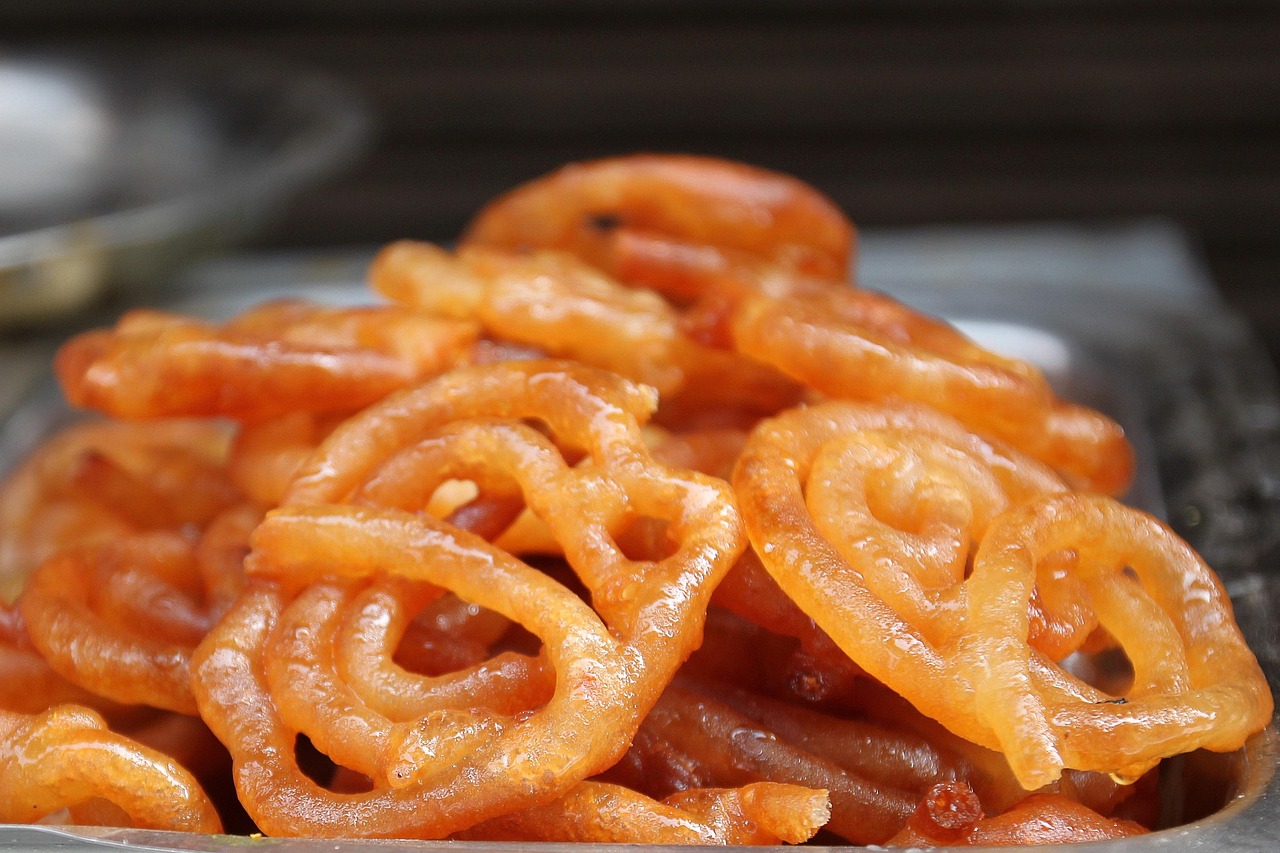
Spirals of fermented batter fried crisp and soaked in sugar syrup, eaten hot in the morning, often with kachori or with curd. Haryana is known for the oversized jalebis of Gohana.
Old city
Pedas, bedai-puri, kachori, lassi and chaat in the old market streets.
Open in Google Maps (opens in a new tab)Central Mathura
Vegetarian restaurants and sweet shops near the temple.
Open in Google Maps (opens in a new tab)Mathura, India
Hotels and guesthouses close to the temples and trains.
Open in Google Maps (opens in a new tab)Mathura, India
Many pilgrims stay in Vrindavan, about 12 km away, and visit Mathura for the day.
Open in Google Maps (opens in a new tab)Mathura and the Braj villages live by the stories of Krishna's childhood and youth, retold in song (bhajans, kirtan), dance-drama (Raslila) and festivals. Janmashtami, Krishna's birthday, is celebrated at midnight in the temples. Holi in Braj includes the Lathmar Holi of Barsana and Nandgaon, where women playfully beat men with sticks, and the flower Holi of the Vrindavan temples.
People greet each other with "Radhe Radhe", and the local dialect, Braj Bhasha, was the language of a great body of devotional poetry.
Mathura is one of the oldest continuously inhabited cities in India and one of Hinduism's seven sacred cities. In Hindu tradition Krishna was born here in the prison of the tyrant king Kansa, and spent his childhood in the villages around — Gokul, Vrindavan, Govardhan and Barsana — together known as Braj.
Around 2,000 years ago Mathura was a capital of the Kushan empire and a great centre of Buddhist, Jain and Hindu art; the red-sandstone sculpture of the Mathura school produced some of the earliest images of the Buddha. The city was sacked and rebuilt several times in its long history. Most of its temples were rebuilt from the 19th century on, and they draw pilgrims all year round.
Krishna Janmasthan, the museum and Dwarkadhish Temple, then aarti at Vishram Ghat.
Banke Bihari, ISKCON and Prem Mandir lit up in the evening.
The hill and part of the parikrama in the morning.
The hilltop temples of Radha and Nanda.
Evening aarti at Vishram Ghat.
October to March is pleasant. Janmashtami (August–September) and Holi (February–March) are spectacular but extremely crowded. Summers are very hot.
By air: the nearest major airport is Delhi (DEL), about 180 km away via the Yamuna Expressway. Agra's airport, about 60 km away, has few flights.
By train: Mathura Junction is on the main Delhi–Mumbai and Delhi–Chennai lines, with very frequent trains from Delhi (under two hours on fast trains) and Agra.
By road: via the Yamuna Expressway or the old Delhi–Agra highway (NH19); buses run from Delhi and Agra. Agra is about an hour away — see our Agra guide for the Taj Mahal. Check current schedules before you travel.