Jaleb Chowk
First courtyard
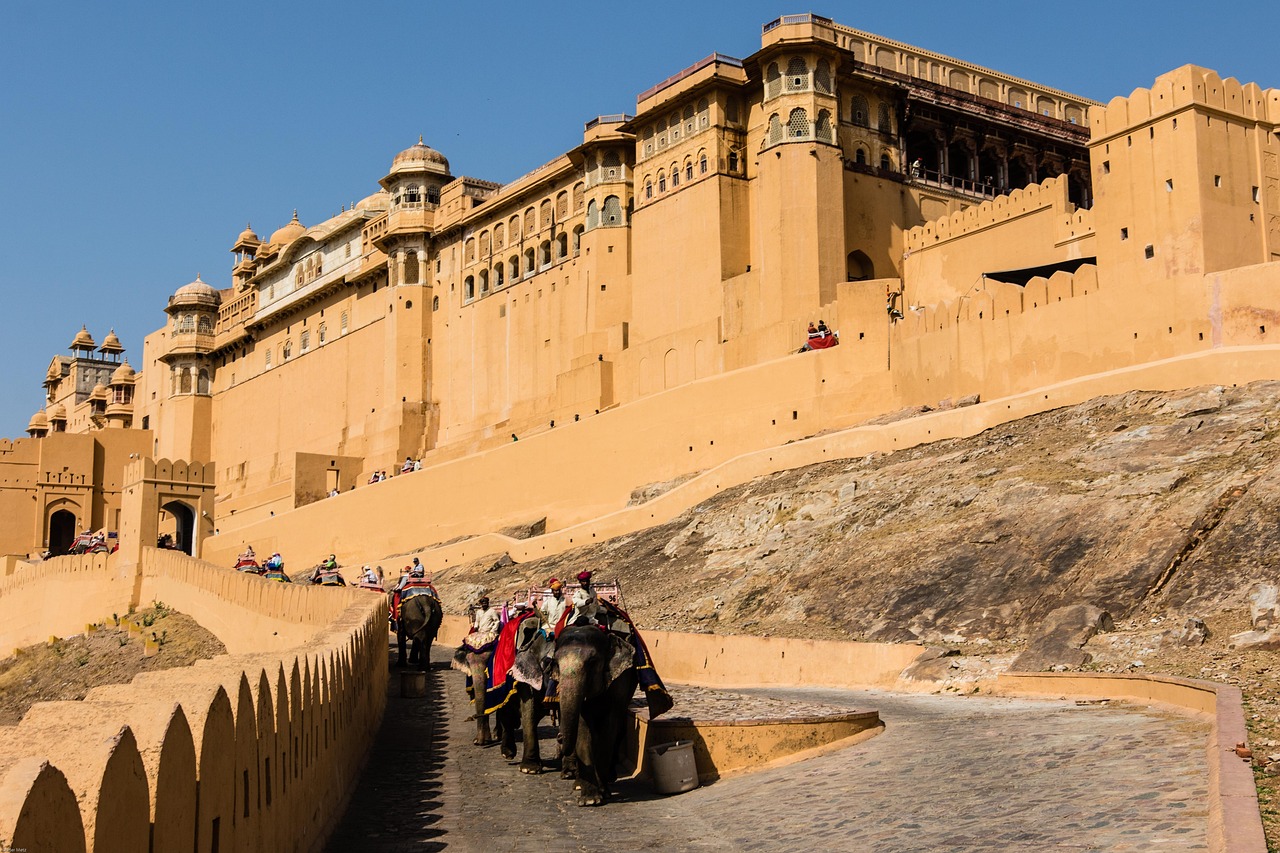
The great courtyard where the army paraded, entered through the Suraj Pol (Sun Gate).
Open in Google Maps (opens in a new tab)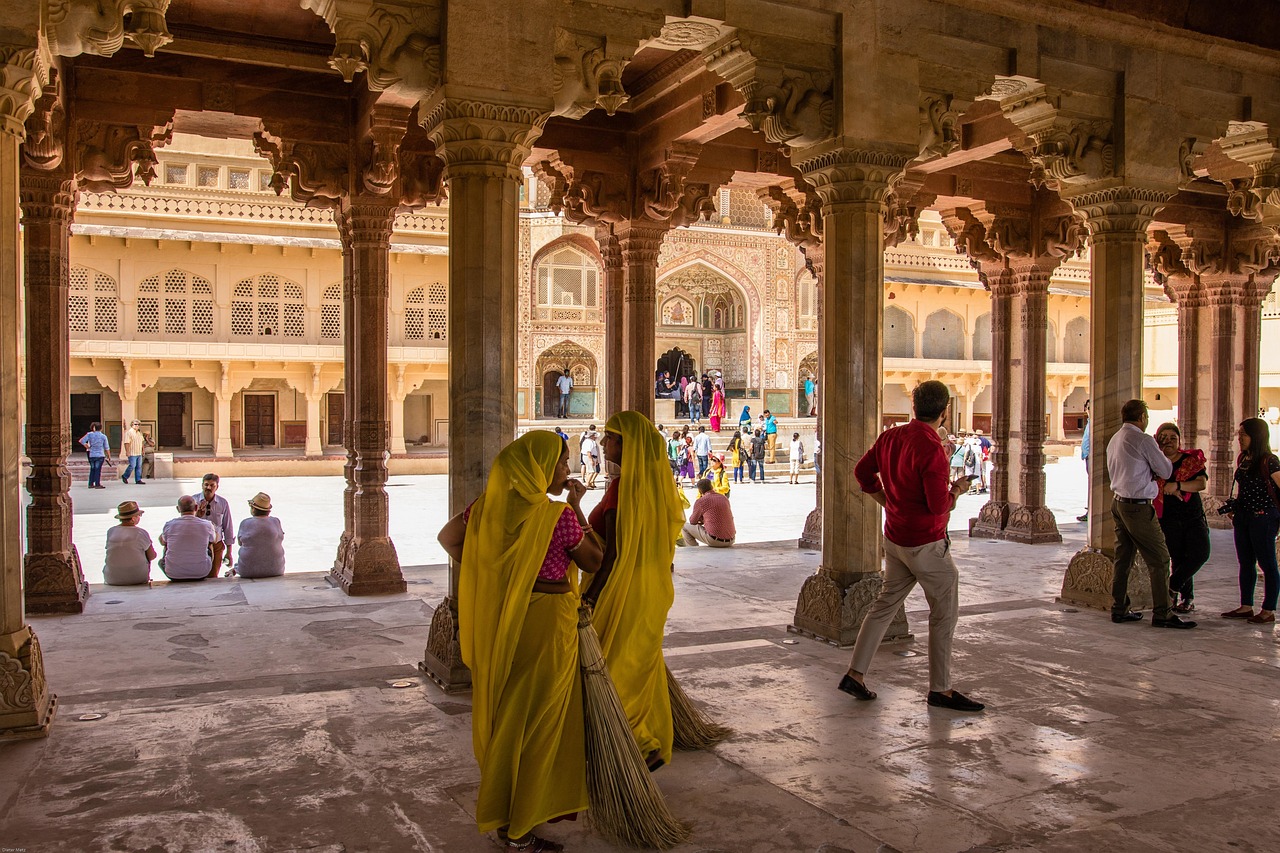
 Jaipur, India
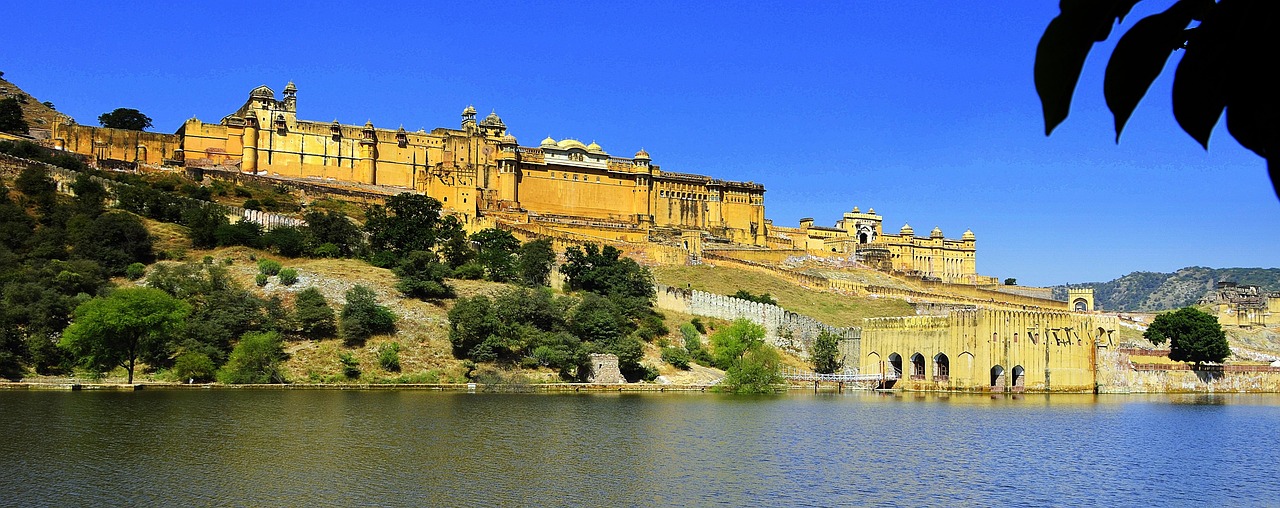
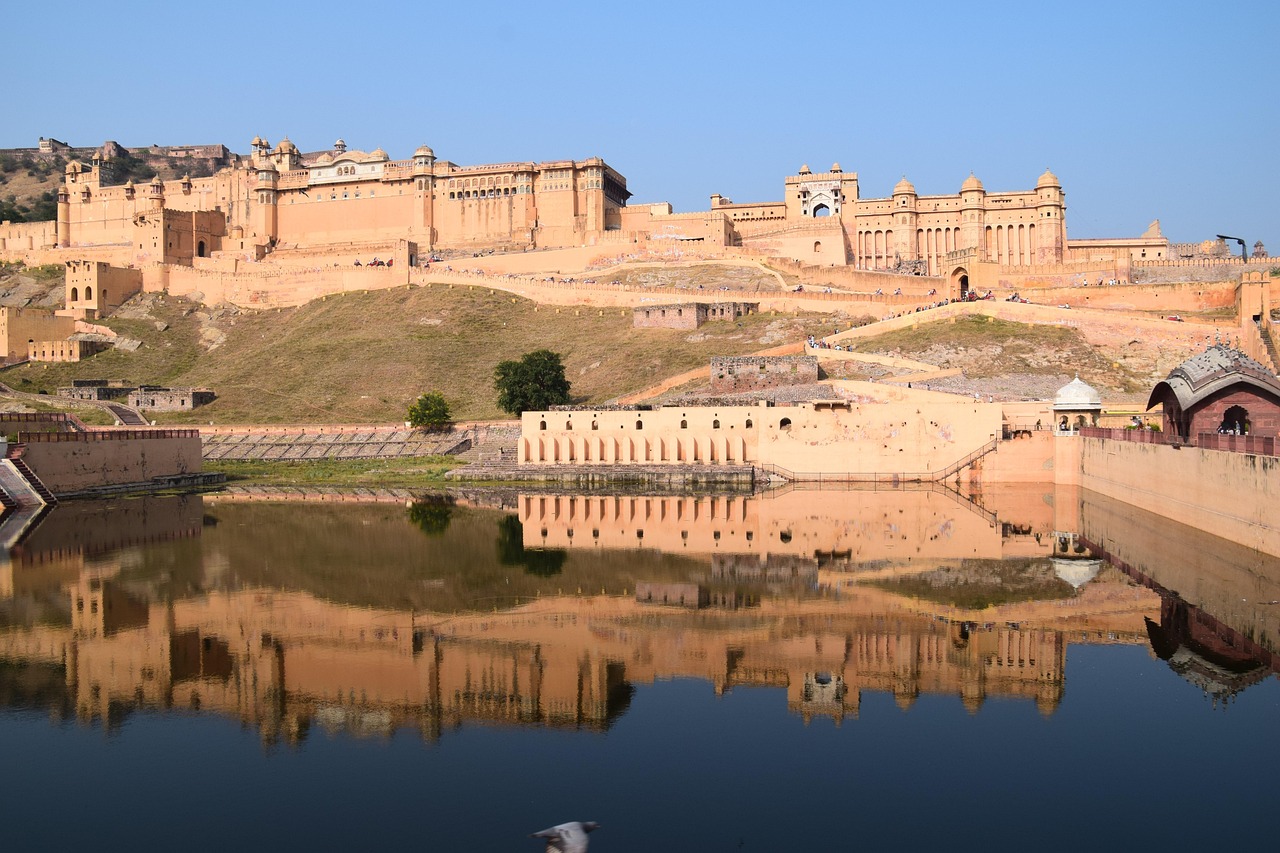
The hilltop palace-fortress of the Kachhwaha Rajputs above Maota Lake, 11 km north of Jaipur — honey-coloured walls, courtyards, painted gateways and the glittering Mirror Palace.
First courtyard
The great courtyard where the army paraded, entered through the Suraj Pol (Sun Gate).
Open in Google Maps (opens in a new tab)Second courtyard
The hall of public audience, with double rows of columns and elephant-shaped brackets.
Open in Google Maps (opens in a new tab)Entrance to the private palace
A richly painted gateway with a figure of Ganesh above the arch.
Open in Google Maps (opens in a new tab)Private palace
Walls and ceilings inlaid with thousands of tiny mirrors that sparkle in candlelight.
Open in Google Maps (opens in a new tab)Private palace
A hall cooled by water channels, facing a formal garden.
Open in Google Maps (opens in a new tab)Near Jaleb Chowk
The temple of the Kachhwaha family goddess, with silver doors. Photography may not be allowed inside.
Open in Google Maps (opens in a new tab)Amer town, below the fort
A beautiful 16th-century stepwell a short walk away.
Open in Google Maps (opens in a new tab)Jaipur, India
Jaipur, India
Jaipur, India
Pink City, Bani Park, Amer Road and Nahargarh
Rajasthani thalis, laal maas and dal baati churma served in old havelis, palace hotels and rooftops with views of the forts. Nahargarh Fort has a café with sunset views over the city.
Open in Google Maps (opens in a new tab)Around Sindhi Camp, Station Road and the old city
Morning stalls and sweet shops frying pyaaz kachori and mirchi vada (stuffed chilli fritters), with masala chai; Rawat Mishthan Bhandar near Sindhi Camp is the best-known.
Open in Google Maps (opens in a new tab)Jaipur, India
Former royal palaces and nobles' mansions now run as luxury hotels, some in the city and some on the road to Amber, between the lake and the hills.
Open in Google Maps (opens in a new tab)Jaipur, India
Havelis turned into small hotels and guesthouses inside the walls, within walking distance of Hawa Mahal, the City Palace and the bazaars. Busy and atmospheric.
Open in Google Maps (opens in a new tab)Amber was a working court, and its design shows how a Rajput palace was lived in: the Ganesh Pol gateway, painted with the elephant-headed god of beginnings, marks the passage from public to private life; the women's quarters (zenana) have screened balconies; and the Shila Devi Temple, the family shrine of the rulers, is still in worship. Remove your shoes in the temple.
Amber (Amer) was the capital of the Kachhwaha Rajputs for some six centuries before Jaipur was founded. The present palace was begun in the late 16th century by Raja Man Singh I, a leading general of the Mughal emperor Akbar, and enlarged by later rulers, especially Mirza Raja Jai Singh I in the 17th century.
Built of yellow and pink sandstone and white marble, it combines Rajput defence with Mughal elegance: courts of public and private audience, gardens, baths and the private apartments of the royal family. Fortified walls run along the ridge to Jaigarh Fort, which protected it from above. When the court moved down to Jaipur in 1727, Amber was left largely as it was. It is part of the Hill Forts of Rajasthan, a UNESCO World Heritage Site.
Or take a jeep from the town.
Diwan-i-Aam, Ganesh Pol, Sheesh Mahal and the zenana.
The stepwell in Amer town.
A photo stop on the way back to the city.
October to March, right at opening time to beat the heat and the tour buses. An evening sound and light show is held below the fort — check timings.
From Jaipur: about 11 km north of the old city on the Delhi road, 20–30 minutes by auto, app cab or local bus, passing Jal Mahal on the way.
Up to the fort: walk up the cobbled ramp from the lake (about 15–20 minutes), take a jeep from the lower town, or drive to the upper parking.