Dharohar folk dance show
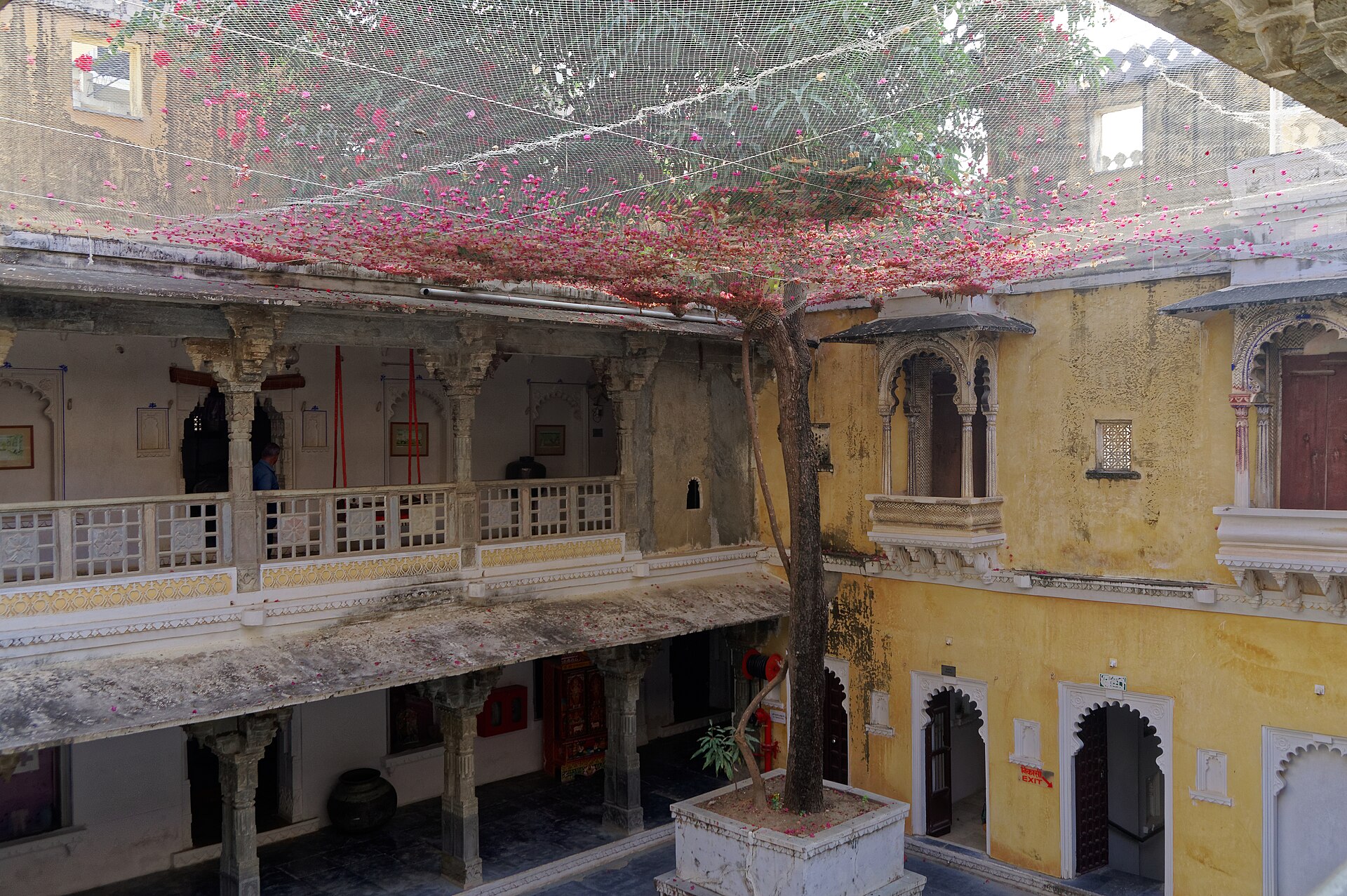
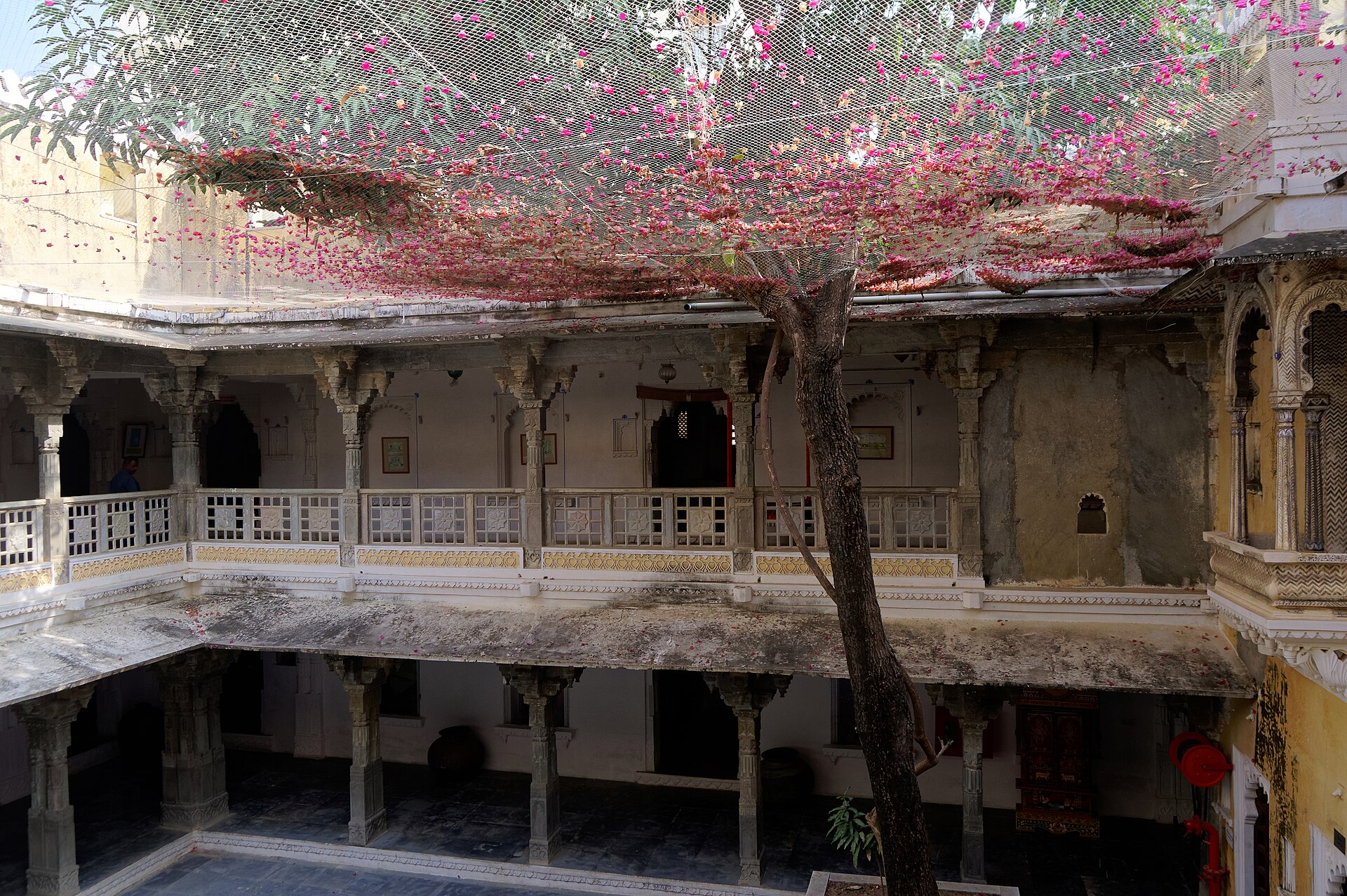
Main courtyard
An evening of Rajasthani folk dance, music and puppetry.
Open in Google Maps (opens in a new tab)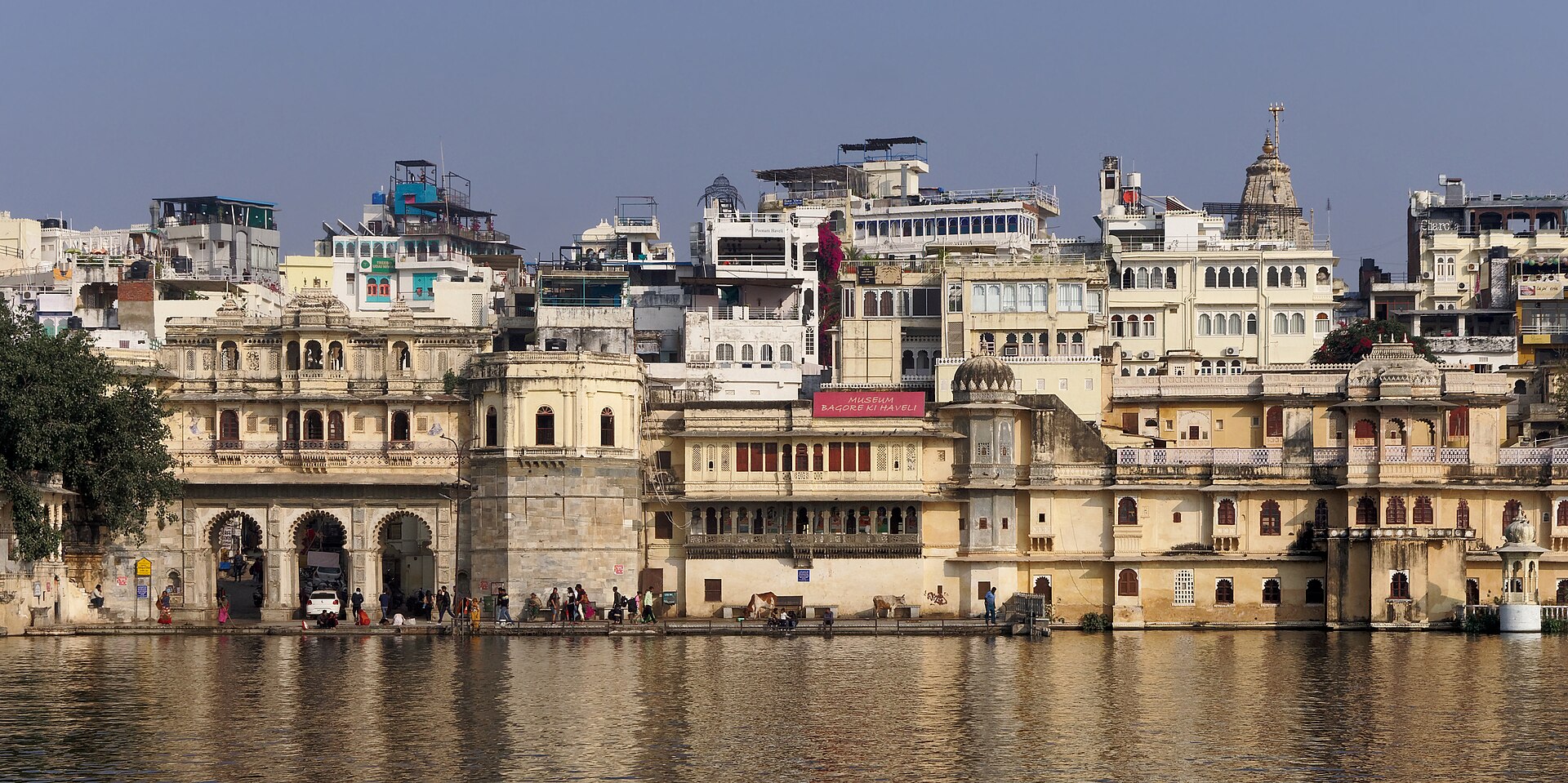
 Udaipur, India
An 18th-century mansion on Gangaur Ghat, restored as a museum of Mewar life with over a hundred rooms, and home to a popular evening show of Rajasthani folk dance.
Main courtyard
An evening of Rajasthani folk dance, music and puppetry.
Open in Google Maps (opens in a new tab)Museum floors
Furnished rooms, a queen’s chamber, kitchens and baths of an 18th-century noble house.
Open in Google Maps (opens in a new tab)Museum
Turbans in the styles of different Rajasthani communities, including a very large one.
Open in Google Maps (opens in a new tab)Over Gangaur Ghat
Windows and balconies directly over Lake Pichola.
Open in Google Maps (opens in a new tab)Udaipur, India
Rolls of gram-flour dough, boiled, sliced and simmered in a yoghurt curry with spices. A desert dish born where fresh vegetables were scarce, eaten with roti or rice in every Rajasthani home.
Udaipur, India
Lanes between Jagdish Temple and Lal Ghat, old city
Dozens of guest-house rooftops with views over Lake Pichola to the Lake Palace, serving Rajasthani thalis, Indian curries and traveller food. Best at sunset.
Open in Google Maps (opens in a new tab)West bank of Lake Pichola, across from the City Palace
Lakeside terraces facing the City Palace, lit up at night — the classic place for a dinner with a view. Smaller cafés and simple eateries fill the lanes behind.
Open in Google Maps (opens in a new tab)Udaipur, India
Heritage havelis, guest houses and small hotels on the east bank of Lake Pichola, walking distance to the City Palace, Jagdish Temple and Bagore Ki Haveli. Lively, with narrow lanes busy with scooters.
Open in Google Maps (opens in a new tab)Udaipur, India
Across the footbridge on the west bank, a little quieter, with lakeside hotels looking straight at the City Palace.
Open in Google Maps (opens in a new tab)The show brings together performers of Rajasthani folk forms such as ghoomar, the swirling women's dance, and bhavai, where dancers balance stacks of pots on their heads. Udaipur was the capital of Mewar, ruled by the Sisodia Rajputs, who are remembered for refusing to submit to the Mughals — Maharana Pratap, who fought at Haldighati in 1576, is the local hero. The former royal family still lives in part of the City Palace. Mewar is known for its miniature painting, folk puppetry, and the colourful Gangaur and Mewar festivals in spring. People are conservative and polite: dress modestly in the old city and temples, and ask before photographing women.
The haveli was built in the 18th century by Amar Chand Badwa, a prime minister of Mewar, right on the water at Gangaur Ghat. It later passed to the royal family and was used by members of the court, before falling into neglect in the 20th century.
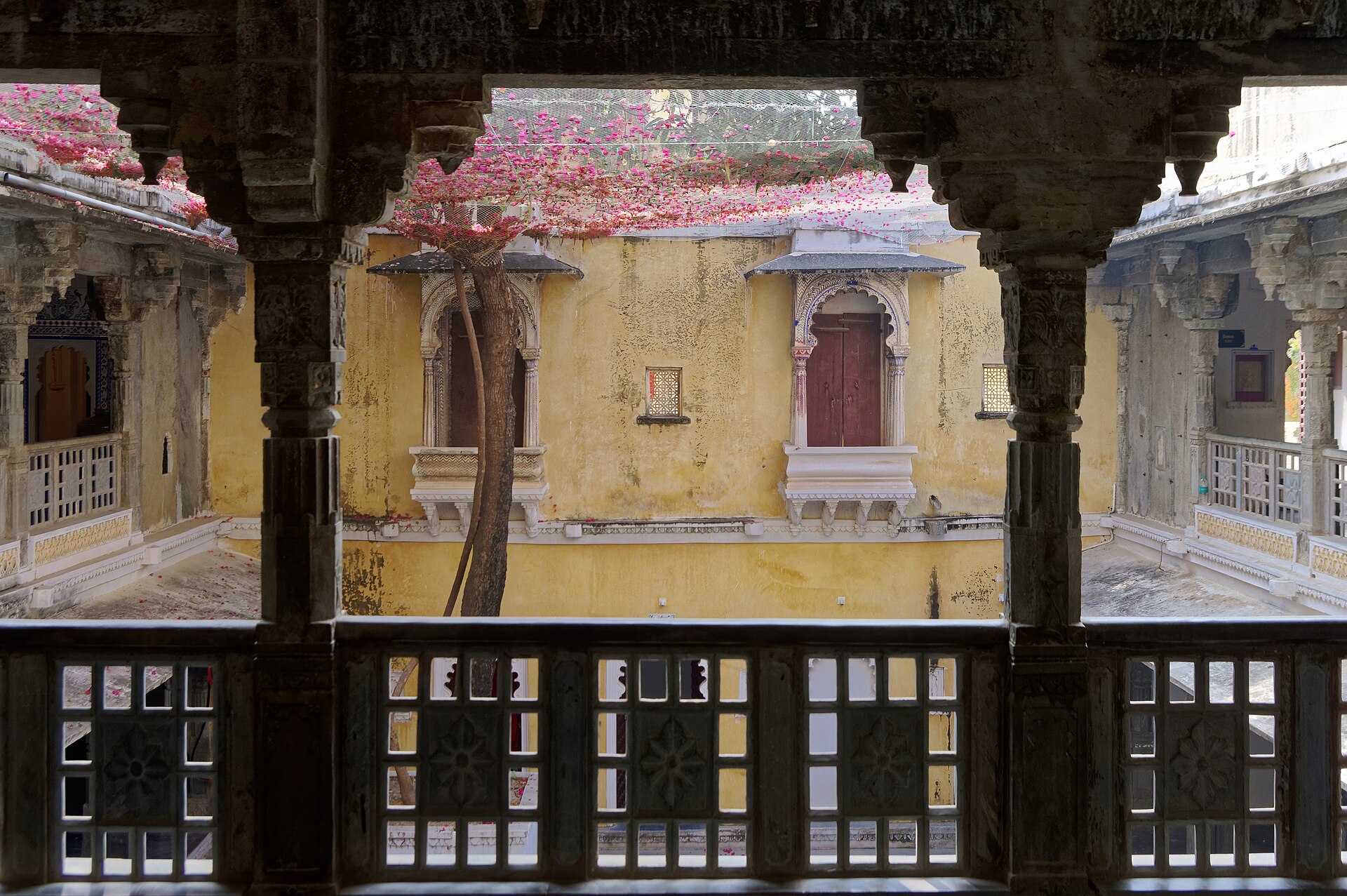
It has been restored and opened as a museum by a government cultural centre. Its rooms, courtyards and balconies show how a noble household lived — with furniture, costumes, glass work, wall paintings and a collection of turbans — and the courtyard hosts the evening Dharohar folk dance show.
Tour the haveli rooms in the late afternoon.
Sit on Gangaur Ghat as the light fades.
Join the queue early for the evening show.
Eat at a Lal Ghat rooftop nearby.
Late afternoon for the museum, then stay for the evening dance show, which runs most days — check times locally.
On Gangaur Ghat, a few minutes' walk downhill from Jagdish Temple in the old city.
The museum covers several floors connected by narrow stairs; allow about an hour. The show lasts about an hour.