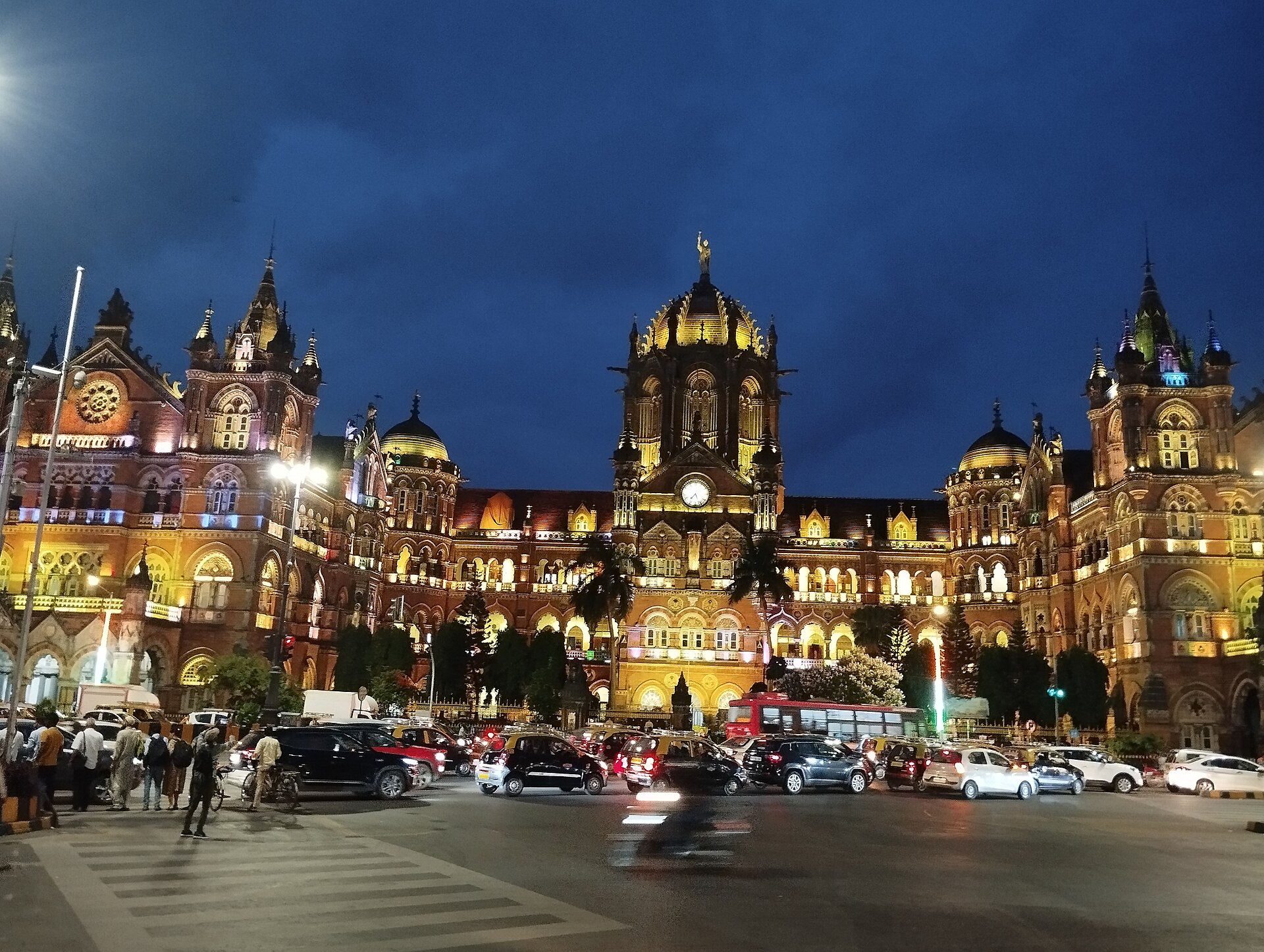
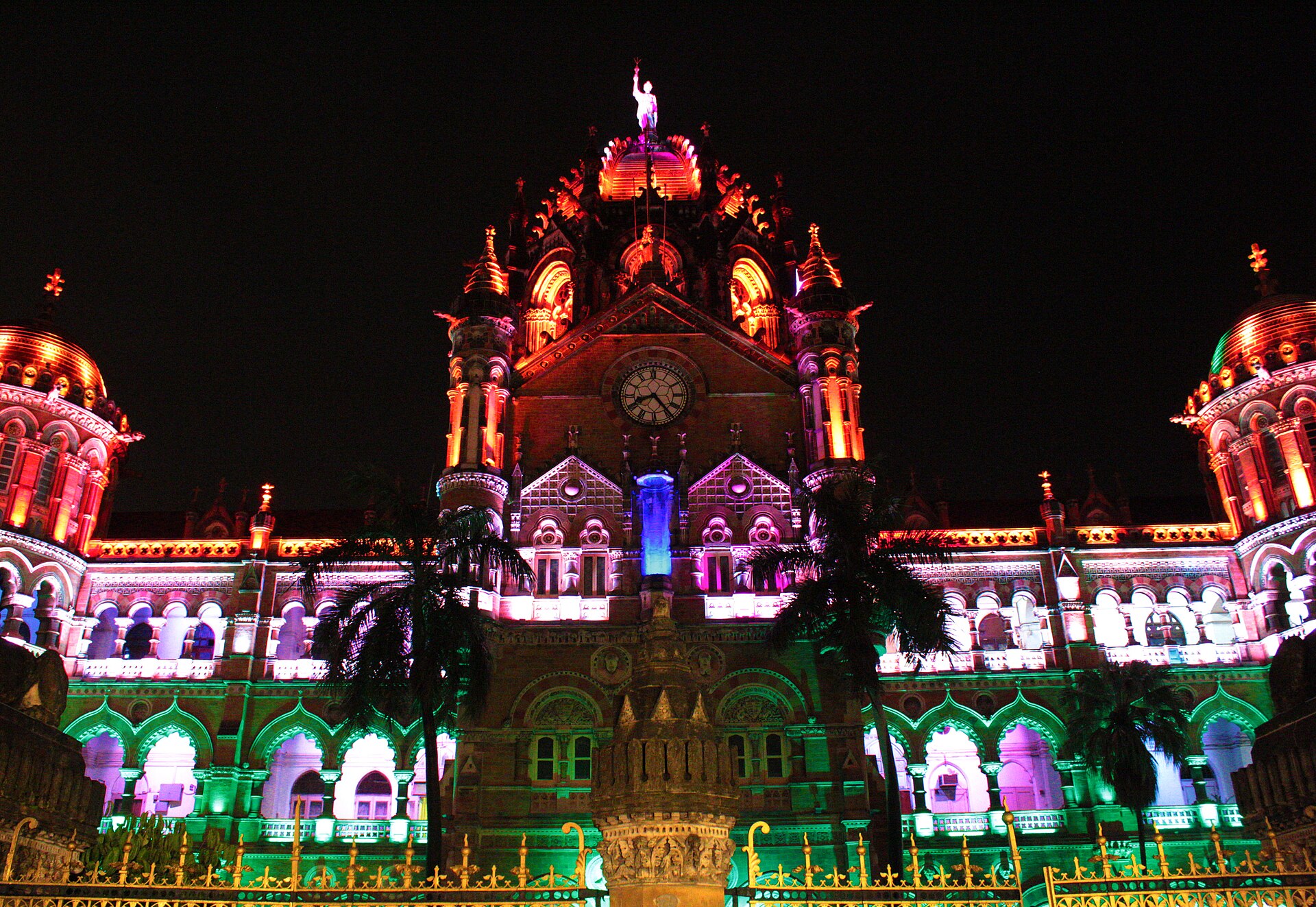
The main façade and dome
D N Road side
The richly carved front with its central dome and the statue of Progress on top.
Open in Google Maps (opens in a new tab)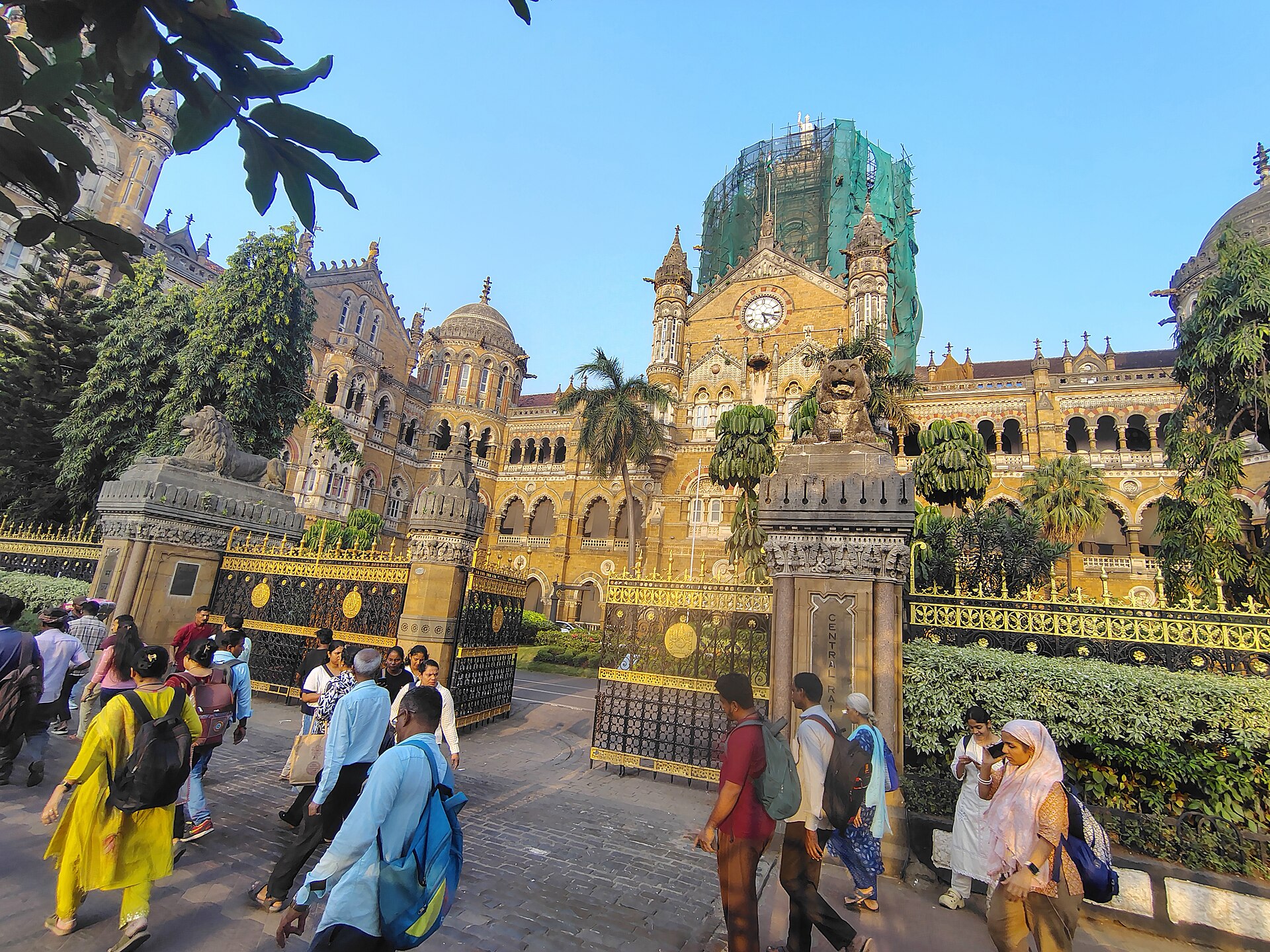
 Mumbai, India
One of the world’s great railway stations, a Victorian Gothic palace of stone domes, spires and carvings that still handles huge crowds of commuters every day.
D N Road side
The richly carved front with its central dome and the statue of Progress on top.
Open in Google Maps (opens in a new tab)Inside the station
Long platforms and endless local trains — the everyday Mumbai.
Open in Google Maps (opens in a new tab)Opposite the station
The Gothic headquarters of the city government, also by F. W. Stevens.
Open in Google Maps (opens in a new tab)A short walk north
A Victorian covered market for fruit, spices and household goods, with stone carvings at its entrance.
Open in Google Maps (opens in a new tab)
Mumbai, India
Mumbai, India
Mumbai, India
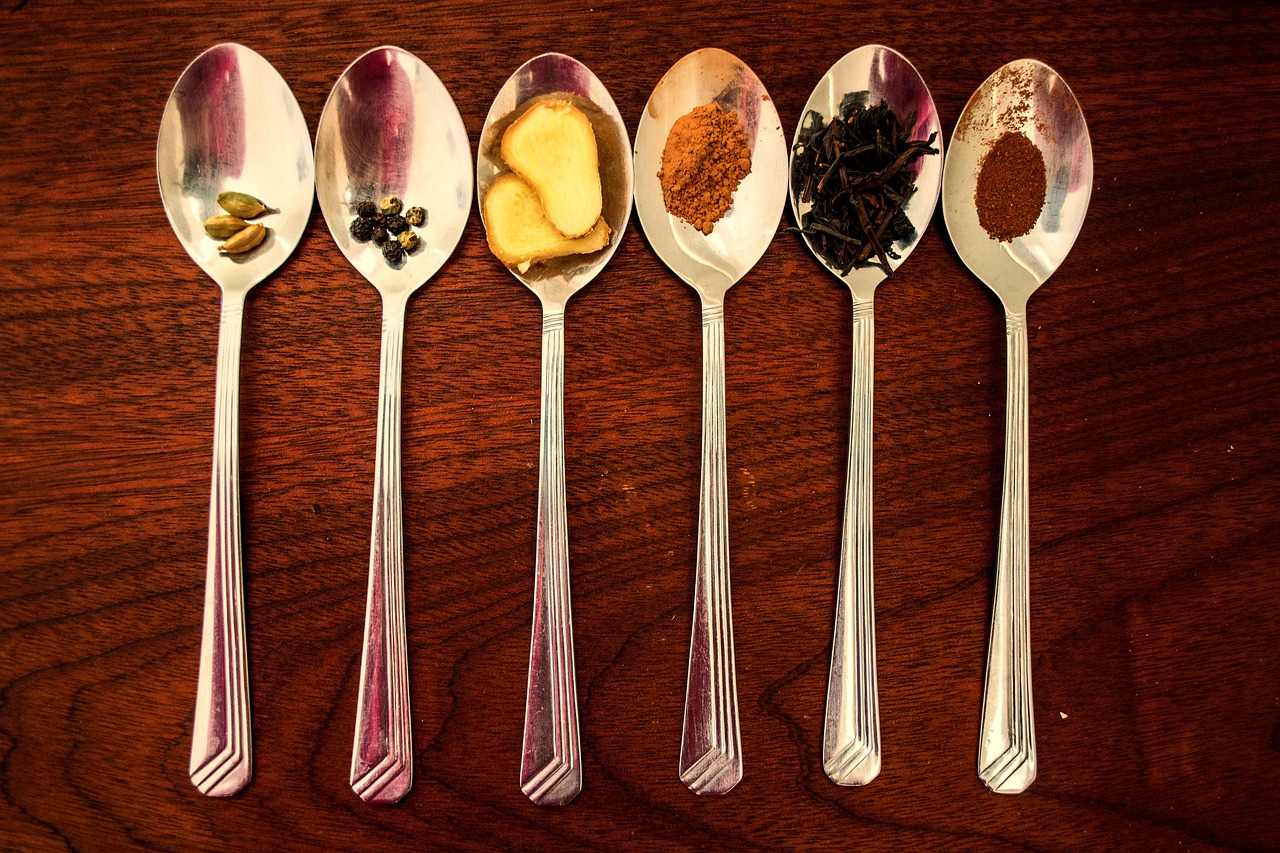
Black tea boiled with milk, sugar and spices such as cardamom, ginger and cloves, sold in small glasses from tea stalls on almost every street corner. Cutting chai — a half glass — is the Mumbai way to drink it.
Ballard Estate, Fort and Dhobi Talao
The old business district, with Parsi and Irani cafés such as Britannia & Co (berry pulao, lunch only and closed on some days — check) and Kyani & Co (bun maska and chai), plus office-lunch thali restaurants.
Open in Google Maps (opens in a new tab)Near Minara Masjid, Bhendi Bazaar
Kebabs, nalli nihari, malpua and other Mughlai food in one of the city’s oldest Muslim neighbourhoods. During Ramadan the street turns into a night-long food market after the evening fast is broken.
Open in Google Maps (opens in a new tab)Mumbai, India
Mumbai, India
Sea-facing hotels in Art Deco buildings along the Queen’s Necklace and near Churchgate station — central, calm and close to the Western Railway local trains.
Open in Google Maps (opens in a new tab)CSMT is the beating heart of Mumbai’s commute. Watching the trains arrive and the crowds pour out is a sight in itself, and the station area is where the famous dabbawalas hand over lunches for the offices of south Mumbai.
Built as Victoria Terminus, the station was designed by the British architect Frederick William Stevens and completed in 1888 for the Great Indian Peninsula Railway, on the site where India's first passenger train had left for Thane in 1853.
It blends Victorian Italian Gothic with Indian craftsmanship: carved animals, peacocks and gargoyles, stained glass and a great central dome topped by a statue representing Progress. Indian students of the Bombay School of Art worked on much of the decoration.
The station was renamed Chhatrapati Shivaji Terminus in 1996, after the 17th-century Maratha king, and "Maharaj" was added in 2017. It was inscribed as a UNESCO World Heritage Site in 2004 and remains the headquarters of the Central Railway.
See the façade and the concourse between rush hours.
Walk through the old business district.
The High Court and Rajabai Clock Tower facing the Art Deco blocks.
Berry pulao or bun maska in a Fort café.
All year. Mid-morning or early afternoon between rush hours is calmest; the building is floodlit in the evening.