Main shrine
Top of the steps
The black stone image of Vishnu as Jagannath under the carved spire.
Open in Google Maps (opens in a new tab)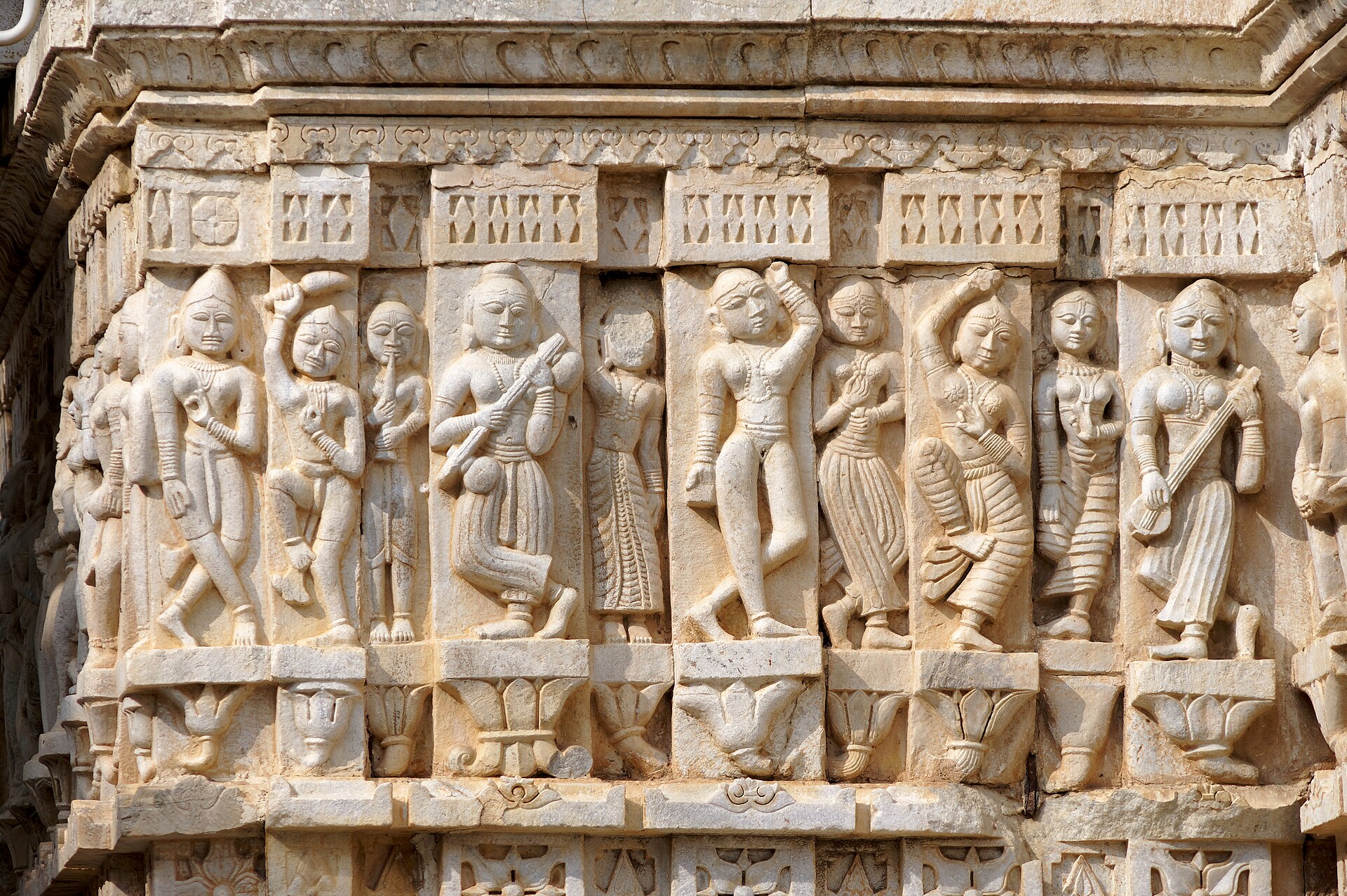
 Udaipur, India
A large, richly carved Hindu temple to Lord Vishnu at the heart of the old city, a few steps from the City Palace. Still busy with worship from dawn, with bells, chanting and offerings of flowers.
Top of the steps
The black stone image of Vishnu as Jagannath under the carved spire.
Open in Google Maps (opens in a new tab)Facing the main shrine
A bronze figure of Garuda, half man and half eagle, kneeling before Vishnu.
Open in Google Maps (opens in a new tab)Around the temple
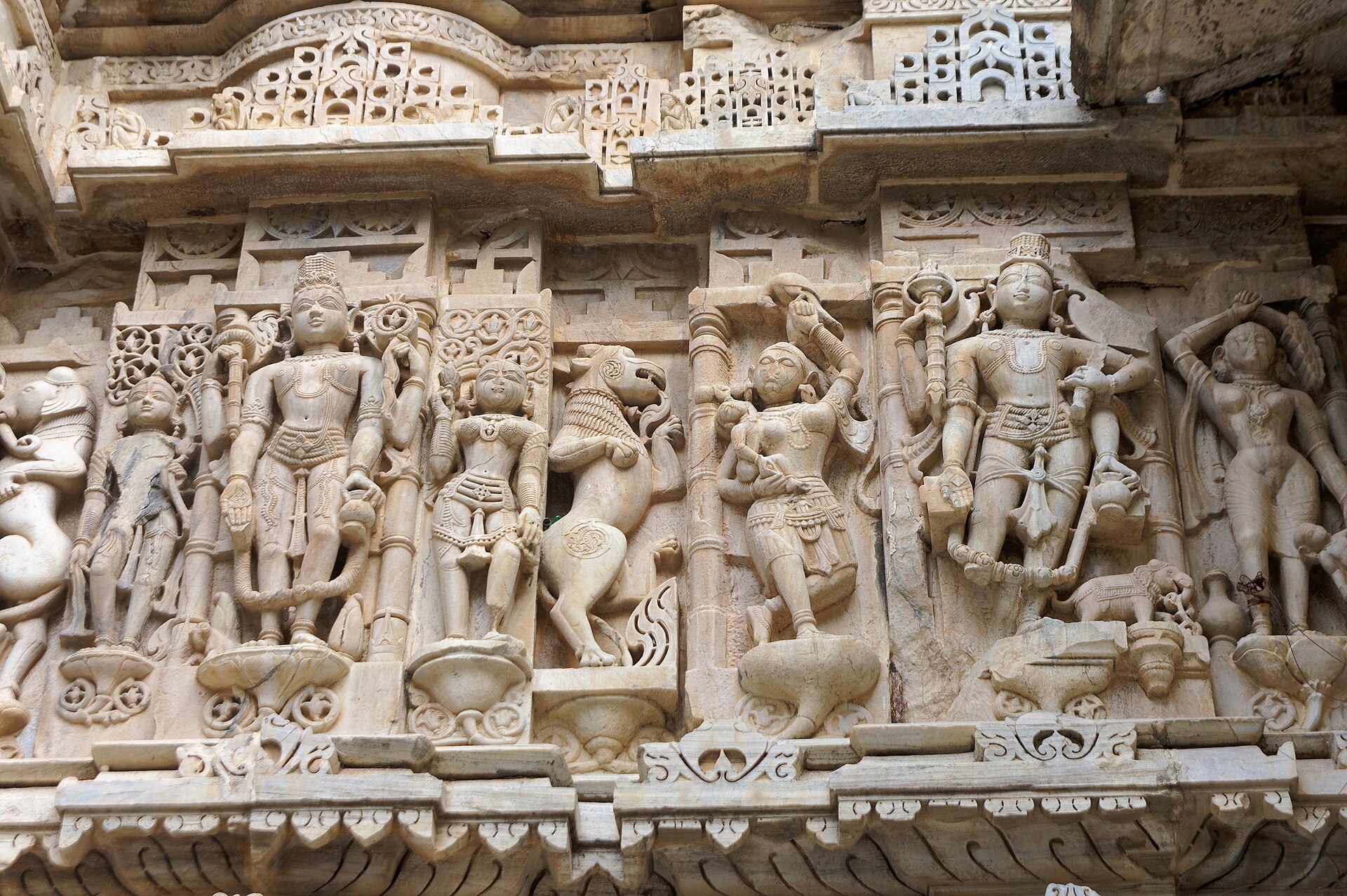
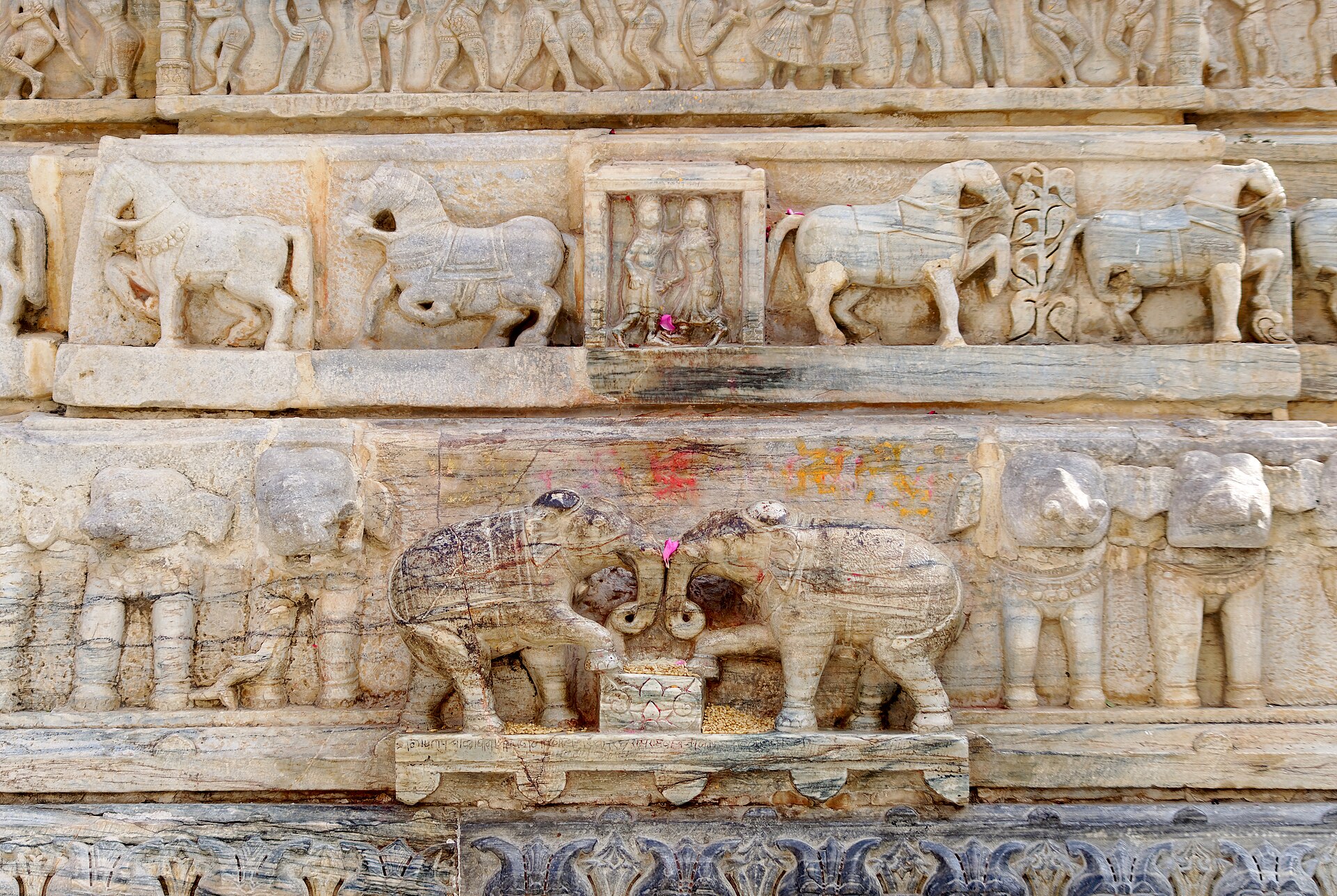
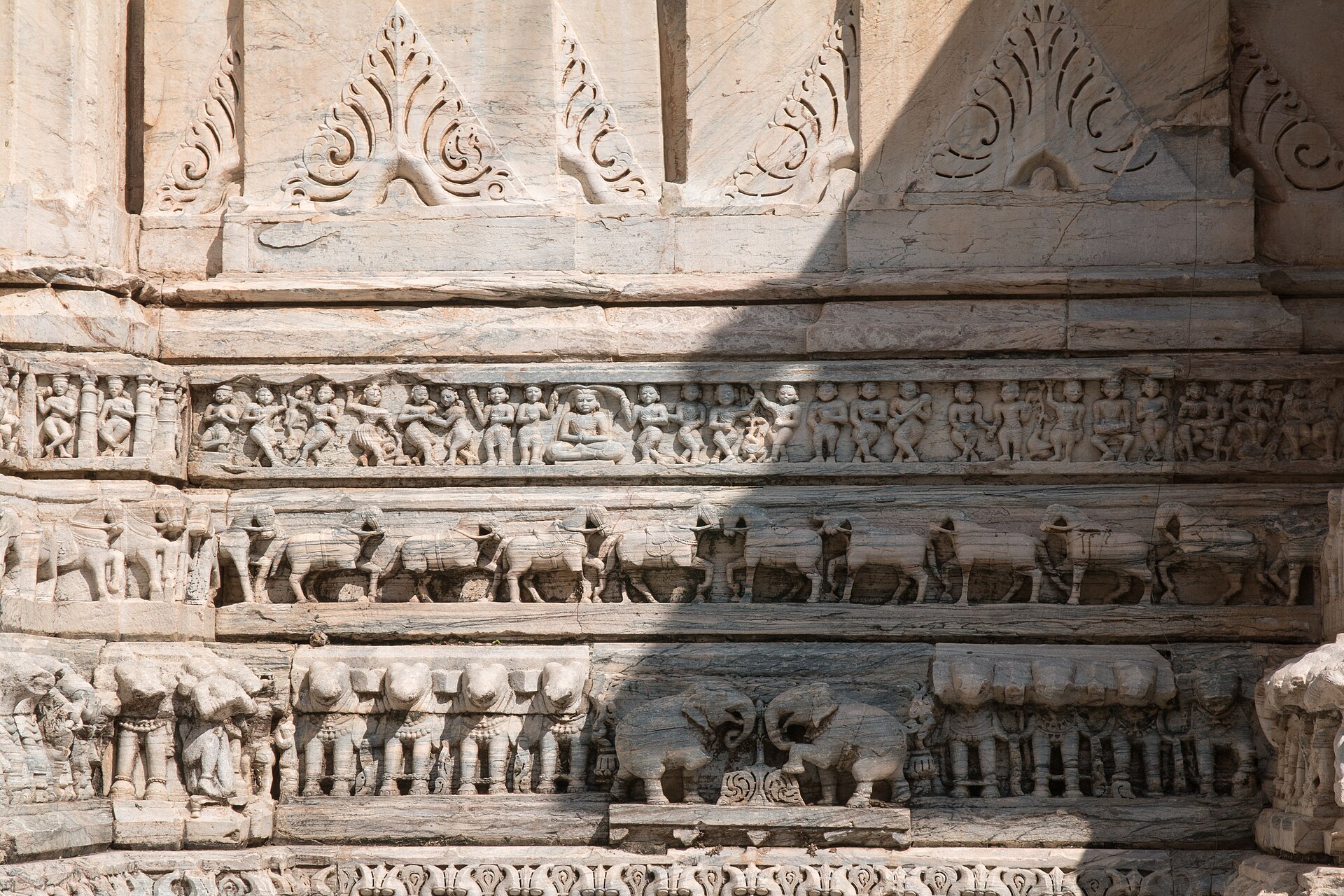
Rows of carved dancers, musicians, elephants and gods — walk around the temple clockwise to see them.
Open in Google Maps (opens in a new tab)Below the temple
The busy square with flower sellers, painting shops and lanes down to the lake.
Open in Google Maps (opens in a new tab)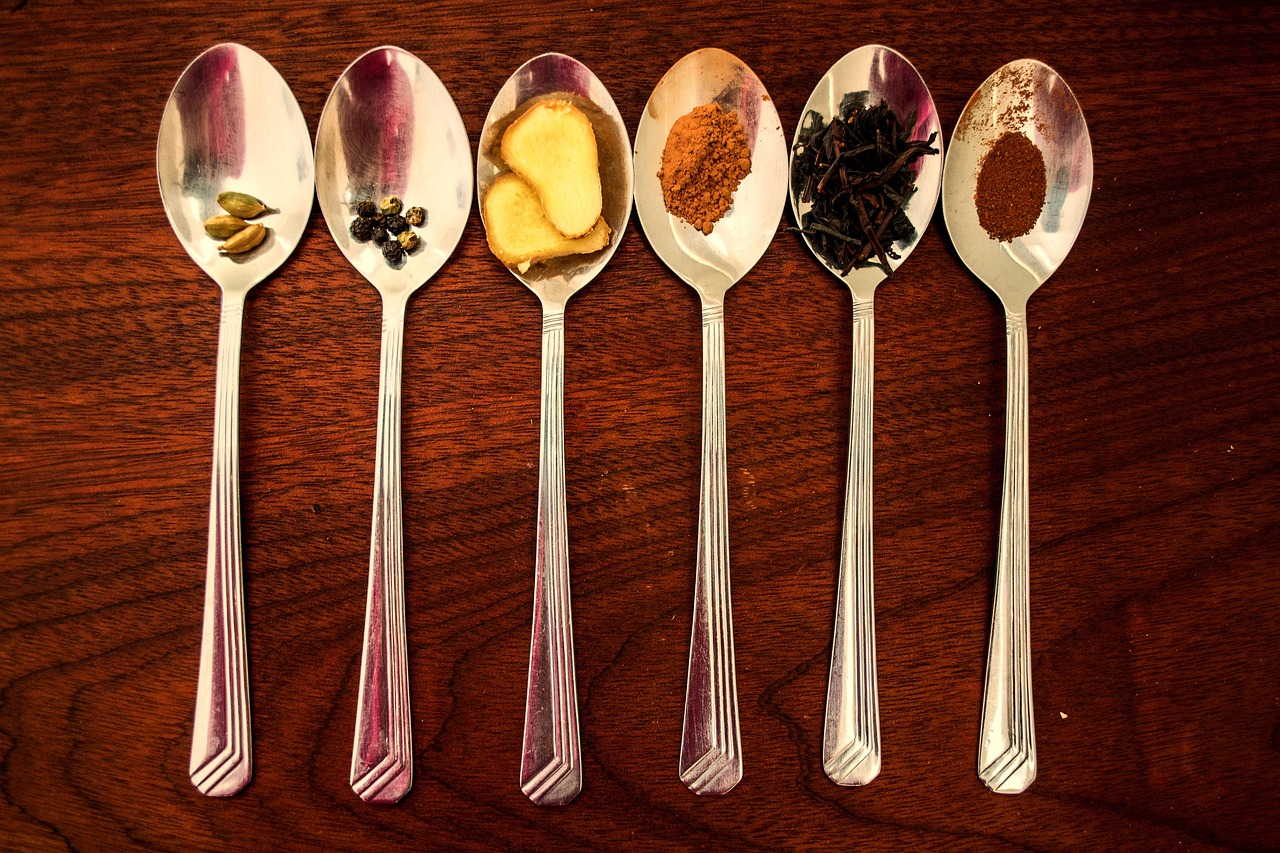
Udaipur, India
Black tea boiled with milk, sugar and spices such as ginger, cardamom and cloves, served in small glasses or clay cups at stalls all day long.
Udaipur, India
A large round plate with many small bowls — dal, gatte, kadhi, ker sangri, bajra roti, rice, pickles and a sweet — refilled as you eat. The easiest way to taste the whole cuisine in one meal.
Lanes between Jagdish Temple and Lal Ghat, old city
Dozens of guest-house rooftops with views over Lake Pichola to the Lake Palace, serving Rajasthani thalis, Indian curries and traveller food. Best at sunset.
Open in Google Maps (opens in a new tab)Udaipur, India
Heritage havelis, guest houses and small hotels on the east bank of Lake Pichola, walking distance to the City Palace, Jagdish Temple and Bagore Ki Haveli. Lively, with narrow lanes busy with scooters.
Open in Google Maps (opens in a new tab)Hindu temples welcome respectful visitors. Dress modestly with shoulders and knees covered, take your shoes off at the entrance (there is usually a place to leave them), and do not carry leather goods into the shrine where signs ask you not to. Walk around the shrine clockwise, keep your voice low, and ask before photographing the inner sanctum or worshippers. Devotees often sing bhajans (devotional songs) in the hall in the evening; you are welcome to sit quietly and listen.
The temple was built in 1651 by Maharana Jagat Singh I and dedicated to Vishnu as Jagannath, Lord of the Universe. It is in the Nagara (north Indian) style, raised on a high platform reached by a steep flight of steps flanked by stone elephants.
Its walls and spire are covered with carvings of gods, dancers, musicians, elephants and horsemen. In front of the shrine stands a bronze image of Garuda, the eagle-mount of Vishnu, and a black stone image of Vishnu sits inside. The temple has been in continuous worship since it was built.
See the morning worship.
A glass of masala chai at a stall.
Walk to the lake and Bagore Ki Haveli.
Arrive as the palace opens.
Early morning or the evening aarti, when worshippers gather with bells and lamps. Avoid the middle of the day, when the stone steps are hot underfoot.
The temple stands at Jagdish Chowk, the busy junction of the old city, about 150 m from the City Palace gate. Rickshaws can drop you nearby; the last stretch is easiest on foot.
Climb the front steps barefoot; the temple and its small side shrines can be seen in 30–45 minutes.