Samrat Yantra
Centre of the observatory
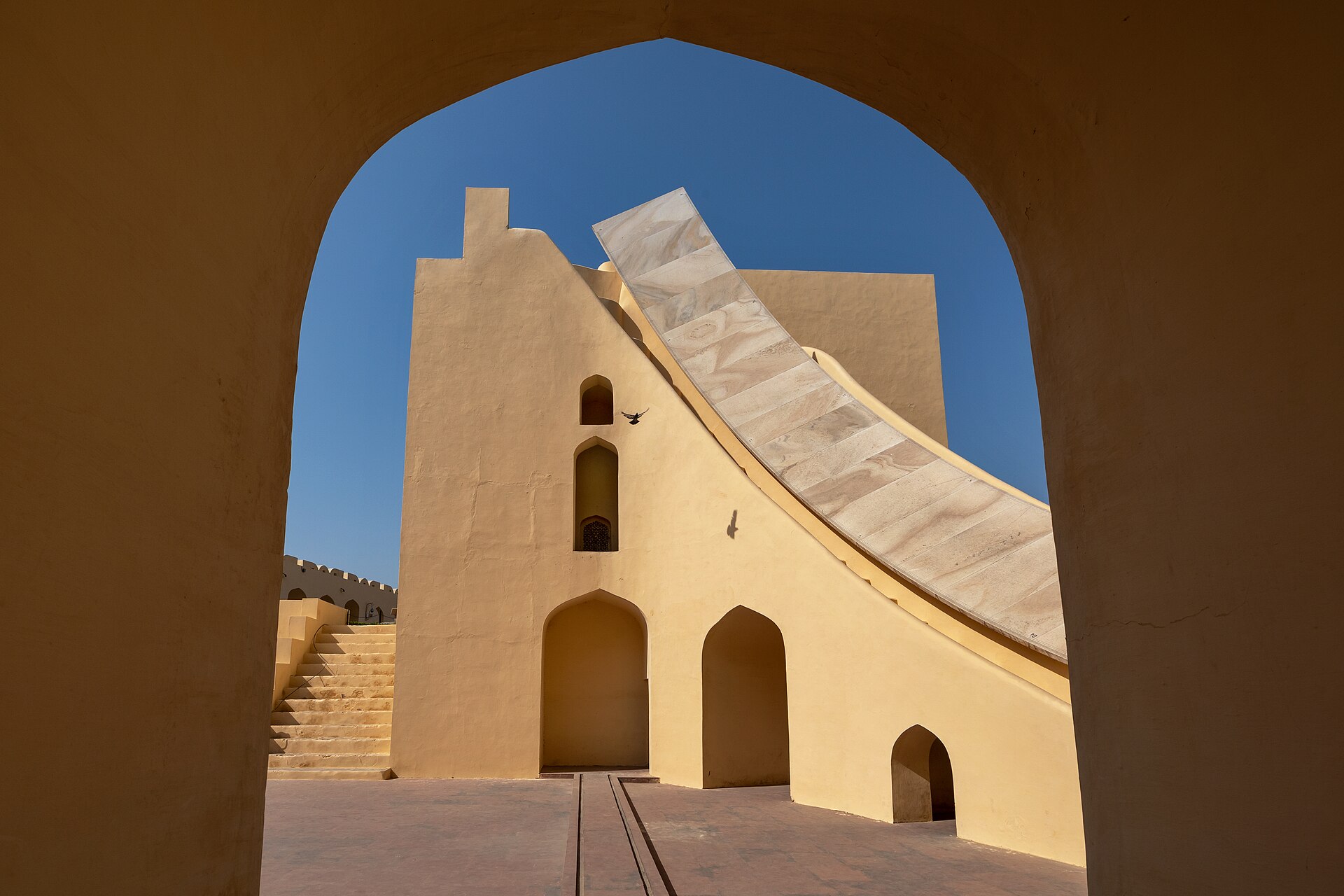
The giant sundial, whose shadow moves across the stone quadrants as you watch.
Open in Google Maps (opens in a new tab)
 Jaipur, India
Maharaja Jai Singh II's 18th-century astronomical observatory: a garden of giant stone instruments, among them the world's largest stone sundial, still able to tell the time.
Centre of the observatory
The giant sundial, whose shadow moves across the stone quadrants as you watch.
Open in Google Maps (opens in a new tab)Observatory
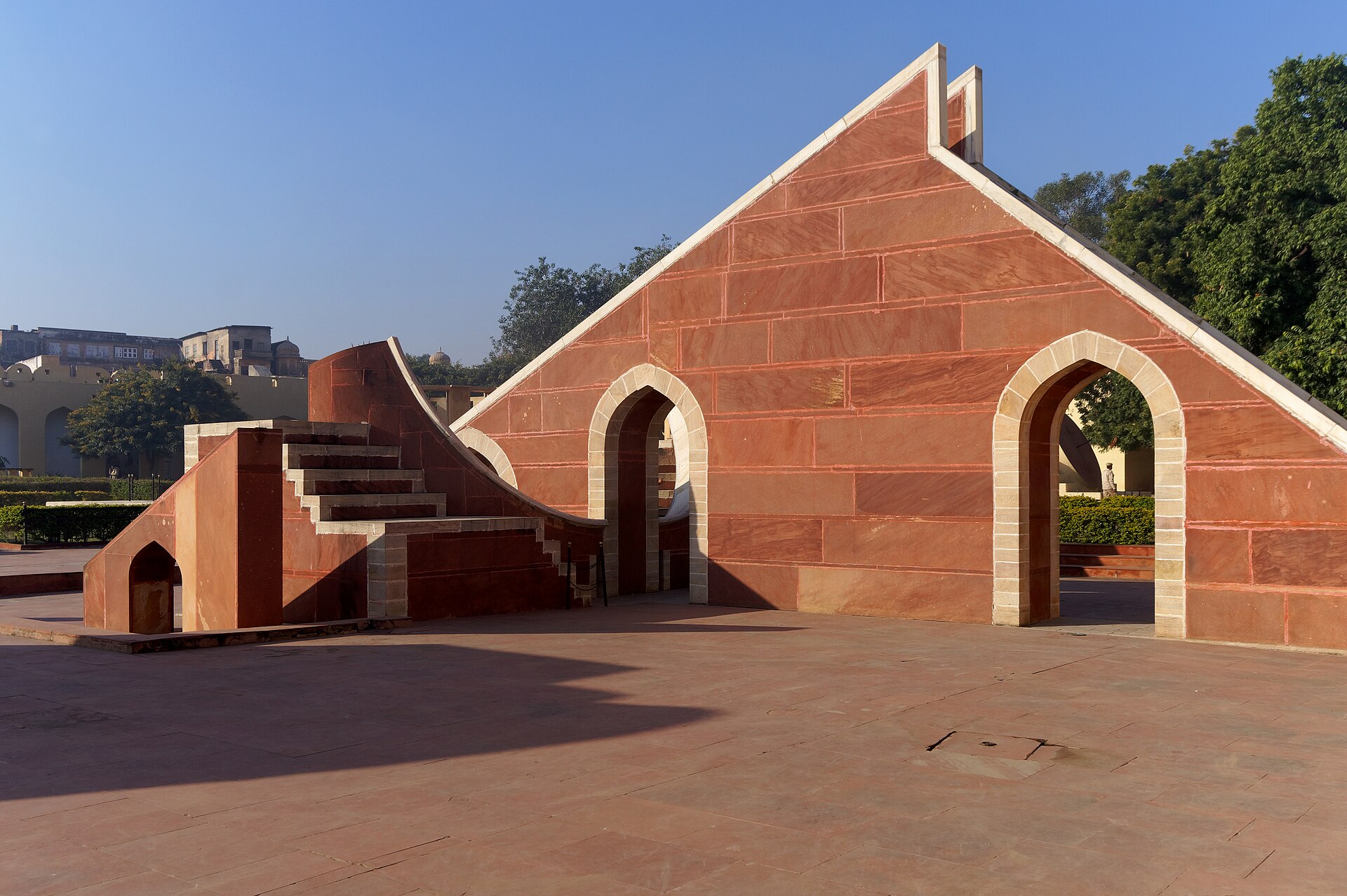
Two hollow hemispheres marked with the heavens, used to read the position of the sun and stars.
Open in Google Maps (opens in a new tab)Observatory
Twelve instruments, one for each sign of the zodiac.
Open in Google Maps (opens in a new tab)Observatory
Cylindrical structures for measuring the altitude and direction of stars.
Open in Google Maps (opens in a new tab)Near the entrance
A smaller sundial, easier to read than the giant one.
Open in Google Maps (opens in a new tab)Jaipur, India
Jaipur, India
Jaipur, India
Johari Bazaar, Pink City
Laxmi Mishthan Bhandar (LMB), a Jaipur institution for decades, and other old sweet houses selling ghewar, mawa kachori, Rajasthani thalis and snacks, in the middle of the jewellery bazaar.
Open in Google Maps (opens in a new tab)Mirza Ismail Road, between the old city and C-Scheme
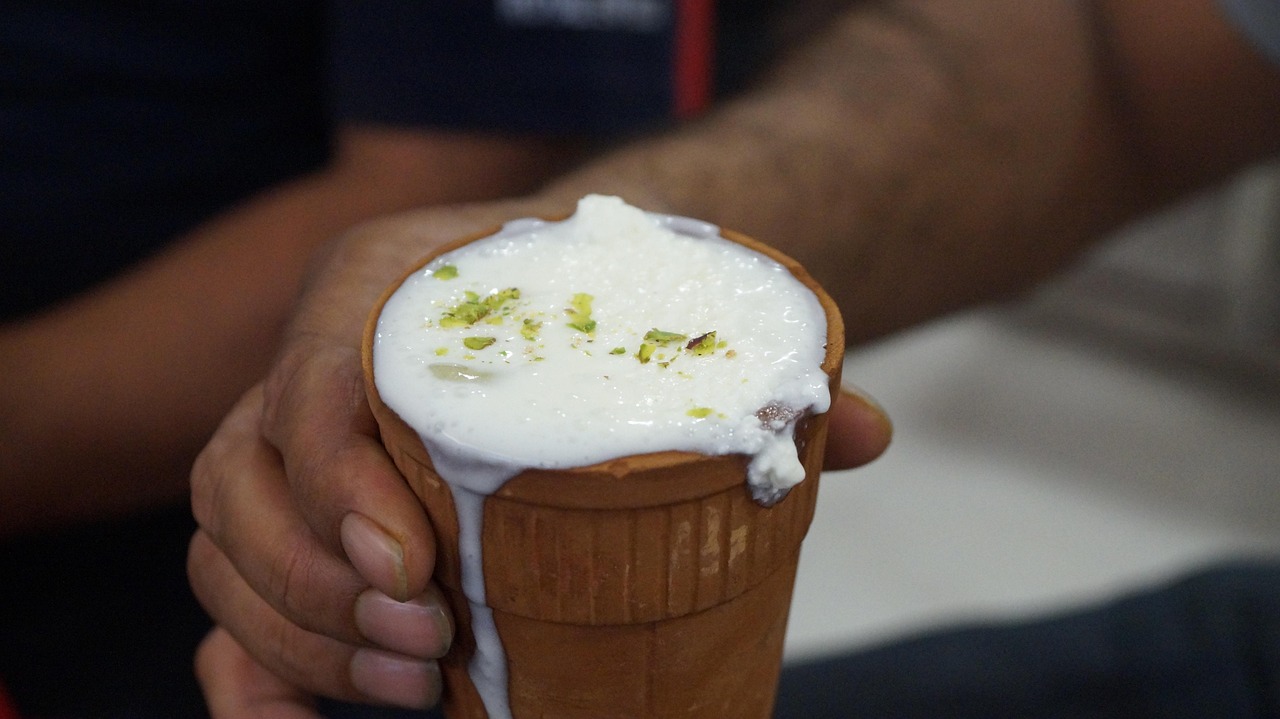
Jaipur's main street of long-established restaurants and sweet shops, including the famous lassi shops in clay cups and family restaurants serving Rajasthani and North Indian food.
Open in Google Maps (opens in a new tab)Jaipur, India
Havelis turned into small hotels and guesthouses inside the walls, within walking distance of Hawa Mahal, the City Palace and the bazaars. Busy and atmospheric.
Open in Google Maps (opens in a new tab)Jaipur, India
Central, modern hotels near the main shopping streets and restaurants, a short ride from the old city.
Open in Google Maps (opens in a new tab)Jantar Mantar reflects Jai Singh's world of learning, where Indian, Persian and European astronomy met. Some of its instruments are still used by local astrologers and scholars, for example to forecast the monsoon, and it remains a favourite school trip for children across Rajasthan.
Maharaja Sawai Jai Singh II, the founder of Jaipur, was a keen astronomer. To improve the accuracy of the astronomical tables of his day he built five observatories in North India — in Delhi, Jaipur, Ujjain, Varanasi and Mathura. The Jaipur Jantar Mantar, completed around 1734, is the largest and best preserved.
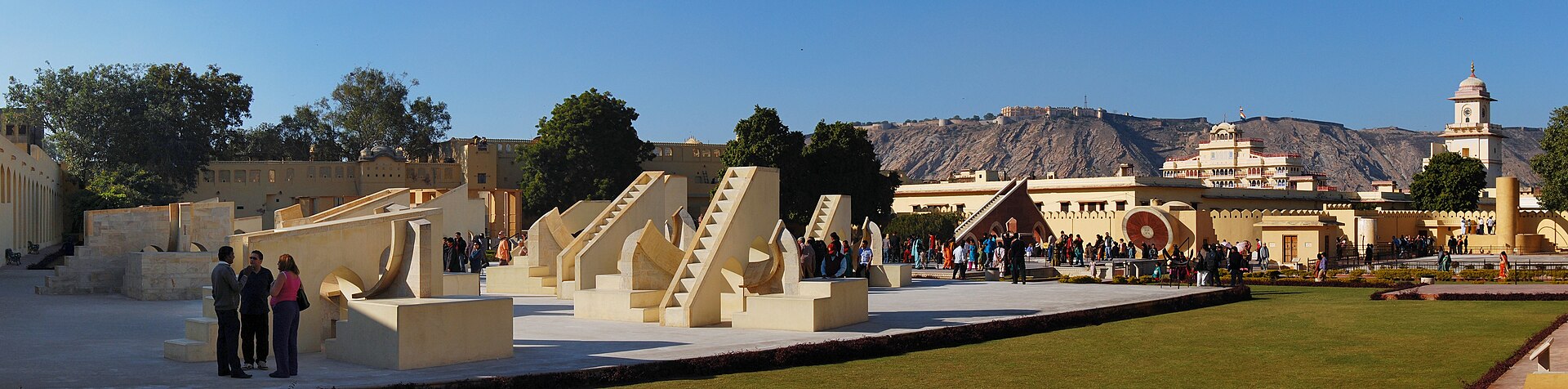
Its nearly twenty instruments, built of stone and marble on a huge scale, measure time, track the sun, stars and planets, and predict eclipses. The largest, the Samrat Yantra, is a giant sundial whose shadow moves visibly across its marked quadrants. Restored in the early 20th century, Jantar Mantar is a UNESCO World Heritage Site.
The façade at sunrise.
The sundials in the mid-morning sun.
Next door.
A Rajasthani thali.
October to March, on a sunny day around midday or the afternoon, when the sundials can be seen working.
In the Pink City: next to the City Palace, a short walk from Hawa Mahal; autos drop at the entrance.