Johari Bazaar
Badi Chaupar to Sanganeri Gate
Jewellers and gem dealers, silver shops, saris and the old sweet houses.
Open in Google Maps (opens in a new tab)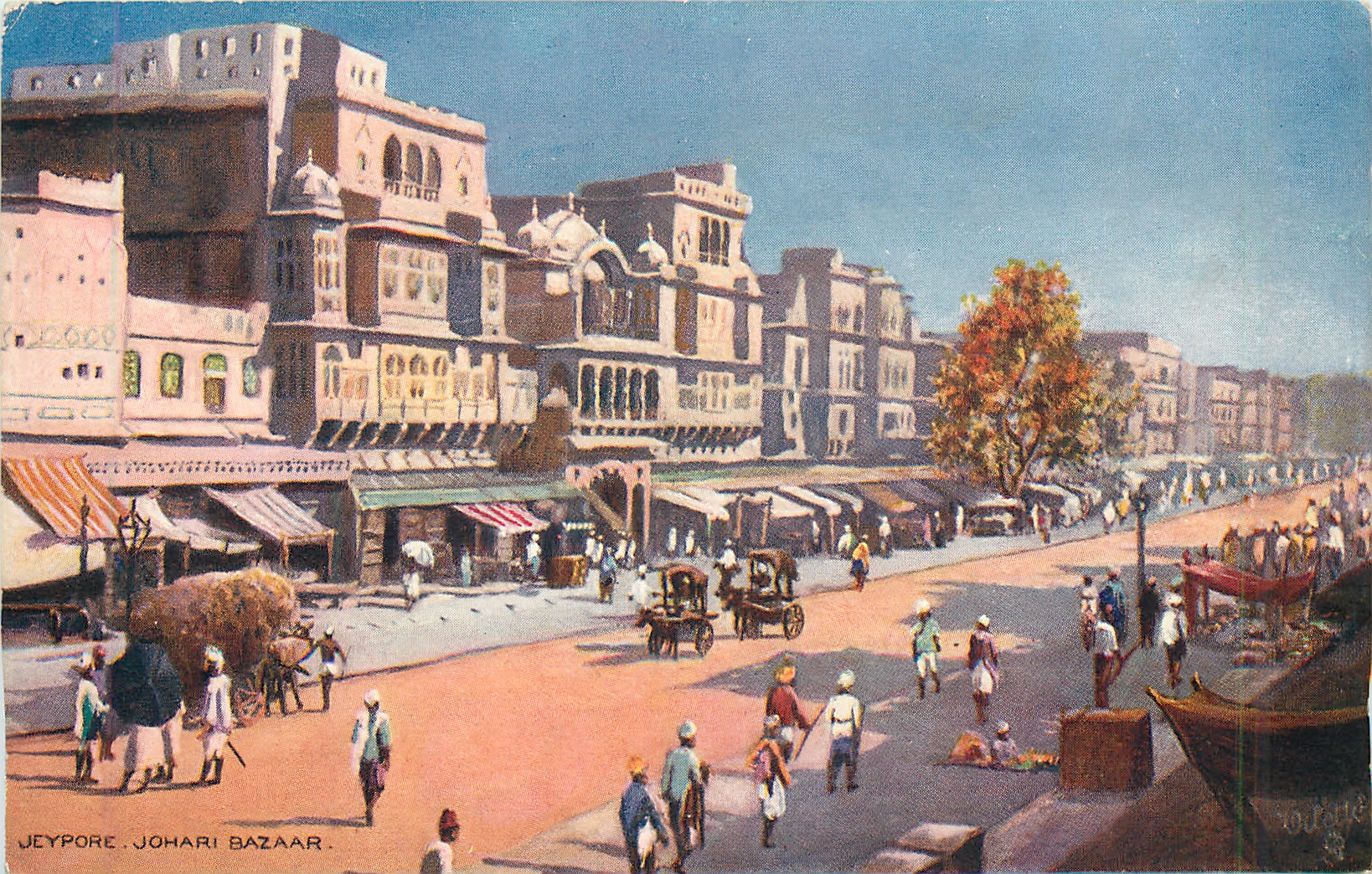
 Jaipur, India
The arcaded pink bazaars of the old city: Johari Bazaar for jewellery and gems, Bapu Bazaar for block-printed textiles, mojari shoes and souvenirs — and the best places to taste Jaipur sweets.
Badi Chaupar to Sanganeri Gate
Jewellers and gem dealers, silver shops, saris and the old sweet houses.
Open in Google Maps (opens in a new tab)Sanganeri Gate to New Gate
Block-printed fabric, bedspreads, embroidered mojari shoes, bags and souvenirs.
Open in Google Maps (opens in a new tab)West of Badi Chaupar
Brassware, lac bangles and kitchenware, in front of the triple-arched Tripolia Gate.
Open in Google Maps (opens in a new tab)Next to Bapu Bazaar
Textiles, perfumes and shoes along the same southern wall.
Open in Google Maps (opens in a new tab)South end of Johari Bazaar
One of the original gates in the walls of the old city.
Open in Google Maps (opens in a new tab)Jaipur, India
Jaipur, India
Jaipur, India
Jaipur, India
A large round platter of small bowls: dal, kadhi, gatte, ker sangri, bajra (millet) roti, rice, chutneys, papad and sweets, refilled until you stop. The easiest way to taste the whole cuisine in one sitting.
Johari Bazaar, Pink City
Laxmi Mishthan Bhandar (LMB), a Jaipur institution for decades, and other old sweet houses selling ghewar, mawa kachori, Rajasthani thalis and snacks, in the middle of the jewellery bazaar.
Open in Google Maps (opens in a new tab)Mirza Ismail Road, between the old city and C-Scheme
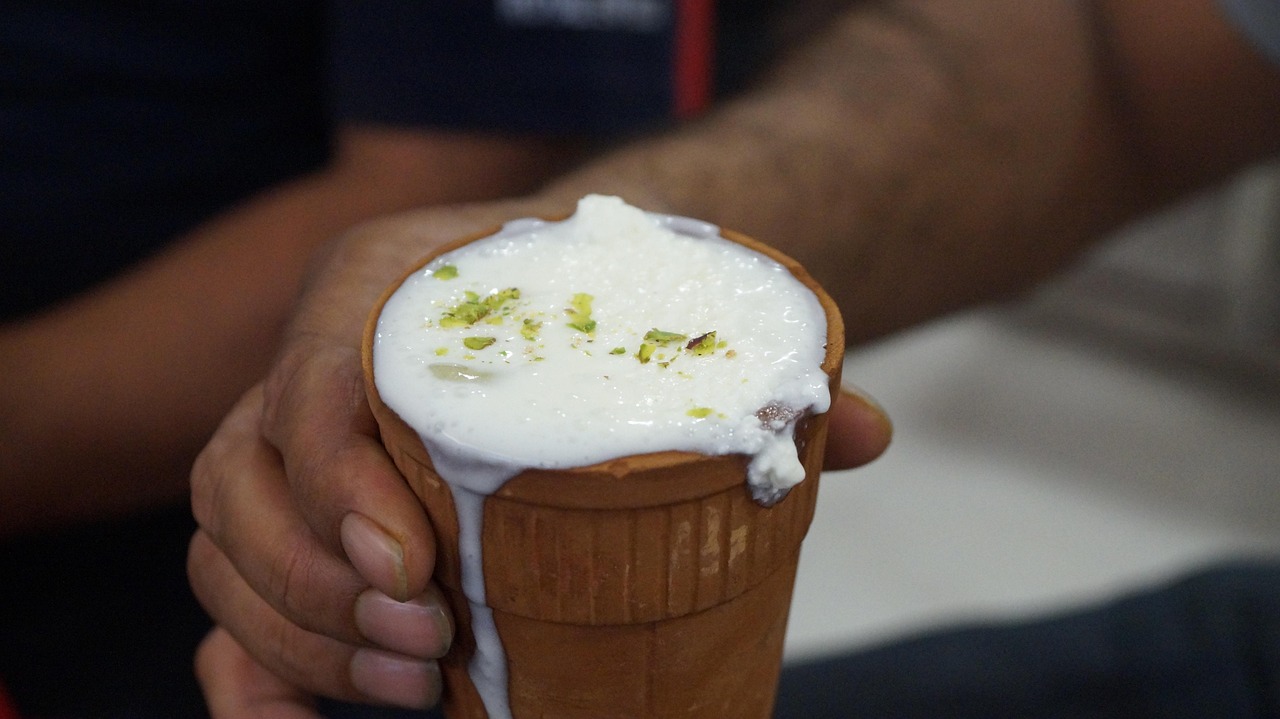
Jaipur's main street of long-established restaurants and sweet shops, including the famous lassi shops in clay cups and family restaurants serving Rajasthani and North Indian food.
Open in Google Maps (opens in a new tab)Around Sindhi Camp, Station Road and the old city
Morning stalls and sweet shops frying pyaaz kachori and mirchi vada (stuffed chilli fritters), with masala chai; Rawat Mishthan Bhandar near Sindhi Camp is the best-known.
Open in Google Maps (opens in a new tab)Jaipur, India
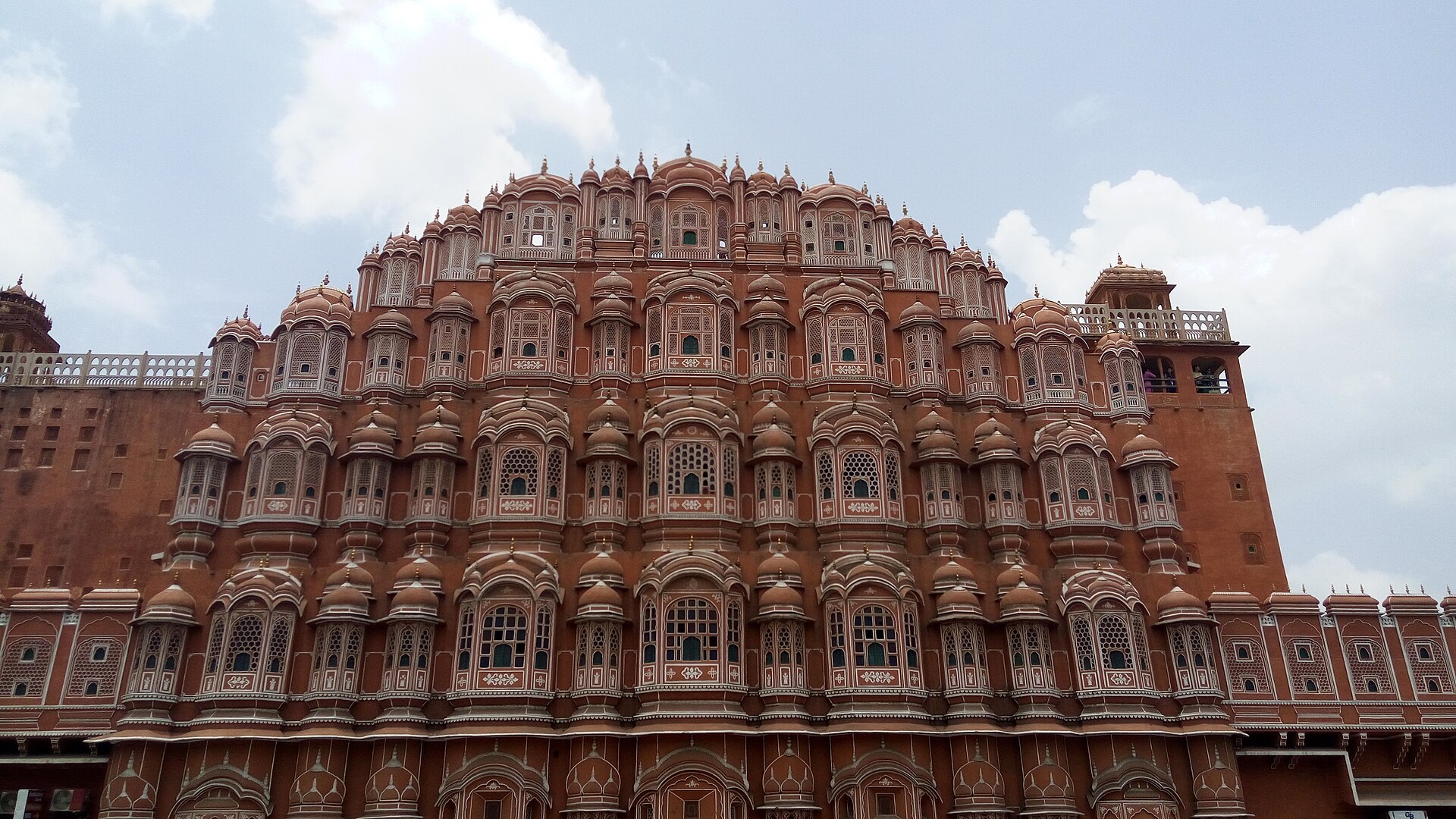
Havelis turned into small hotels and guesthouses inside the walls, within walking distance of Hawa Mahal, the City Palace and the bazaars. Busy and atmospheric.
Open in Google Maps (opens in a new tab)Jaipur, India
Central, modern hotels near the main shopping streets and restaurants, a short ride from the old city.
Open in Google Maps (opens in a new tab)The bazaars are where Jaipur's crafts meet its daily life: brides' families choose wedding jewellery in Johari Bazaar, women shop for bandhani tie-dye and lehengas, and sweet shops sell ghewar in stacks before Teej. At Diwali the arcades are strung with lights and the whole old city turns out to shop.
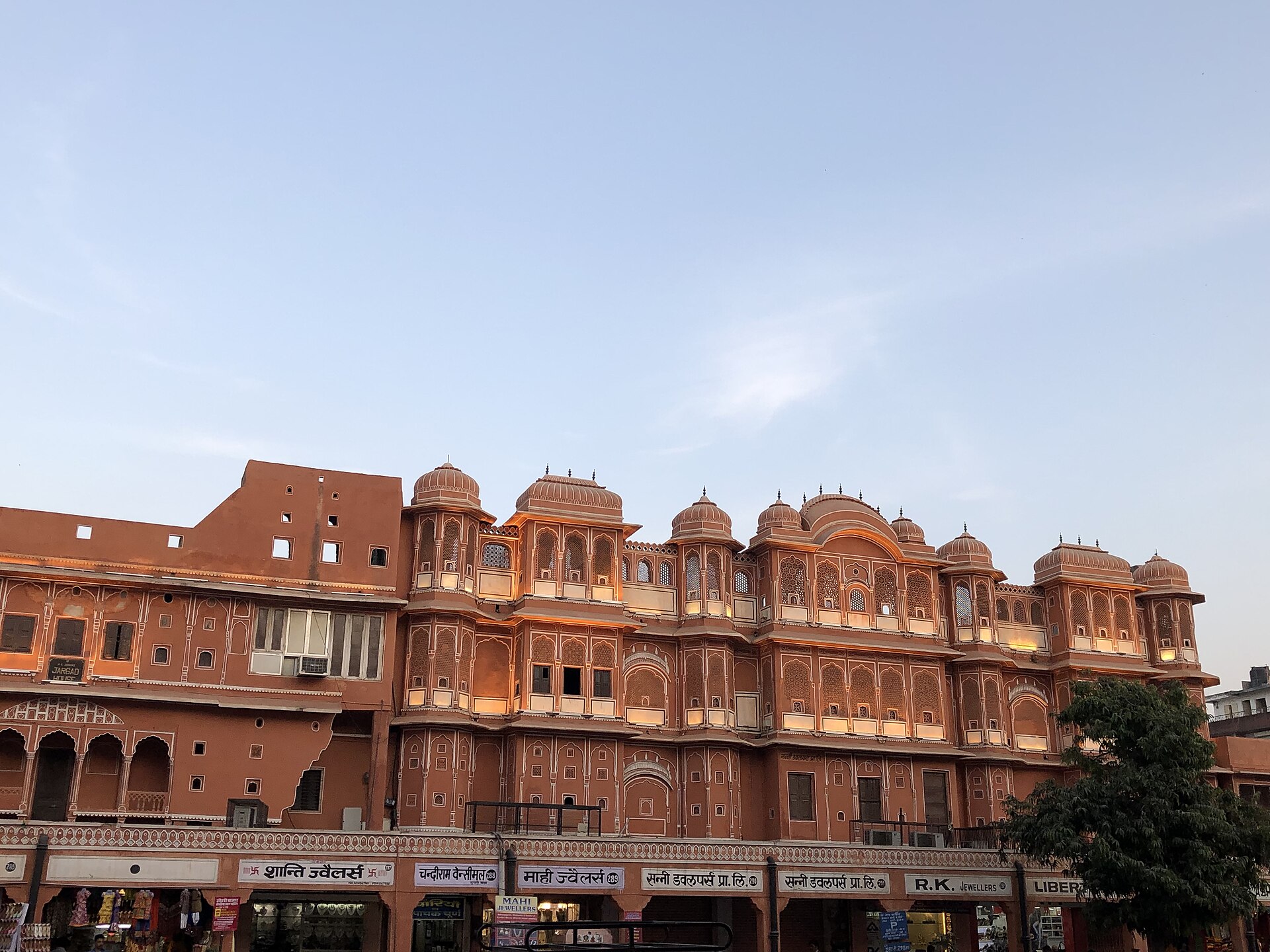
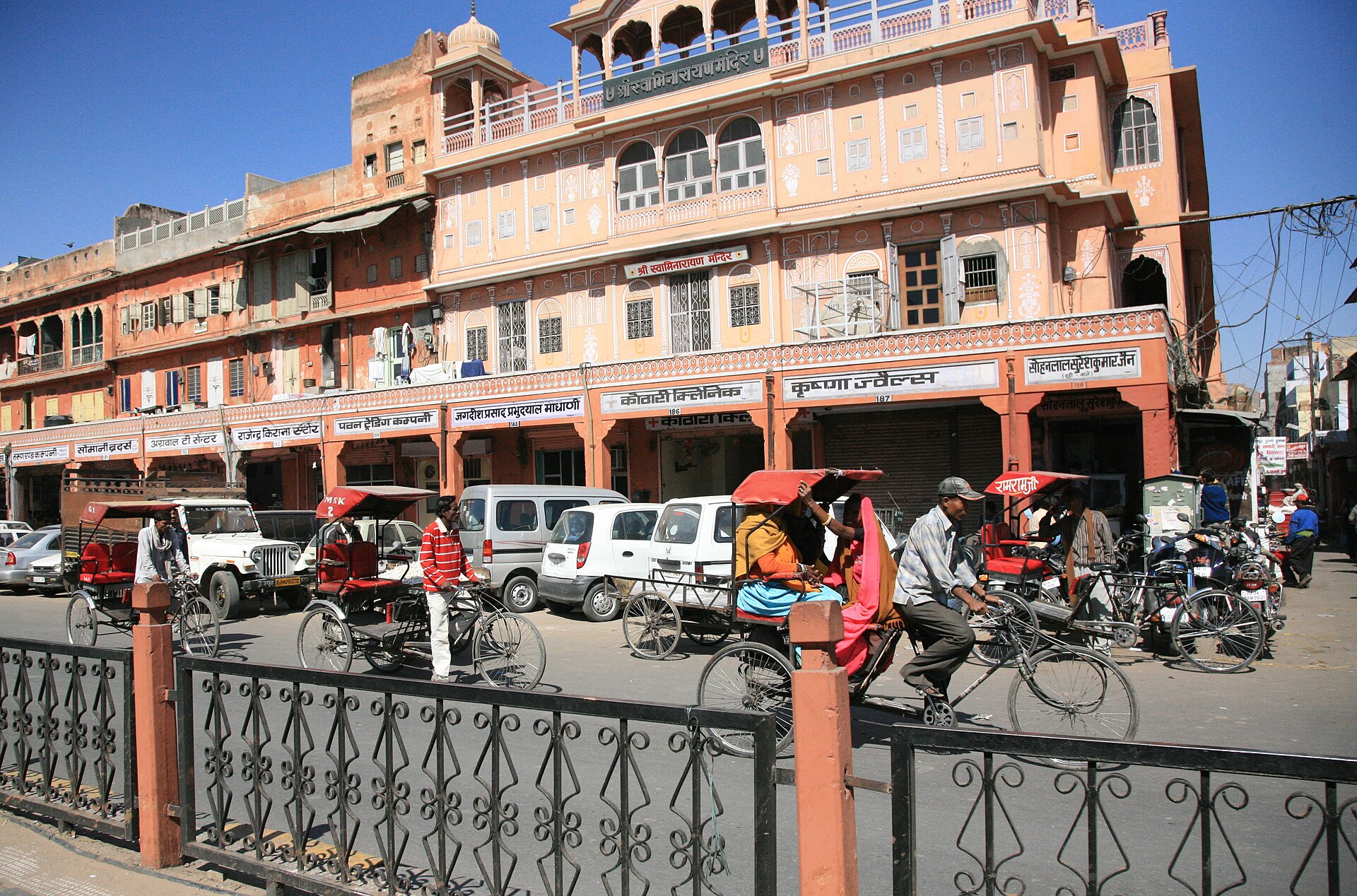
When Sawai Jai Singh II planned Jaipur in 1727, he laid out the city in blocks divided by broad bazaar streets lined with uniform shops under arcades, and invited merchants and craftsmen from across India to settle. Each bazaar had its trade: Johari Bazaar, the jewellers' street, runs south from Badi Chaupar to Sanganeri Gate, and Jaipur grew into one of the world's great centres for cutting coloured gemstones.
Bapu Bazaar, named after Mahatma Gandhi, runs along the southern wall of the old city near Sanganeri Gate and New Gate, and is known for textiles, block prints, leather shoes and handicrafts. The painted façades of both bazaars keep the pink colour that the city has worn since 1876.
Jewellery shops and silver.
Ghewar and mawa kachori at an old sweet house.
Block prints and mojaris.
In a clay cup to finish.
October to March, in the late afternoon and evening, when the shops are busiest and lit up. Many shops in the old city close one day a week — check locally.
In the Pink City: Johari Bazaar starts at Badi Chaupar, by Hawa Mahal; Bapu Bazaar runs inside the southern wall between Sanganeri Gate and New Gate, a short walk from MI Road. Autos drop at the gates.