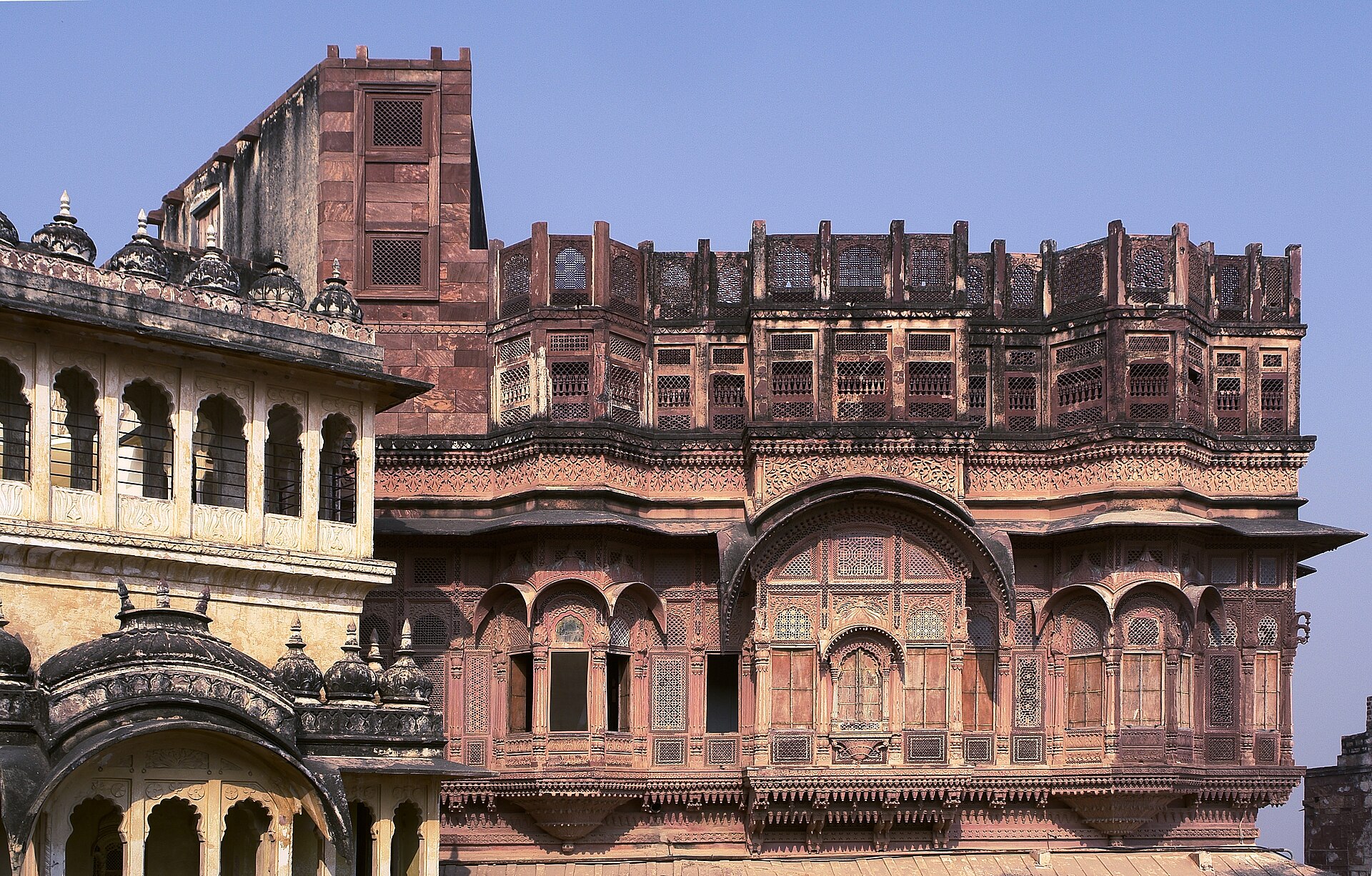
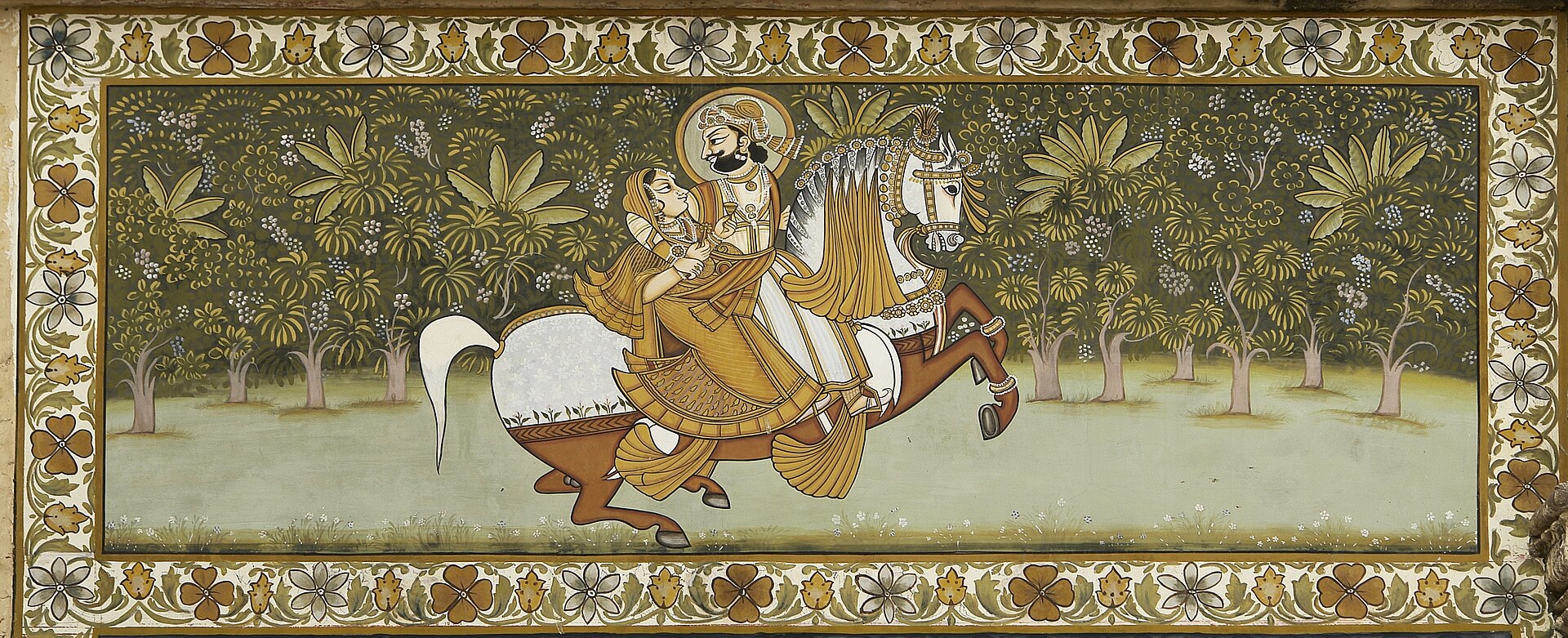
Moti Mahal (Pearl Palace)
Inside the palaces
The hall of public audience, with stained-glass windows and a gilded ceiling.
Open in Google Maps (opens in a new tab)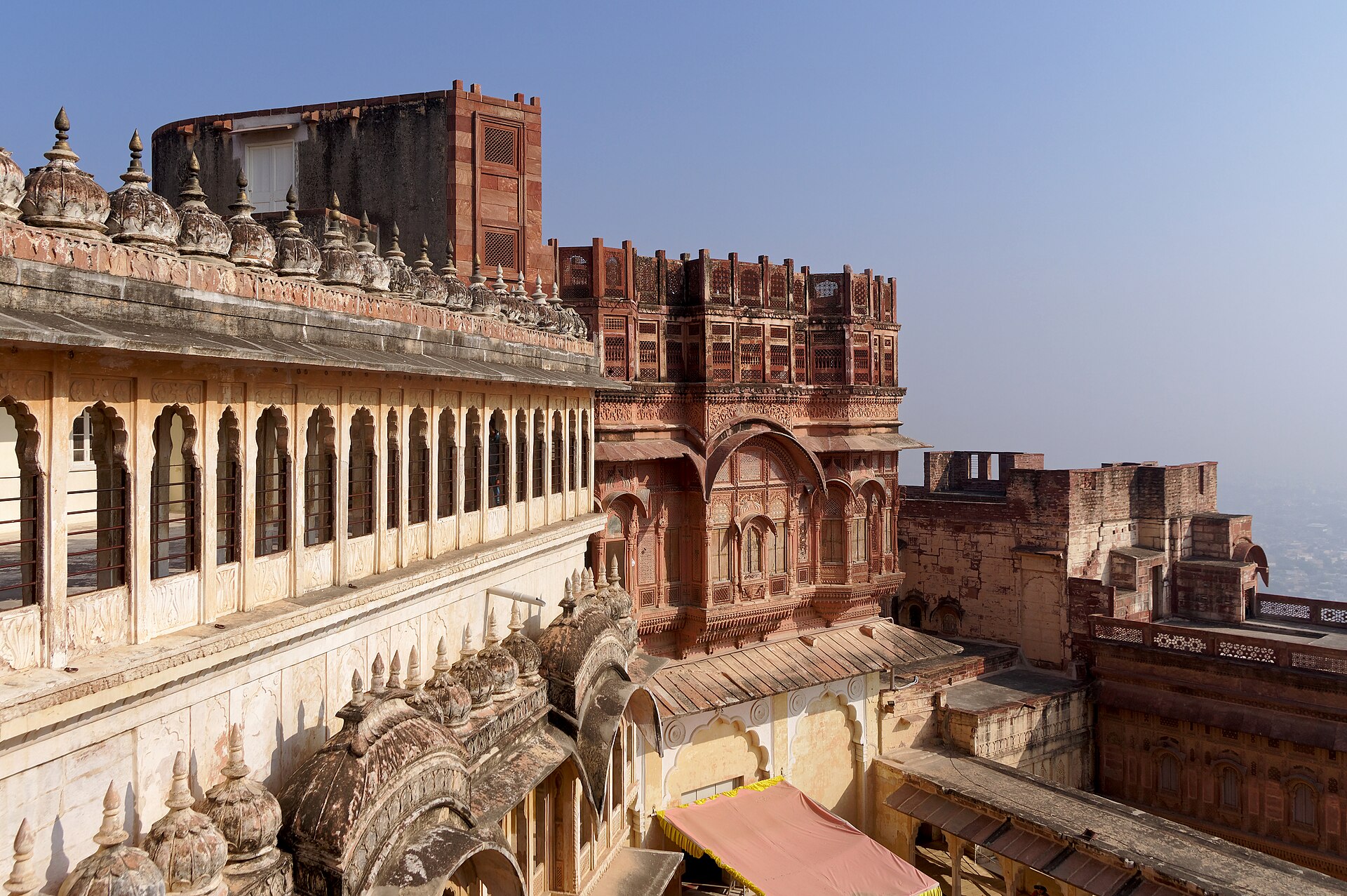
 Jodhpur, India
One of India's largest and best-kept forts, rising sheer from a rocky ridge above the Blue City. Inside are palaces with carved stone screens and one of the finest museums in Rajasthan.
Inside the palaces
The hall of public audience, with stained-glass windows and a gilded ceiling.
Open in Google Maps (opens in a new tab)Inside the palaces
A richly decorated hall of gold leaf and paintings, used for private celebrations.
Open in Google Maps (opens in a new tab)Inside the palaces
A small mirror hall decorated with glass and religious images.
Open in Google Maps (opens in a new tab)Upper walls
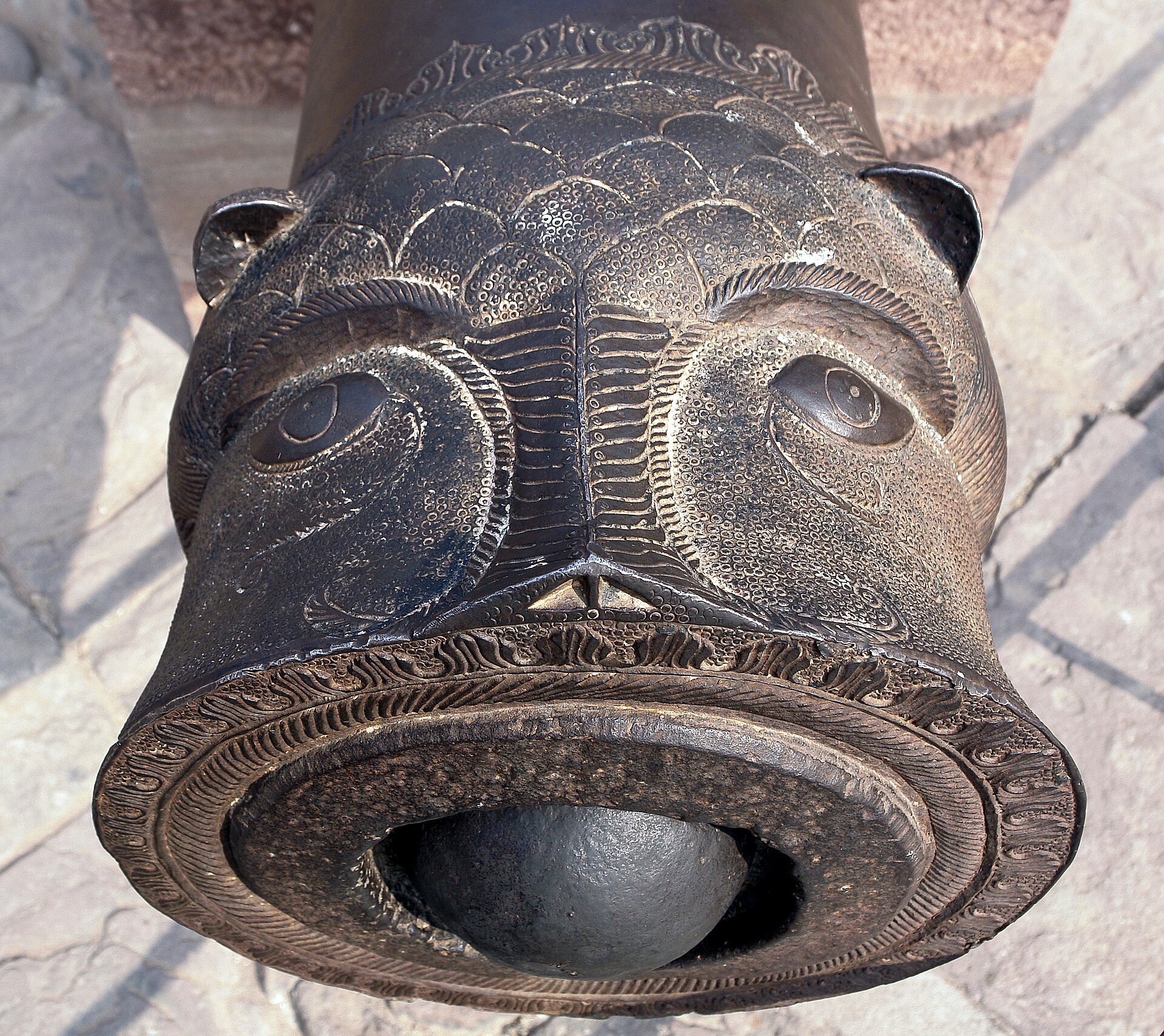
Old cannons and a sweeping view over the blue houses of the old city.
Open in Google Maps (opens in a new tab)Southern end of the fort
Temple of the Rathores’ family goddess, busiest during the Navratri festival.
Open in Google Maps (opens in a new tab)Jodhpur, India
A large, mild green chilli stuffed with spiced potato, dipped in gram-flour batter and deep-fried — the classic Jodhpur street snack, eaten hot with chutney, often with chai in the morning.
Jodhpur, India
Thick, sweet yoghurt drink topped with a layer of cream or butter (makhan), flavoured with saffron and cardamom. Jodhpur is famous for it, especially at the old shops around the Clock Tower.
Navchokiya, Gulab Sagar and the lanes below Mehrangarh
Haveli and guest-house rooftops facing the fort, lit up at night, serving Rajasthani thalis and laal maas. The best place to see Mehrangarh glowing after dark.
Open in Google Maps (opens in a new tab)Ghanta Ghar, old city
The heart of Jodhpur street food: mirchi vada, pyaaz kachori and mawa kachori stalls, sweet shops and long-established lassi shops near the market gates.
Open in Google Maps (opens in a new tab)Jodhpur, India
Guest houses and haveli hotels in the blue lanes around Navchokiya, Gulab Sagar and the Clock Tower — fort views from the rooftop and the bazaars on the doorstep.
Open in Google Maps (opens in a new tab)Jodhpur was the capital of Marwar, ruled by the Rathore Rajputs for five centuries. Its people are known for their hospitality, colourful turbans and the long tradition of Marwari traders who spread across India. Folk music from the Manganiyar and Langa communities is still performed at the fort and at festivals such as the Rajasthan International Folk Festival (RIFF) in autumn. Dress modestly in the old city and temples, and ask before photographing people.
Rao Jodha laid the foundations of Mehrangarh in 1459, on a ridge known as Bhakurcheeria, the "mountain of birds". Later Rathore rulers enlarged it for centuries, adding seven gates and a series of palaces whose sandstone windows and balconies are carved as finely as lace.
The gates tell the fort's story: Jai Pol was built to mark a victory, Fateh Pol to mark another over the Mughals, and Loha Pol carries the small handprints of royal women who committed sati — a painful reminder of the past. The fort is run by the Mehrangarh Museum Trust, set up by the former royal family, whose museum displays palanquins, howdahs, paintings, arms and textiles.
Arrive as the gates open.
Follow the audio guide through the gates and palaces.
Palanquins, howdahs, paintings and arms.
Take the path down through the blue lanes to the Clock Tower.
At opening time, before the heat and the crowds. October to March is the best season; the RIFF folk festival takes place here in October.
The fort is on the hill above the old city, about 5 km by road from the Clock Tower — take a rickshaw or taxi up to the main gate. You can also walk up through the blue lanes from the old city on steep paths and steps.
A lift helps with the first climb inside the gates; the rest of the route goes through courtyards and up stairs. Allow two to three hours. The audio guide included with many tickets is excellent.