
Car Rental Insurance Explained: CDW, Excess, Liability and What to Decline
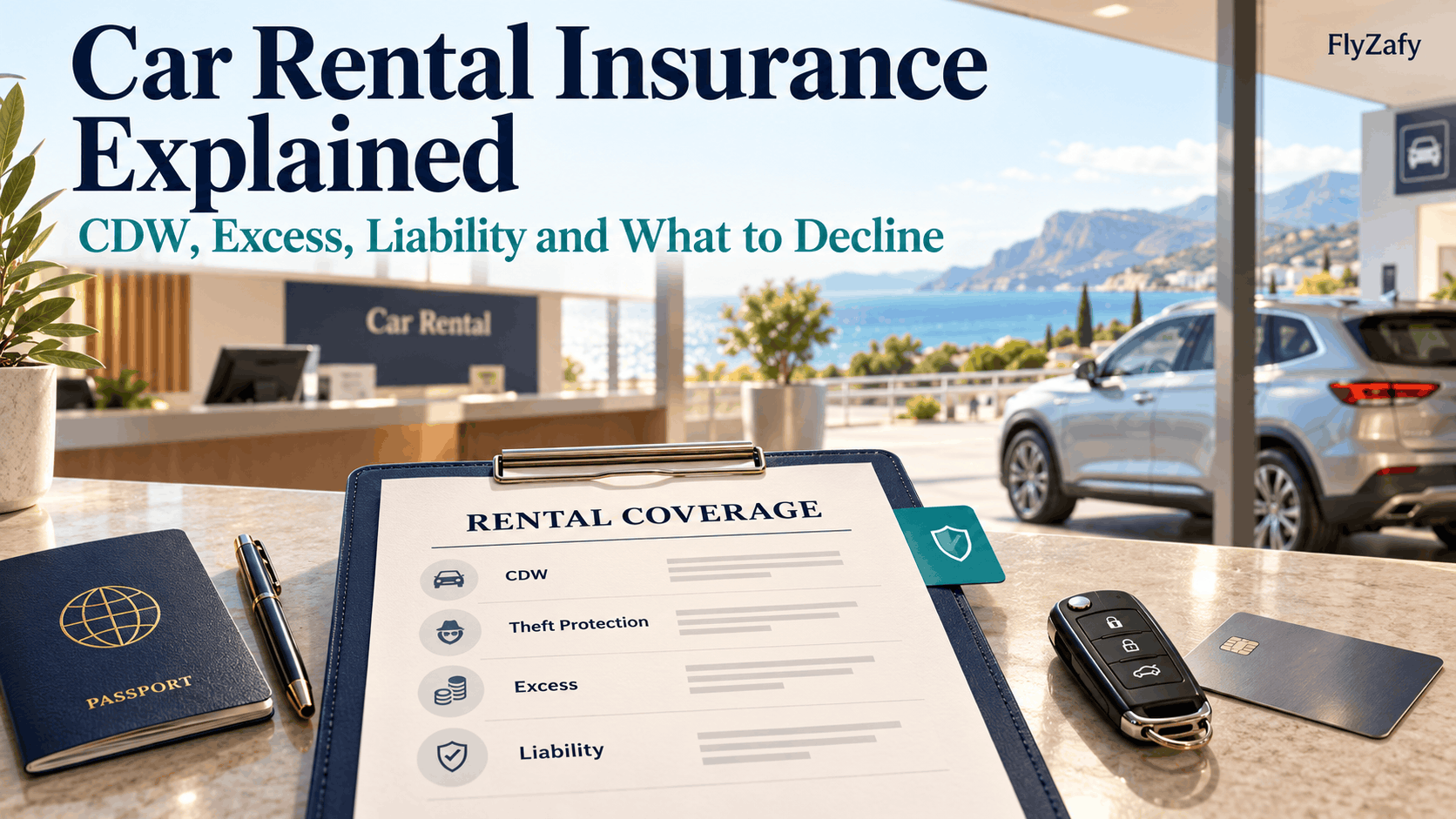
Car rental insurance is confusing because the same cover goes by different names in different countries, and because the desk agent is often selling extras at the end of a long journey. With car rental insurance explained in plain terms, it becomes much easier to decide what you need.
The key idea is simple. Most rental prices include some damage and theft cover, but with an excess, also called a deductible. That is the amount you pay if something happens. Most extras on offer exist to reduce that amount.
What follows explains each term, what your own card might cover, and how to protect yourself if the company says you damaged the car.
1. Collision Damage Waiver (CDW) and Loss Damage Waiver (LDW)
A collision damage waiver is not technically insurance. It is an agreement that the rental company will not charge you the full cost of damage to the car, only up to the excess.
- CDW usually covers damage to the bodywork of the rental car.
- LDW is a broader term, often used in the US, that combines damage and theft.
- Common exclusions include tyres, wheels, windscreen, glass, roof, underside and interior.
- Cover is usually void if you break the contract, for example by driving off-road or letting an unnamed person drive.
In many countries outside the US, basic CDW is included in the rental price. In the US it is often sold as an optional extra.
2. Theft Protection
Theft protection limits what you pay if the car is stolen. Like CDW, it usually comes with an excess.
- It may not cover personal belongings left in the car.
- Losing the keys may not be covered, and replacement keys can be expensive.
- Leaving keys in the car or the car unlocked usually voids the cover.
3. The Excess or Deductible
The excess is the most important number in your rental agreement. It is the maximum you pay for damage or theft under the included cover, and it is often linked to the deposit held on your card.
- Find the excess amount in your rental terms before you travel.
- The excess can differ for damage and theft.
- Larger and premium cars usually have higher excesses.
- Some damage, such as glass or tyres, may be charged in full regardless of the excess.
4. Excess Reduction Cover
At the desk you may be offered a product that reduces the excess, sometimes to zero. Names vary, such as super CDW or full protection.
- It can make sense if the excess is high and you want peace of mind.
- It may also reduce the deposit held on your card.
- Check what it still excludes, such as tyres, glass or the undercarriage.
- Compare its daily cost over your whole rental before accepting.
Some travellers buy a separate excess cover policy before travelling instead. If you do, remember that you usually pay the rental company first and then claim the money back from that policy.
5. Third-Party Liability
Third-party liability covers damage or injury you cause to other people and their property. It is often the most important cover of all.
- In many countries a minimum level of liability cover is legally required and included in the rental price.
- The included minimum can be low in some places, including some US states.
- In the US, rental companies offer supplemental liability cover to raise the limit.
- Your personal car insurance at home may or may not extend to rentals abroad; check with your insurer.
6. Personal Accident and Personal Effects Cover
Personal accident cover pays benefits if you or your passengers are injured. Personal effects cover protects belongings in the car.
- These often overlap with travel insurance or health cover you already have.
- Check your existing policies before paying for them again.
7. What Credit Card Coverage May or May Not Include
Some credit cards include rental car cover when you pay for the rental with that card. It can be valuable, but the details vary a lot.
- It may be primary or secondary. Secondary cover only pays after other insurance.
- It usually covers damage to the rental car, not liability to others.
- Some countries, vehicle types and longer rentals are excluded.
- You may need to decline the rental company's CDW for it to apply.
- You usually need to pay with that card and be the main driver.
Call your card issuer before the trip and ask for the terms in writing. Do not rely on what you think the card covers.
8. What to Keep and What to Decline
There is no single right answer, but this approach works for most travellers.
- Keep the third-party liability that is legally required, and consider raising it where the minimum is low.
- Accept or rely on damage and theft cover from a source you have confirmed.
- Decline duplicated cover you already have through travel insurance or your card.
- Consider excess reduction if the excess is more than you could comfortably pay.
- Never sign for extras you do not understand. Ask for the cost per day and the total.
9. Handling Damage Disputes
Disputes usually come down to evidence.
- Photograph and video the car at pick-up and at return, including the fuel gauge and mileage.
- Make sure all existing damage is written on the contract before you drive away.
- Ask for a signed return receipt confirming the car was checked.
- If you receive a damage charge later, ask for photos, the repair estimate and the invoice.
- If you paid by card, your card issuer may have a dispute process.
Common Car Rental Insurance Mistakes
- Assuming the rental price includes full cover with no excess.
- Buying the same cover twice through the desk, travel insurance and your card.
- Relying on card cover in a country your card excludes.
- Not checking glass, tyre and undercarriage exclusions.
- Driving away without documenting existing damage.
- Letting an unnamed person drive, which can void all cover.
Frequently Asked Questions
Is CDW the same as insurance?
Not technically. CDW is a waiver where the rental company agrees not to charge you beyond the excess for damage. It works like insurance for the car itself but does not cover injury or damage to others.
Do I need to buy rental car insurance if my credit card covers it?
Possibly not for damage to the car, but card cover rarely includes liability to others and often has exclusions. Confirm the terms with your card issuer before you decide.
What is a rental car excess?
It is the maximum amount you pay if the car is damaged or stolen under the included cover. It is often linked to the deposit held on your card.
Is third-party liability included in car rentals?
In many countries a legal minimum is included in the price. In some places that minimum is low, so extra liability cover may be worth considering.
What should I do if the rental company charges me for damage later?
Ask for evidence: photos, the damage report and the repair invoice. Compare it with your own pick-up and return photos, and contact your card issuer if you need to dispute the charge.
Rent a Car with FlyZafy
On FlyZafy you can rent a car by searching your pick-up place and dates. Read the rental conditions for your chosen car before you book. At checkout the name on the card must be the main driver's, and your confirmation PDF is emailed to you.
Before you collect the car, our guide on what card you need to rent a car explains how deposits and cards work at the desk.
Official Resources
- US Department of State, travel information
- Your credit card issuer's benefits guide for rental car cover
- Your personal car insurer, for whether your policy extends to rentals abroad
- The consumer protection authority of your destination country
Disclaimer
This article is general information, not legal, insurance or financial advice. Rental cover, exclusions and legal minimums vary by country, rental company and card issuer, and they change. Always read your rental agreement and confirm cover with the rental company, your card issuer and your insurer before you travel.
- #car rental insurance explained
- #what is CDW
- #rental car excess
- #do I need rental car insurance
- #credit card rental car coverage
- #collision damage waiver
- #rental car liability insurance
- #excess reduction