
How to choose a good seat on a long flight
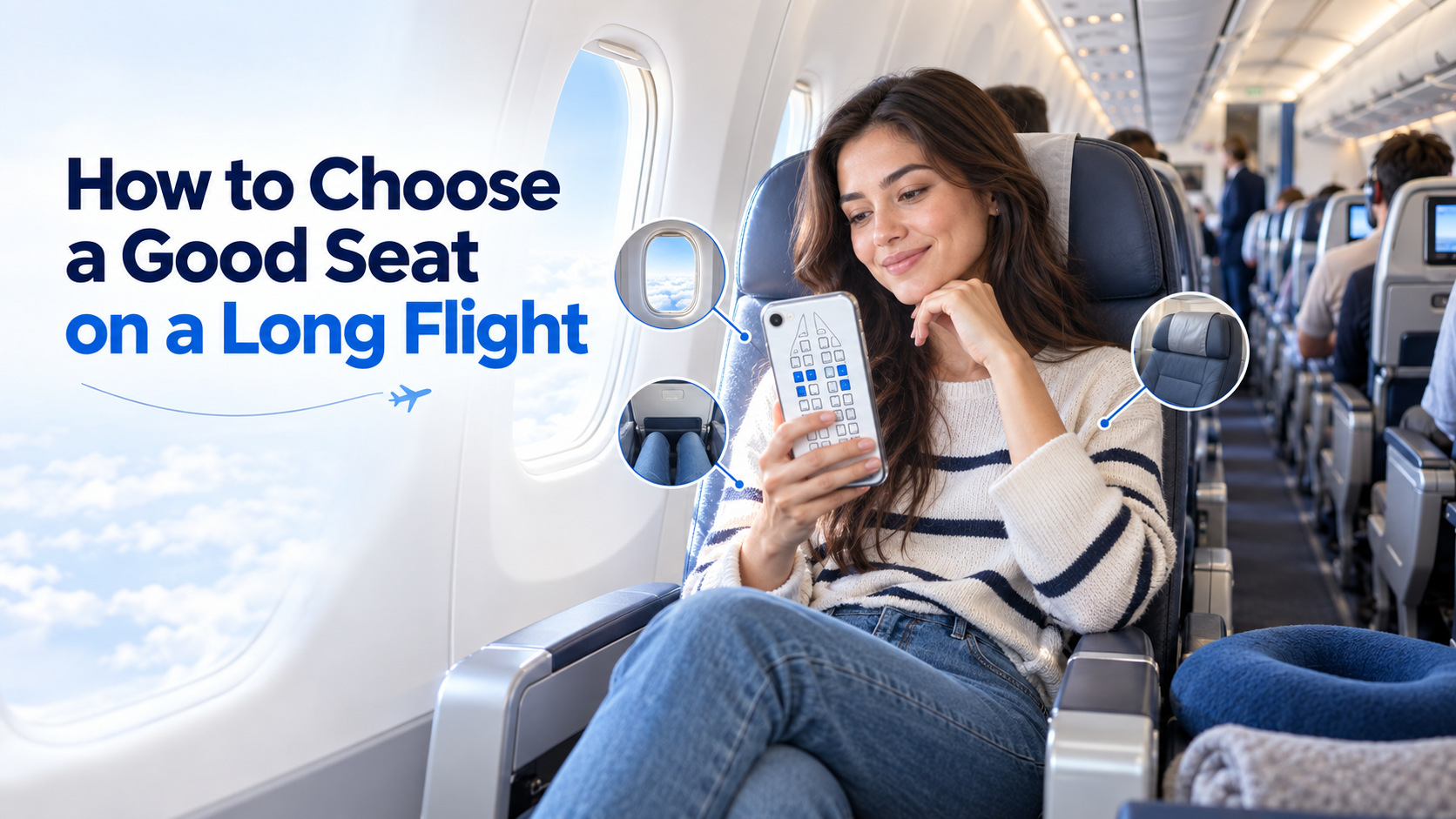
On a two-hour hop your seat barely matters. On a ten-hour flight it is the difference between arriving rested and arriving wrecked. The good news is that this is one of the few parts of a flight you can control.
Start with how you actually travel
There is no objectively best seat, only the seat that matches how you fly.
Choose a window if you want to sleep. You get something to lean against, control of the blind, and nobody climbing over you.
Choose an aisle if you drink water, move around or need the bathroom without negotiation. On a long flight, being able to stand up whenever you like is worth a great deal.
Choose a middle seat only to stay with your travelling companions — which is a perfectly good reason.
If you are travelling as a pair on a three-seat row, booking the window and the aisle is a well-known tactic: middle seats are assigned last, and you may end up with the row to yourselves.
Front or back
Further forward means you disembark sooner, which matters when you have a connection, and it is usually a little quieter.
Further back sometimes has empty seats on lighter flights, giving you room to spread out. It is also closer to the galley, which is convenient if you want to stand, and noisier if you want to sleep.
Over the wing is generally the most stable part of the aircraft, which is worth knowing if turbulence bothers you.
Rows that look better than they are
Two categories are worth understanding before you pay extra.
Exit rows usually have more legroom, and that is real. But some have seats that do not recline, armrests that do not lift, and cold air near the door. You also have to be willing and able to help in an emergency — airlines apply rules about who may sit there.
Bulkhead rows have no seat in front, so nobody reclines into you and legroom is often generous. In exchange, there is no under-seat storage for the whole flight, and these rows are frequently allocated to travellers with infants.
Seats worth avoiding on a long flight
- The last row, which often does not recline and sits beside the bathrooms
- Directly beside the toilets, for the traffic and the queue
- Directly beside a galley, for noise and light through the night
- Any seat with a misaligned window, if you were choosing a window for the view
The practical part
- Choose your seat as early as you can. The good ones go first, and on many fares you can select at booking.
- Check whether selection is included. On basic fares it is often paid, and being assigned a seat at check-in means taking what is left.
- Look at the specific aircraft, not just the airline. The same route can be flown by different aircraft with different layouts.
- Re-check after an aircraft change. If the airline swaps the aircraft, seat assignments are reshuffled and your careful choice may have moved.
One last thing
If comfort matters on a particular trip, compare the cost of a better seat against the cost of a higher fare class. Sometimes paying for extra legroom on a cheaper fare gets you more comfort for less money than the next cabin up. Sometimes it does not — but it is worth the comparison.
Ready to plan the trip? Search flights and pick your seat early.
- #seats
- #long-haul
- #comfort
- #travel tips