Banke Bihari Temple
Old town
Vrindavan's most popular temple, where a curtain is drawn across the image of Krishna every few minutes so devotees catch only glimpses. Expect huge crowds.
Open in Google Maps (opens in a new tab)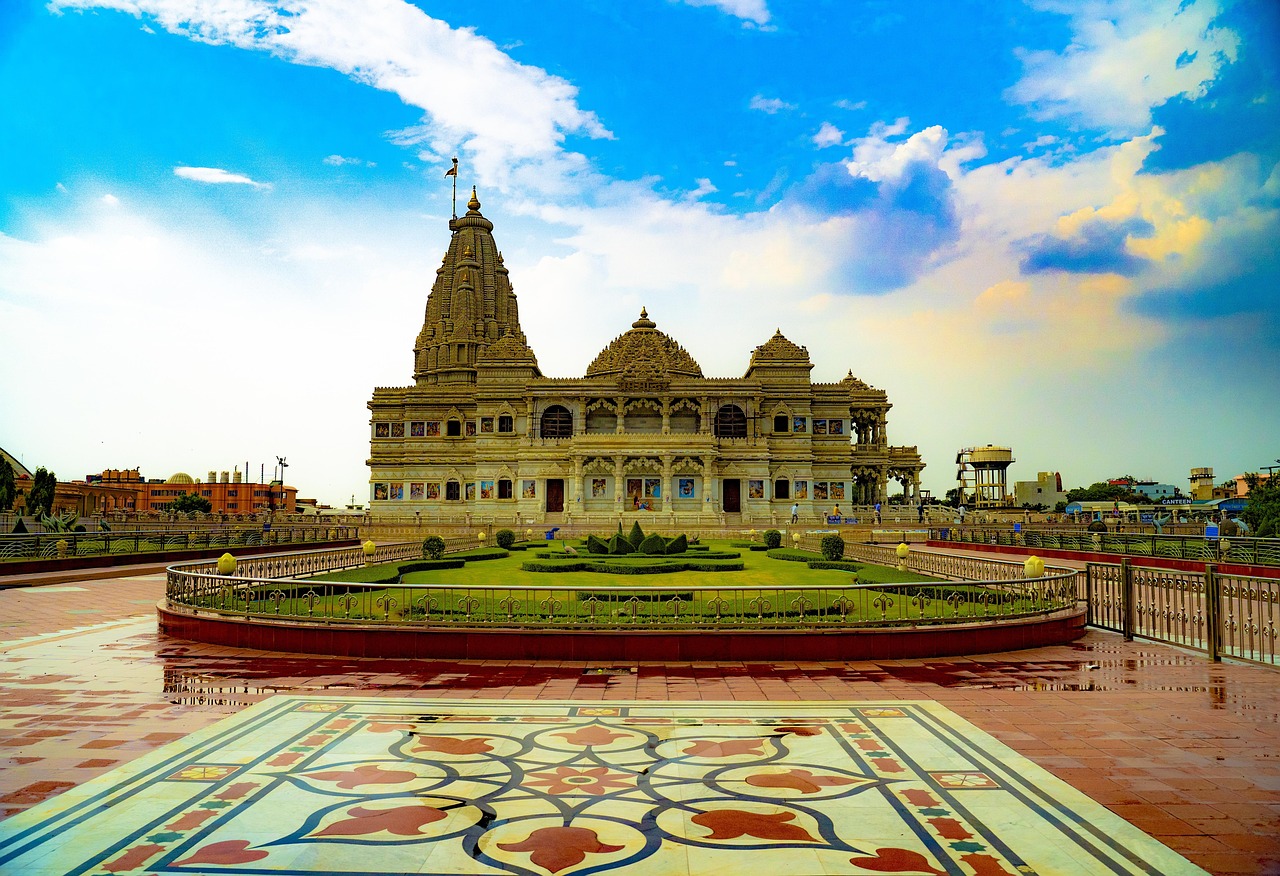
 Vrindavan, India
The town of Krishna's youth on the Yamuna, with thousands of temples: the ever-crowded Banke Bihari, the old red-sandstone Govind Dev temple, ISKCON's Krishna Balaram Mandir, the illuminated Prem Mandir and the sacred groves of Nidhivan and Seva Kunj.
Old town
Vrindavan's most popular temple, where a curtain is drawn across the image of Krishna every few minutes so devotees catch only glimpses. Expect huge crowds.
Open in Google Maps (opens in a new tab)Raman Reti
The Hare Krishna movement's temple of 1975, with constant kirtan, a guesthouse and a vegetarian restaurant; welcoming to visitors.
Open in Google Maps (opens in a new tab)On the Chhatikara road
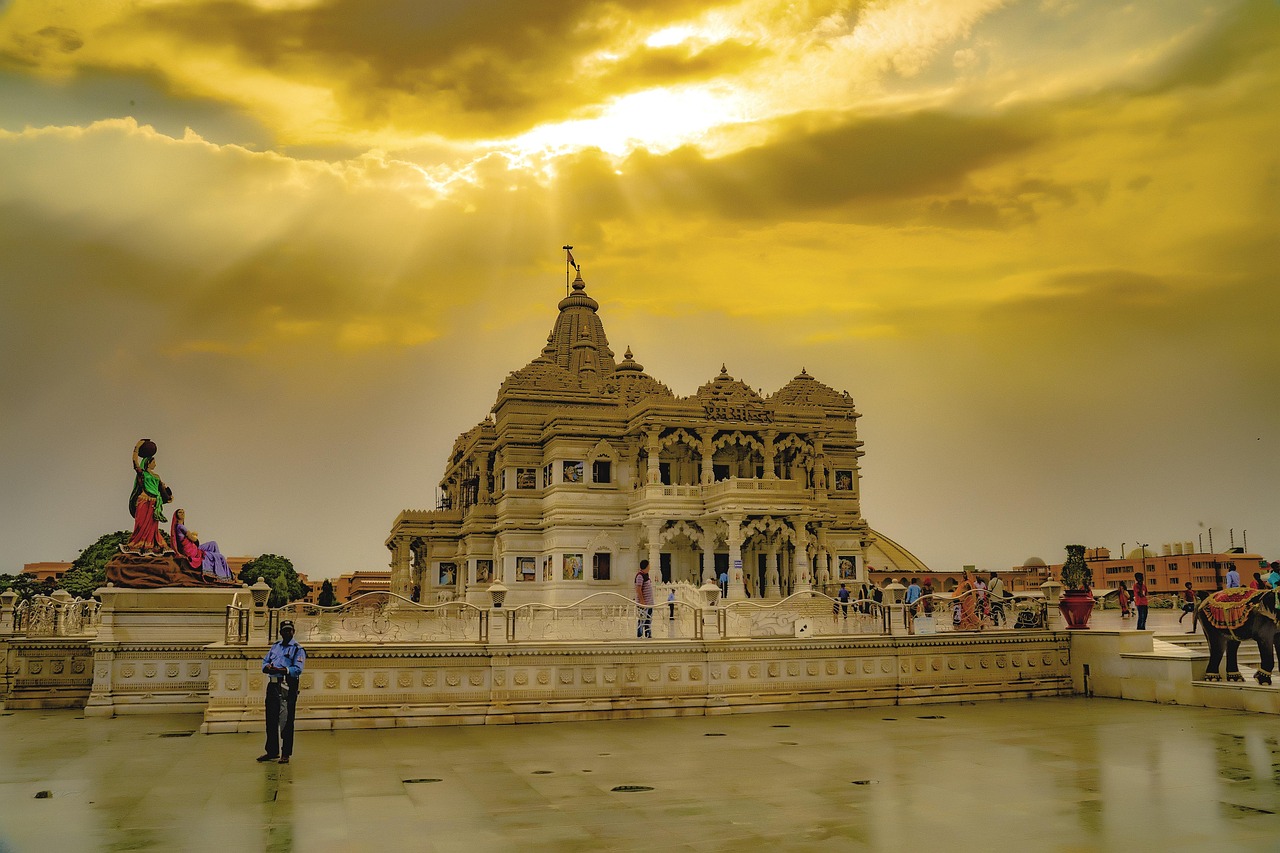
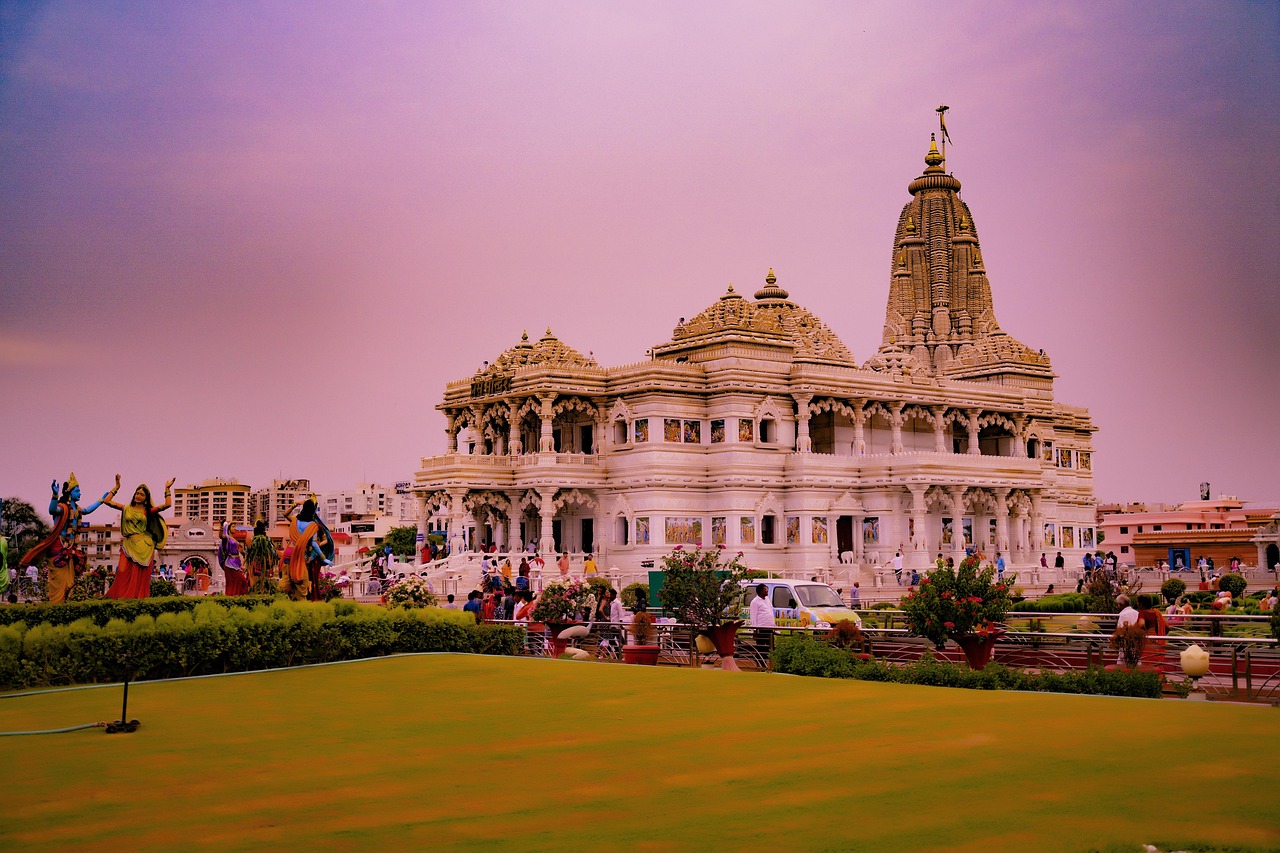
A large white marble temple with carved scenes of Krishna's life, lit in changing colours in the evening and set in gardens with fountain shows.
Open in Google Maps (opens in a new tab)Old town
The great red-sandstone temple of 1590 built by Raja Man Singh, with a vaulted hall; its upper storeys were lost centuries ago.
Open in Google Maps (opens in a new tab)Old town
One of the main temples of the Goswami tradition, founded in the 16th century and known for its devotion and food offerings.
Open in Google Maps (opens in a new tab)Old town
Walled groves of twisted tulsi trees where, in tradition, Krishna and Radha dance at night; they close after the evening aarti.
Open in Google Maps (opens in a new tab)On the Yamuna
The main ghat with old sandstone pavilions, where the Yamuna aarti is held at sunset and boats take pilgrims on the river.
Open in Google Maps (opens in a new tab)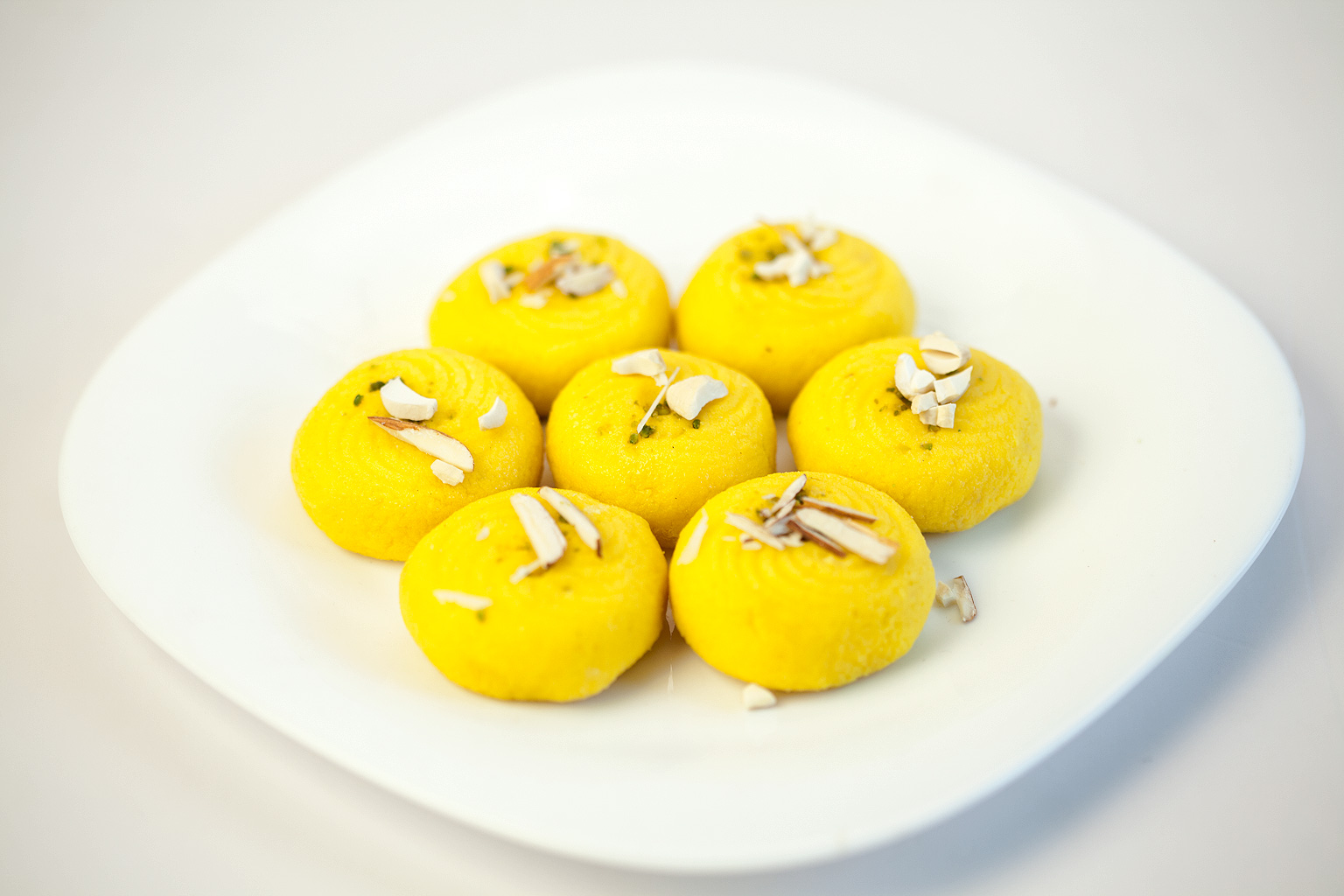
Vrindavan, India
Brown, grainy sweets of khoya slow-roasted with sugar and cardamom until caramelised. Mathura and Vrindavan sell them by the box in every bazaar; they are also offered at temples as prasad.
Vrindavan, India
Fresh white butter with rock-sugar crystals — Krishna's favourite food in the stories of his childhood, and so the classic offering in the temples of Mathura and Vrindavan. Sold in small cups near the temples.
Vrindavan, India
Puffed fried breads stuffed with spiced lentils, eaten with potato curry and followed by jalebi — the breakfast of Braj, sold from shops around the Mathura and Vrindavan temples from early morning.
Vrindavan, India
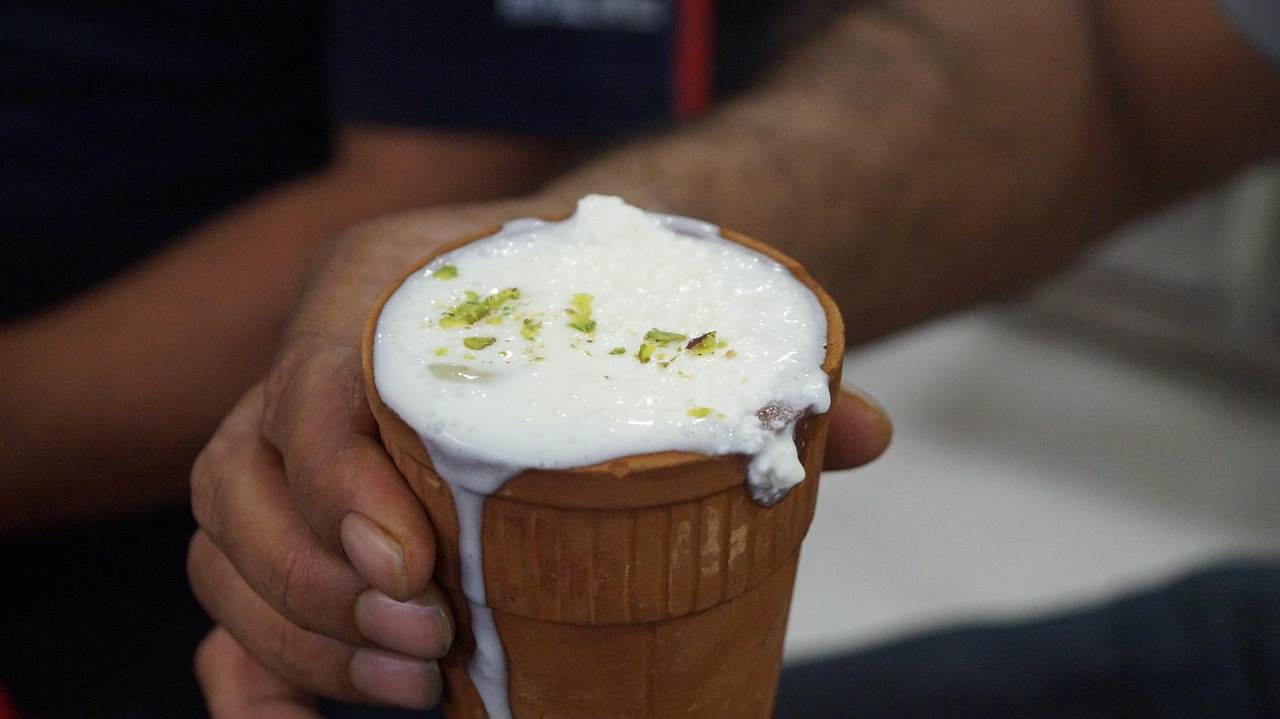
Thick churned yoghurt drink, sweet or salted, often topped with a layer of cream (malai) and served in a clay cup. Punjab and the Braj country around Mathura are particularly proud of theirs.
Vrindavan, India
Pure vegetarian food without onion and garlic, cooked for pilgrims: dal, seasonal vegetables, rice, roti, curd and a sweet. The food of ashrams, dharamshalas and bhojanalayas in the temple towns.
Around Banke Bihari and Loi Bazaar
Pedas, kachori, lassi and simple pure-vegetarian bhojanalayas.
Open in Google Maps (opens in a new tab)Raman Reti
Vegetarian restaurants and cafés near the ISKCON temple, popular with international visitors.
Open in Google Maps (opens in a new tab)Vrindavan, India
Guesthouses, the ISKCON guesthouse and mid-range hotels in a quieter, greener part of town.
Open in Google Maps (opens in a new tab)Vrindavan, India
Larger hotels near Prem Mandir and the highway.
Open in Google Maps (opens in a new tab)Vrindavan, India
Simple rooms for pilgrims with set rules; book ahead for festivals.
Open in Google Maps (opens in a new tab)Vrindavan is a town of devotion to Radha and Krishna, where "Radhe Radhe" is the greeting. Kirtan and bhajans ring out day and night, and the temples celebrate a calendar of festivals — the swing festivals of the monsoon, the flower Holi of Banke Bihari, the lamp-filled Kartik month and Janmashtami.
Many temples follow the devotional traditions of the Gaudiya (Chaitanya), Vallabha, Nimbarka and other schools. Pilgrims walk the parikrama and bathe at Keshi Ghat; dress simply and modestly.
In tradition, Vrindavan — "forest of tulsi" — is where Krishna spent his youth as a cowherd, playing the flute and dancing the raas with Radha and the gopis. Its sacred groves and ghats along the Yamuna were rediscovered as places of pilgrimage in the early 16th century by followers of the Bengali saint Chaitanya Mahaprabhu, whose disciples, the Goswamis, founded the great temples.
In 1590 the Rajput general Raja Man Singh of Amber built the Govind Dev Temple, one of the grandest temples of its age in North India. Vrindavan grew into a town of temples, ashrams and monasteries of many traditions. In the 20th century ISKCON (the Hare Krishna movement) built its temple here, bringing devotees from around the world.
Banke Bihari early, then Radha Raman and Govind Dev.
The groves and the riverside ghats.
Kirtan and lunch at Raman Reti.
See the temple lit up after dark.
October to March is most pleasant. Holi (especially the flower Holi), Janmashtami and Kartik month (October–November) are the high points — and the busiest. Summers are very hot.
By air: the nearest major airport is Delhi (DEL), about 170 km away via the Yamuna Expressway.
By train: the main railhead is Mathura Junction, about 12 km away, with frequent trains from Delhi and Agra; a short local line also runs to Vrindavan station.
By road: Vrindavan is just off the Yamuna Expressway and the old Delhi–Agra highway; e-rickshaws, autos and taxis run from Mathura. Check current schedules before you travel.