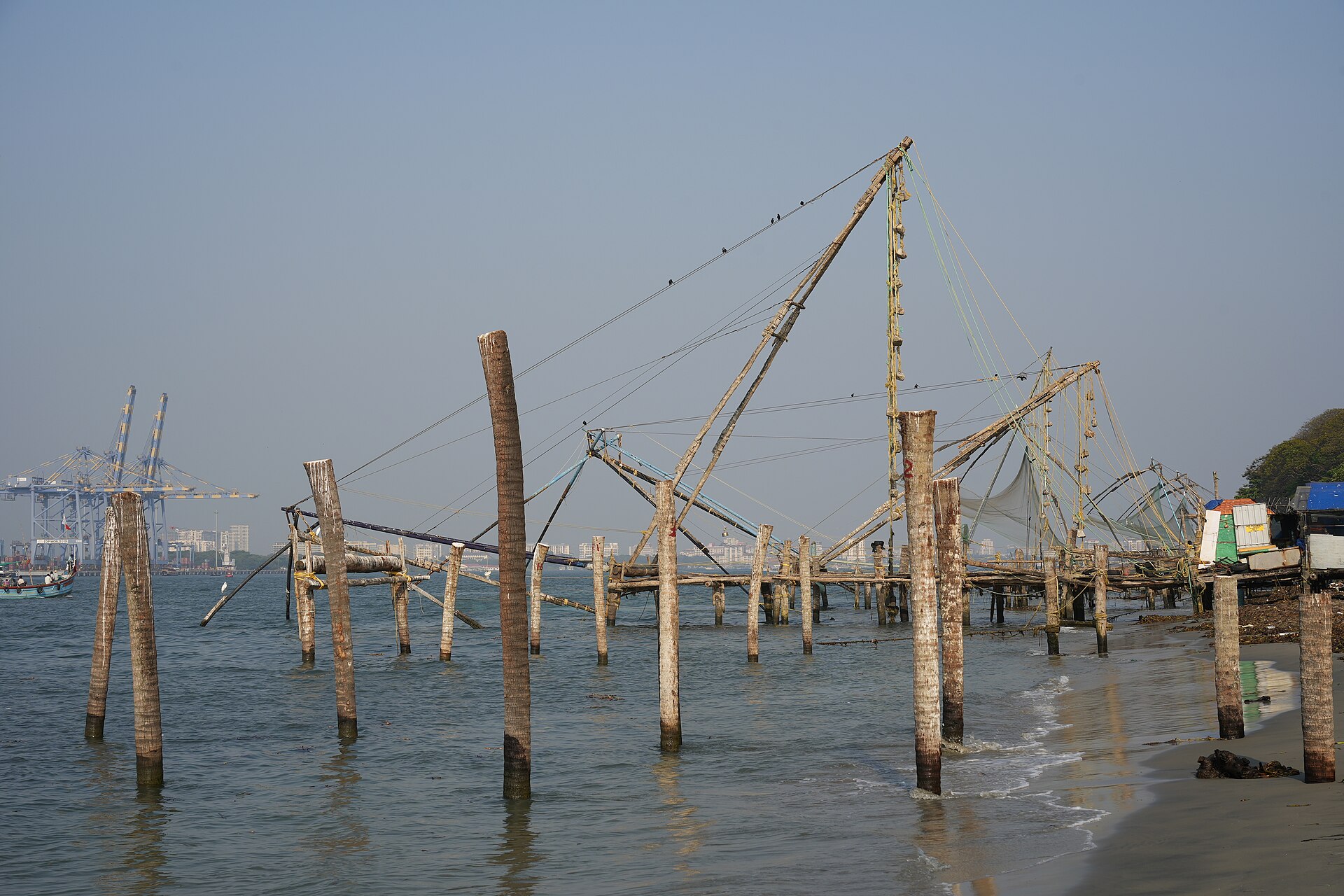
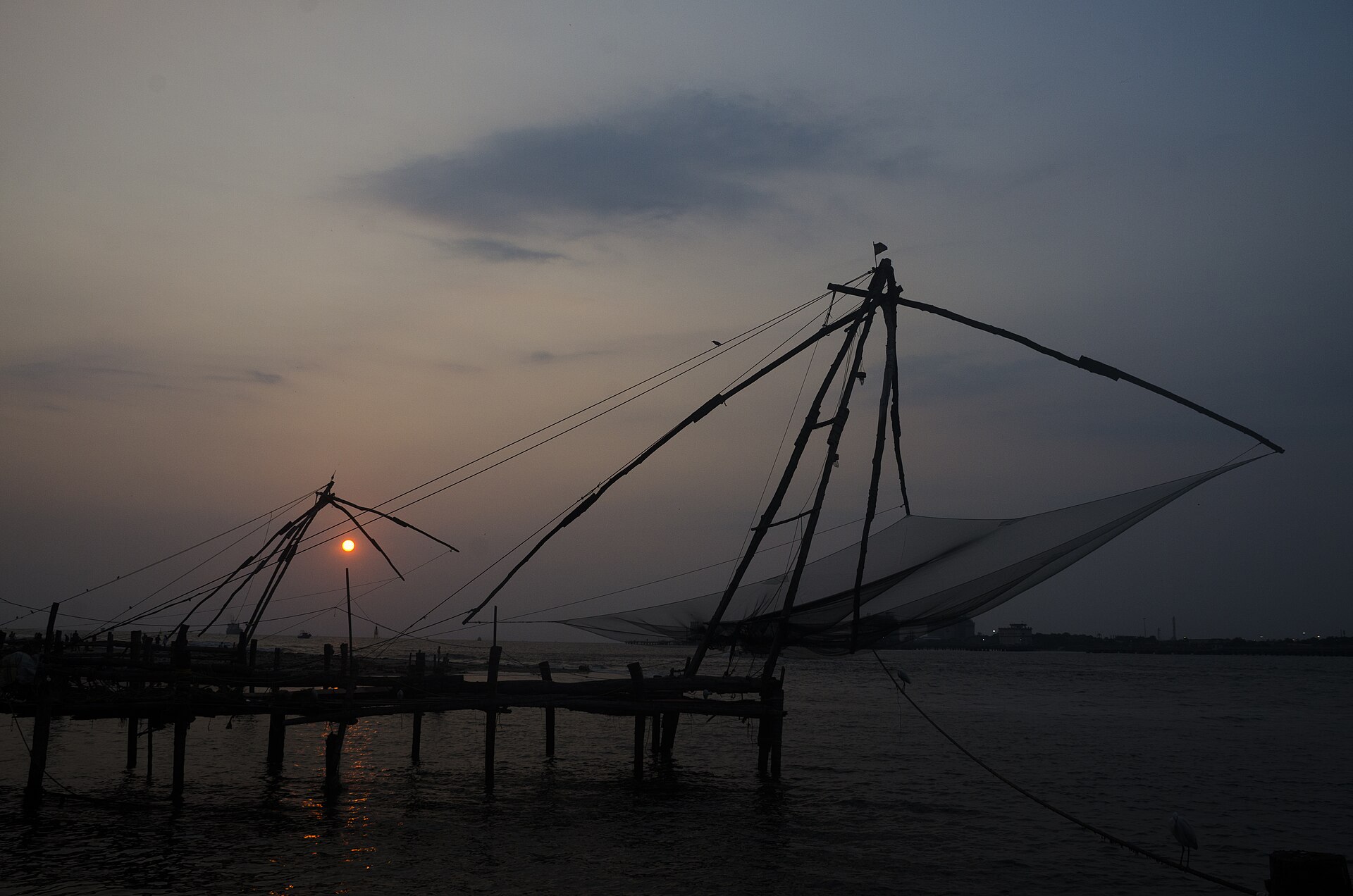
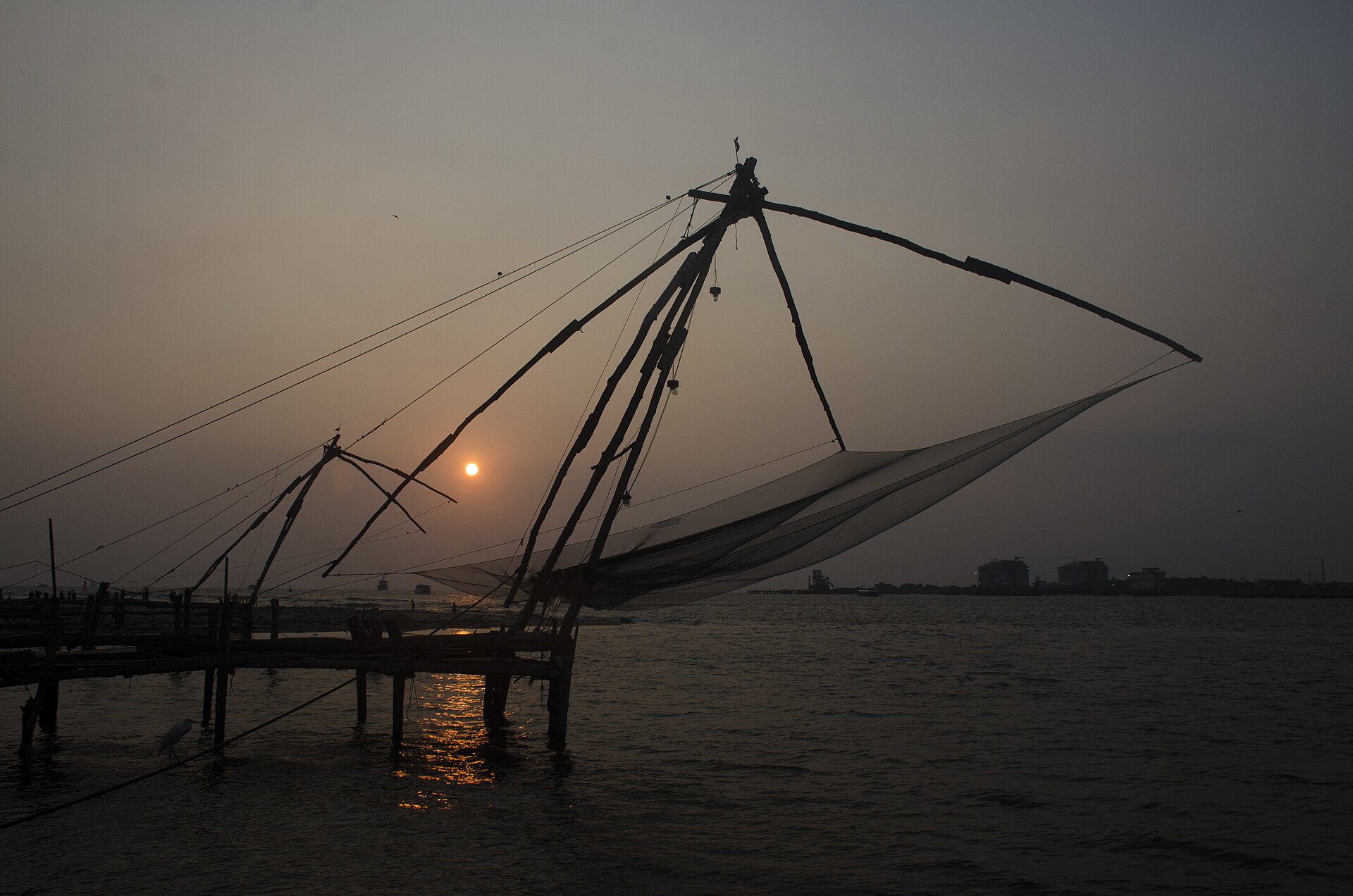
Chinese fishing nets
Vasco da Gama Square, the shore
The giant nets on wooden frames, best seen at sunrise and sunset.
Open in Google Maps (opens in a new tab)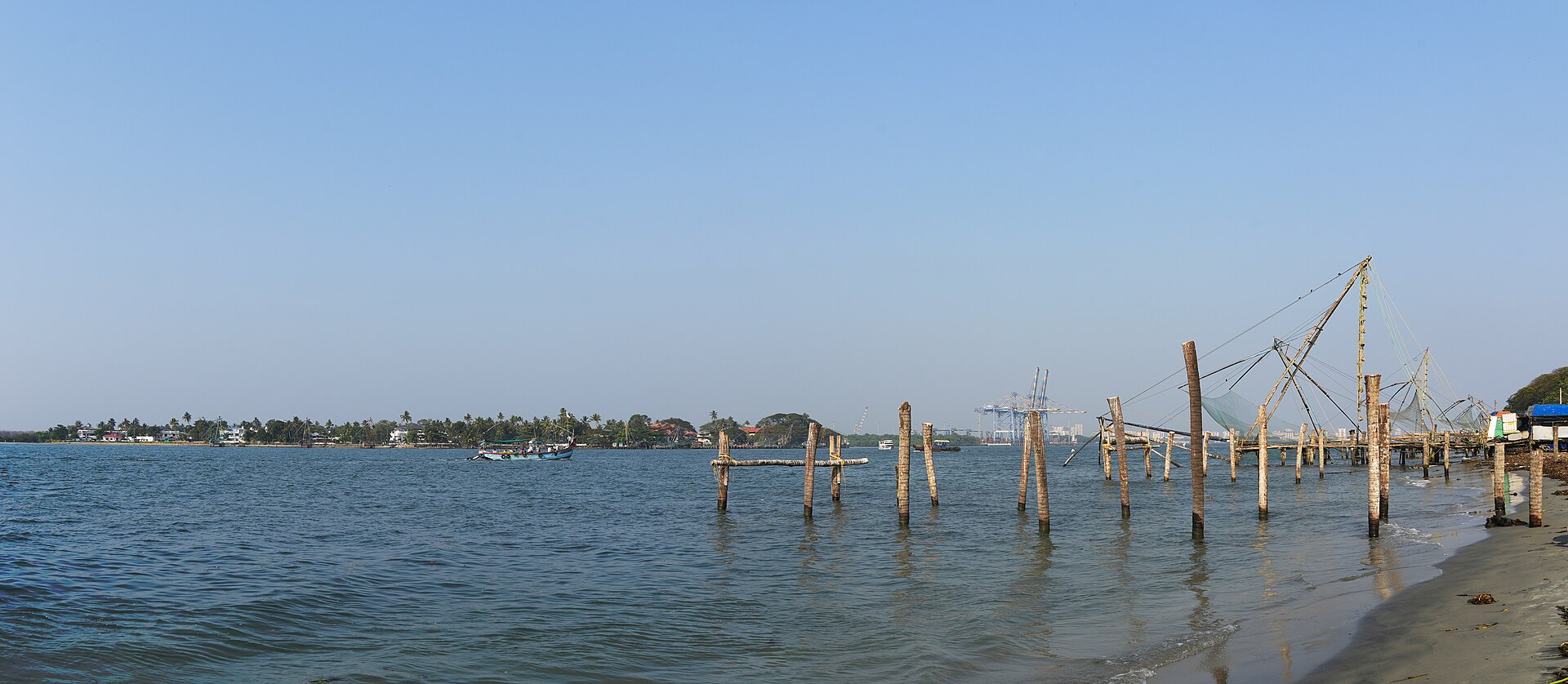
 Kochi, India
The old colonial quarter at the harbour mouth, where huge cantilevered fishing nets are lowered into the sea and tree-shaded streets are lined with Portuguese, Dutch and British buildings.
Vasco da Gama Square, the shore
The giant nets on wooden frames, best seen at sunrise and sunset.
Open in Google Maps (opens in a new tab)Fort Kochi
Old streets of colonial houses, cafés and shops.
Open in Google Maps (opens in a new tab)Calvetty Road
An old trading company’s waterfront compound, a main venue of the Biennale.
Open in Google Maps (opens in a new tab)Centre of Fort Kochi
The old colonial parade ground, surrounded by historic buildings.
Open in Google Maps (opens in a new tab)Near the beach
Tombstones from the 18th century, among the oldest European graves in India.
Open in Google Maps (opens in a new tab)Fort Kochi
The white basilica with its painted ceilings.
Open in Google Maps (opens in a new tab)Kochi, India
A gentle, fragrant fish curry of Kochi’s Syrian Christian kitchen: fish cooked in coconut milk with green chilli, ginger, curry leaves and a touch of turmeric. Mild and creamy, it is usually eaten with appam.
Kochi, India
Pearl spot, the prized fish of the Kerala backwaters, marinated in a spicy masala, wrapped in banana leaf and pan-roasted. A must on a houseboat trip or at a lakeside restaurant around Alleppey.
Kochi, India
Strong, sweet milky tea, often "pulled" between two cups to cool and froth it, from tea shops everywhere; and in the hills around Munnar, tea fresh from the estates. Filter coffee is the South Indian alternative.
Around Princess Street, Burgher Street and the beach
Cafés in colonial houses such as the long-running Kashi Art Cafe, seafood restaurants by the fishing nets — where some will cook fish you buy from the fishermen — and Kerala home-style restaurants.
Open in Google Maps (opens in a new tab)Synagogue Lane and the spice market streets
Small cafés among the antique and spice shops, good for coffee, juice and a light lunch during a walk through the old town.
Open in Google Maps (opens in a new tab)Kochi, India
Heritage hotels and homestays in old Portuguese, Dutch and British buildings, within walking distance of the fishing nets, churches and cafés. The most atmospheric base.
Open in Google Maps (opens in a new tab)Kochi, India
City and business hotels near MG Road, the metro and the railway stations — practical for trains, shopping and onward travel, with ferries across to Fort Kochi.
Open in Google Maps (opens in a new tab)Fort Kochi is a mix of fishermen’s life, old Anglo-Indian and Latin Catholic families, artists and visitors. During the Kochi-Muziris Biennale, warehouses and old bungalows become art venues. New Year is celebrated with the burning of a giant effigy, the Pappanji, at the Cochin Carnival.
Fort Kochi takes its name from Fort Manuel, the fort the Portuguese built here in 1503. Little remains of the fort itself — the Dutch and then the British pulled down much of it — but the town around it became a European enclave of churches, warehouses, bungalows and offices.
The Chinese fishing nets (cheena vala) on the shore are said to have been introduced by Chinese traders or explorers centuries ago, though the details are uncertain. Each net hangs from a wooden frame balanced by heavy stones on ropes, and a team of fishermen lowers and raises it by hand. They have become the symbol of the city.
Watch the nets being hauled.
Where Vasco da Gama was first buried.
The painted interior.
Breakfast in a colonial house café.
October to March. Come at sunrise or sunset for the nets against the sky; early morning is when the fishermen are busiest.