Mahabalipuram (Mamallapuram)

Mahabalipuram (Mamallapuram), India

Mahabalipuram (Mamallapuram)

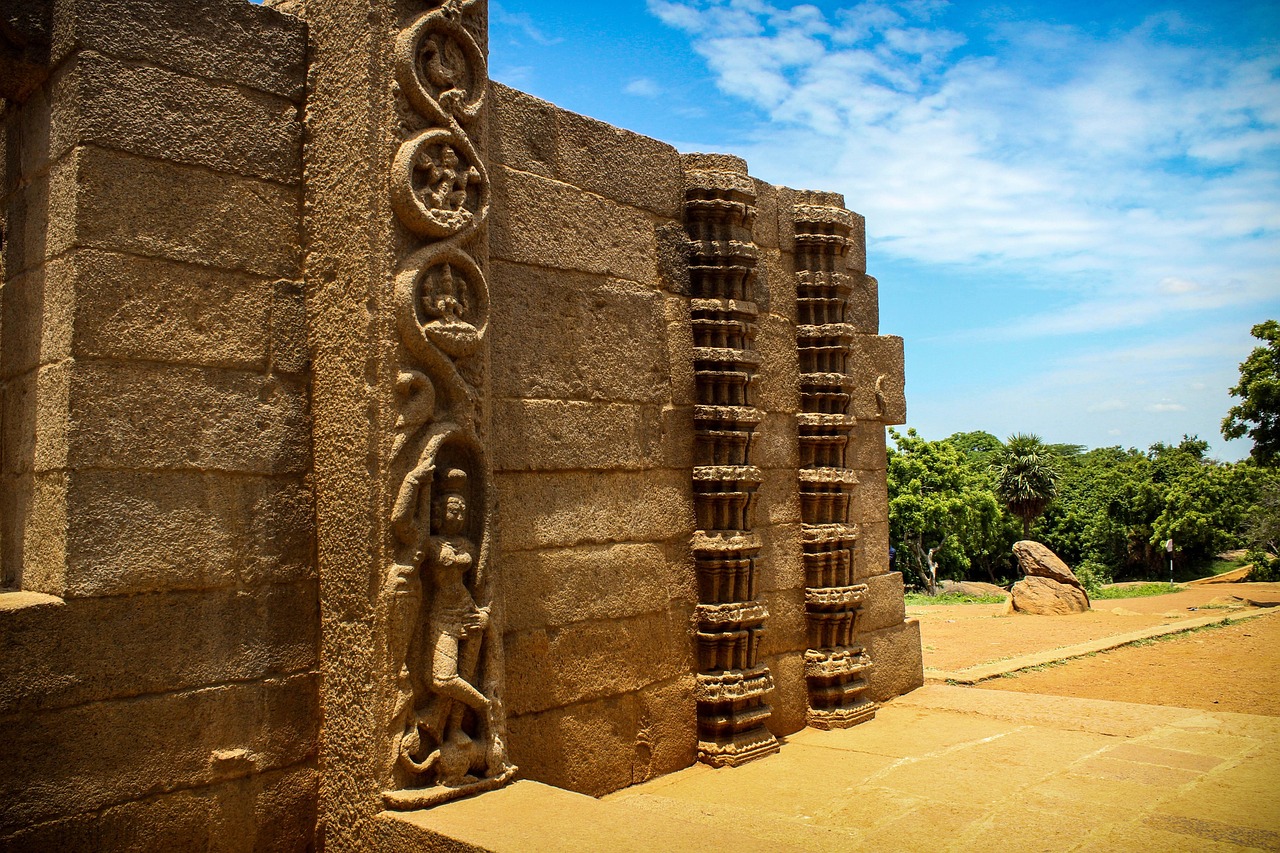
A seaside town south of Chennai famous for the 7th–8th-century Pallava monuments carved from living rock — the Shore Temple, the Five Rathas and the great relief of Arjuna's Penance — a UNESCO World Heritage Site where stone carvers still work today.

Favourite places

  • Shore Temple

    On the beach

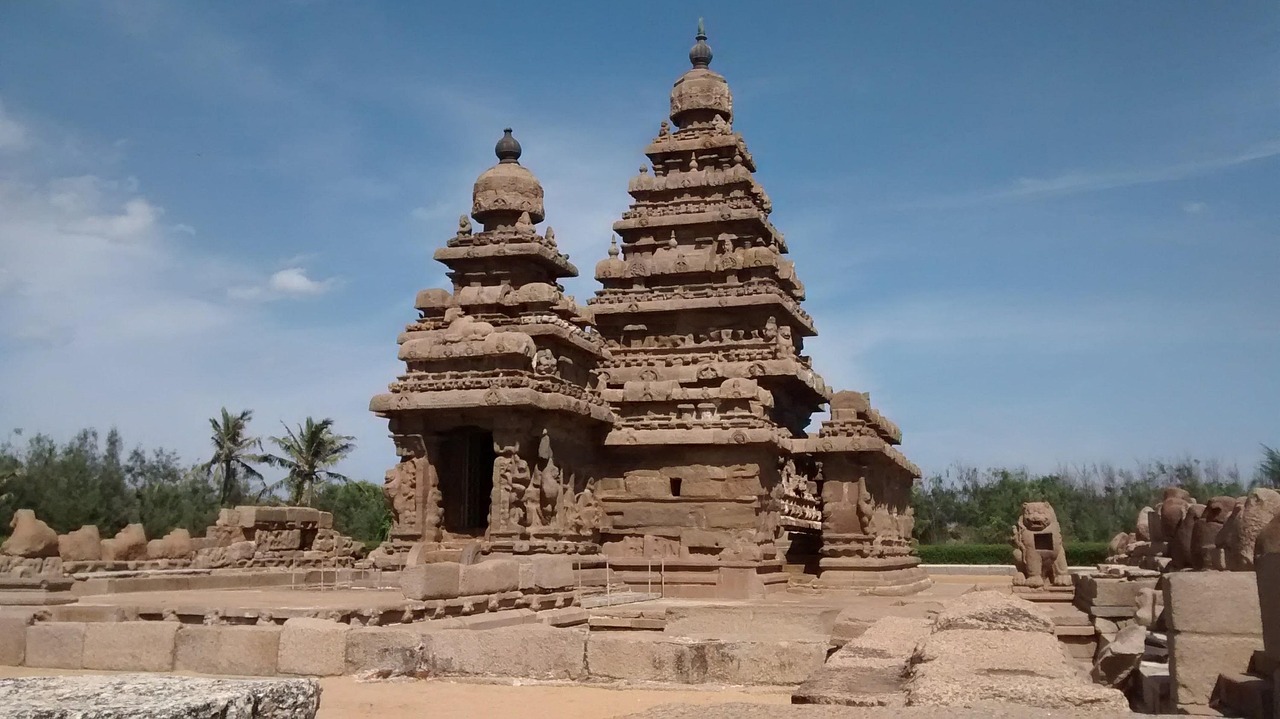
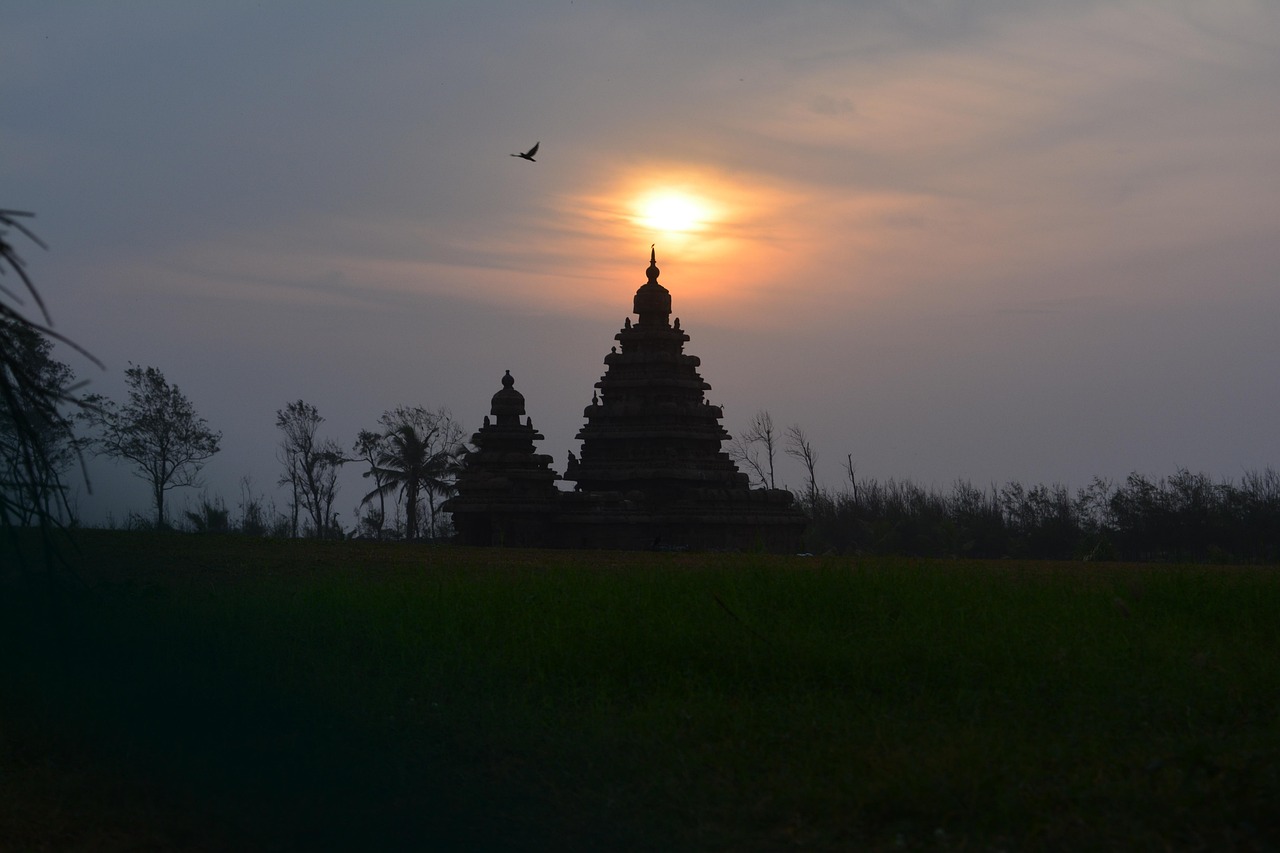
    A pair of granite shrines to Shiva and a smaller one to Vishnu, built around the early 8th century and standing right at the sea's edge — one of the oldest structural stone temples in South India.

    Open in Google Maps (opens in a new tab)
  • Arjuna's Penance (Descent of the Ganges)

    Centre of town

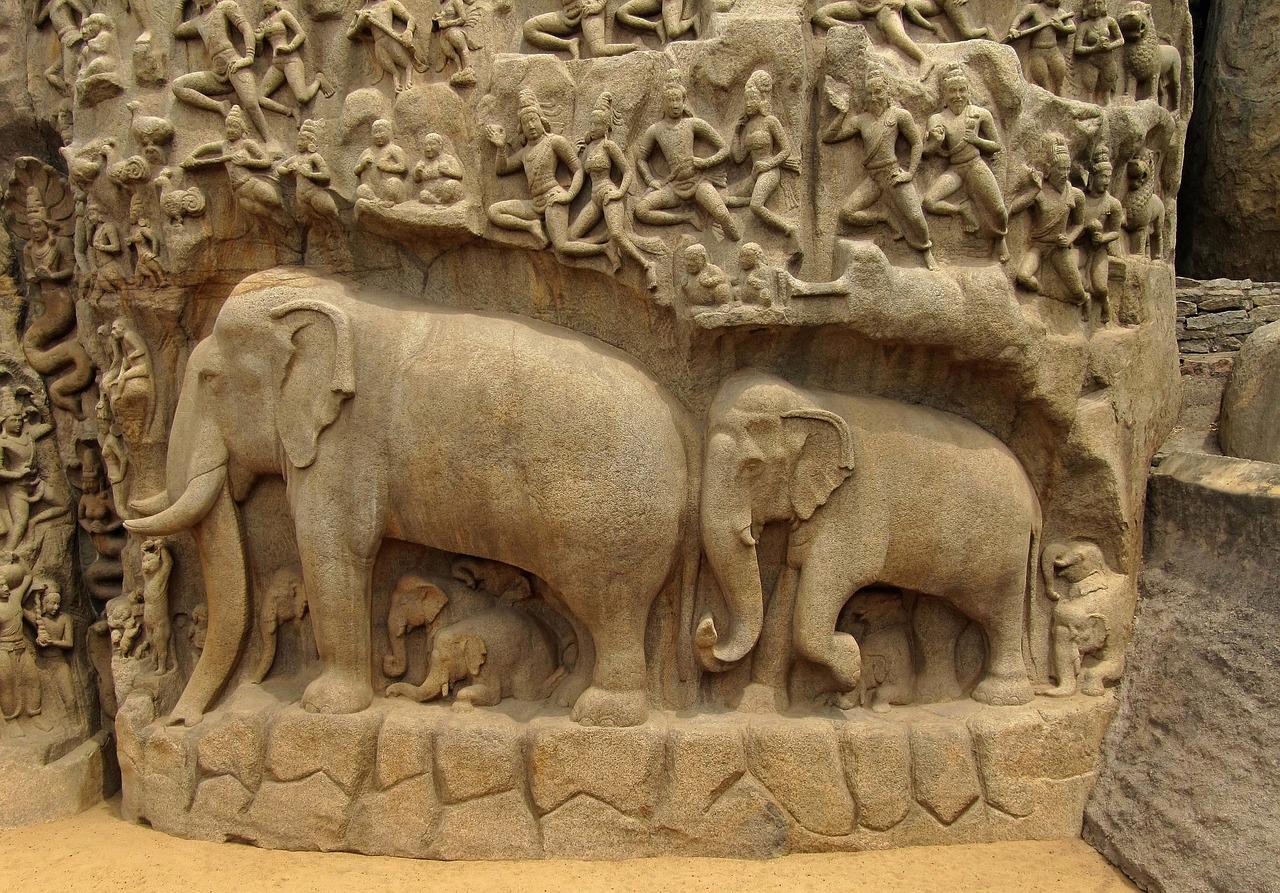
    A huge open-air relief carved on two boulders, with gods, people and life-size elephants gathered around a natural cleft that represents the river Ganga coming down to earth.

    Open in Google Maps (opens in a new tab)
  • Pancha Rathas (Five Rathas)

    South end of town

    Five temples, each carved from a single rock in the shape of a chariot and named after the Pandava brothers of the Mahabharata, with a stone elephant, lion and Nandi bull beside them.

    Open in Google Maps (opens in a new tab)
  • Mahishasuramardini Cave and the lighthouse

    On the hill above the town

    A rock-cut cave temple with fine reliefs of Durga fighting the buffalo demon and Vishnu reclining, below the old and new lighthouses, which give views over the monuments and the sea.

    Open in Google Maps (opens in a new tab)

Local food

  • Coastal fish curry and fry

    Mahabalipuram (Mamallapuram), India

    Along the Tamil and Coromandel coast: tangy tamarind fish kuzhambu, crab and prawn masala and spice-rubbed fish fried on a griddle, eaten with rice. Best in towns close to the fishing harbours.

  • Idli, vada and sambar

    Mahabalipuram (Mamallapuram), India

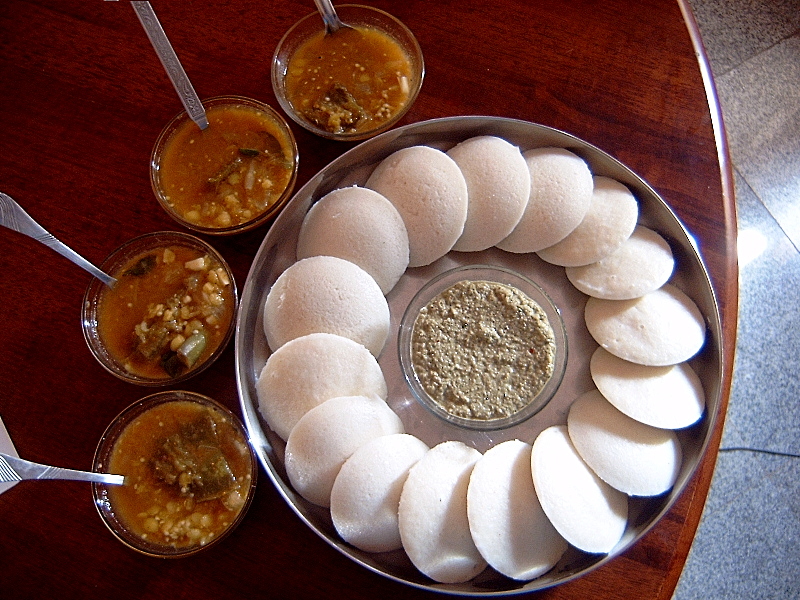
    Soft steamed rice-and-lentil cakes and crisp fried lentil doughnuts (medu vada), served with sambar (lentil and vegetable stew) and coconut and tomato chutneys. The standard South Indian breakfast, eaten from busy "tiffin" restaurants from early morning.Read more
  • Dosa

    Mahabalipuram (Mamallapuram), India

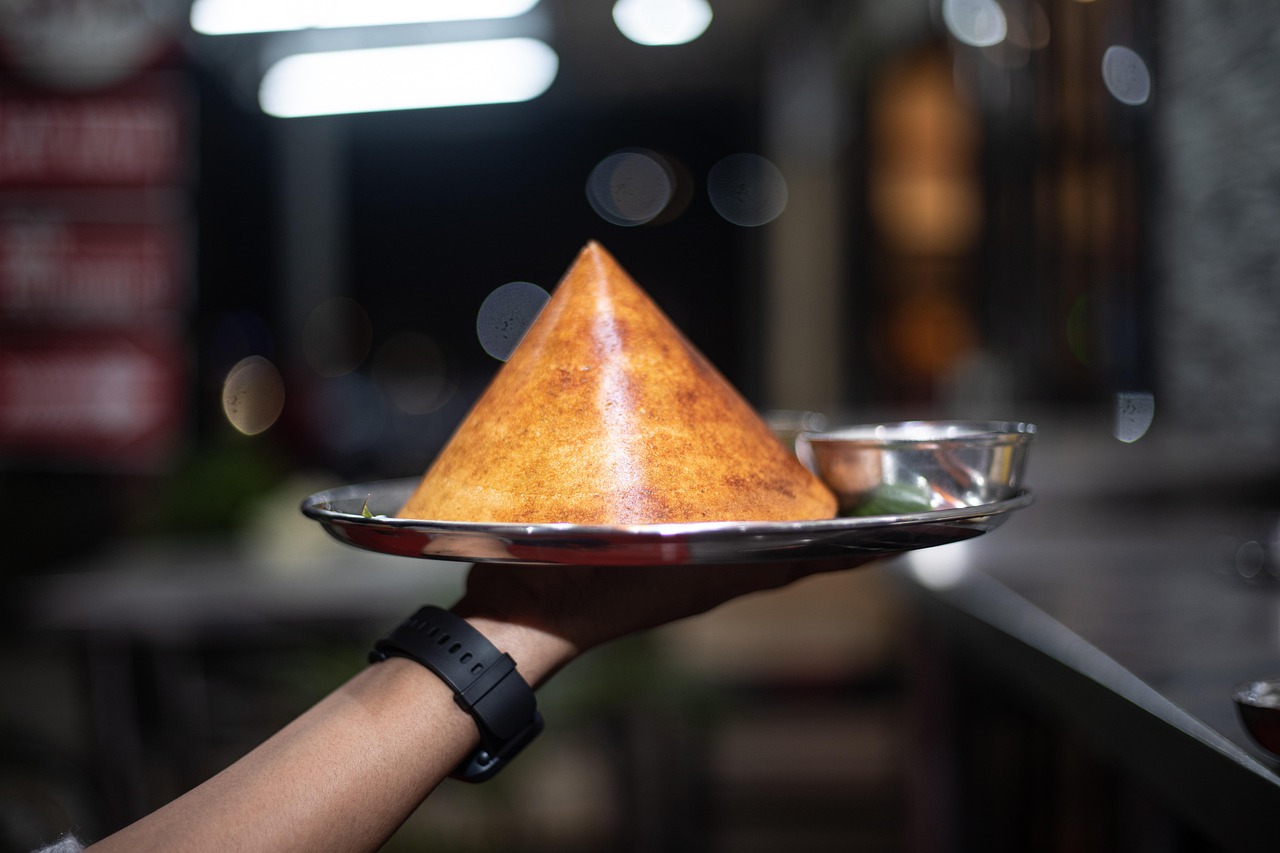
    A thin, crisp pancake of fermented rice and lentil batter, served plain, as a masala dosa folded around spiced potato, as a ghee roast or as a thick onion uttapam, always with sambar and chutneys. Best eaten hot off the griddle at breakfast or in the evening.Read more
  • South Indian filter coffee

    Mahabalipuram (Mamallapuram), India

    Strong decoction from a metal drip filter mixed with hot milk and sugar, poured back and forth between a steel tumbler and a bowl (dabarah) until frothy. Tamil Nadu runs on it; order "one filter coffee" at any tiffin house.Read more

Where to eat

Where to stay

Culture

Mahabalipuram is still a town of stone carvers: workshops along the main streets cut granite deities, animals and temple pieces by hand, continuing a tradition taught at the government college of architecture and sculpture here. The Mamallapuram Dance Festival brings Bharatanatyam, Kuchipudi, Odissi and other classical dances to an open-air stage in front of the great relief.

History

Mamallapuram was a port of the Pallava kings, whose capital was at Kanchipuram. The town is named after Narasimhavarman I, called Mamalla ("great wrestler"), who ruled in the 7th century. Under him and his successors, sculptors carved cave temples, monolithic shrines and huge reliefs out of the granite outcrops by the sea, and later built the structural Shore Temple under Rajasimha (Narasimhavarman II) around the early 8th century.

These monuments are among the earliest examples of Dravidian temple architecture, and they were listed together as the Group of Monuments at Mahabalipuram, a UNESCO World Heritage Site, in 1984. The 2004 Indian Ocean tsunami briefly exposed remains of other structures under the sand near the shore.

Tour plans

Mahabalipuram day trip from Chennai

1 day
  1. Step 1: DakshinaChitra

    Stop on the East Coast Road on the way down.

  2. Step 2: Five Rathas

    Late morning, before the heat.

  3. Step 3: Arjuna's Penance and the hill

    The relief, Krishna's Butter Ball, the caves and the lighthouse.

  4. Step 4: Shore Temple

    In the late-afternoon light, then seafood by the beach.

Map

Open in Google Maps (opens in a new tab)

Travel information

Best time to visit

November to February is the best time. The Mamallapuram Dance Festival is usually held in December–January in front of Arjuna's Penance. Summers are hot.

How to get there

By air: Chennai International Airport (MAA) is about 55 km away (around 1–1.5 hours by road).

By train: there is no railway station in town; the nearest stations are Chengalpattu, about 30 km away, and Chennai's stations.

By road: taxis and buses run along the East Coast Road (ECR) from Chennai, and on to Puducherry (about 2–2.5 hours south).

Getting around

  • On foot: the main monuments are within a couple of kilometres of each other.
  • Bicycle: easy to hire in town and pleasant for the flat lanes.
  • Autos: for the Tiger Cave a few kilometres north and the beaches.

Travel tips

  • Temples: remove shoes (counters or racks at the gate) and dress modestly — shoulders and knees covered. Several large temples have dress codes (for example dhoti or trousers with a shirt for men, saree, salwar or long skirt for women) and some allow only Hindus into the inner sanctum; follow the signs and staff. Photography is usually not allowed inside the shrines.
  • Heat: the plains are hot most of the year and very hot from April to June. Start sightseeing early, rest at midday, carry water and a hat.
  • Rains: the Tamil Nadu and Puducherry coast gets most of its rain from the north-east monsoon (roughly October–December), when cyclones can occur; inland Andhra Pradesh and Telangana get the south-west monsoon (June–September). Check the weather before travelling.
  • Language: Tamil, Telugu or Malayalam is spoken locally; English is understood in hotels, stations and shops in the cities, and Hindi much less so in Tamil Nadu.
  • Eating: meals are often eaten with the right hand; spoons are always available. Ask for "less spicy" in Andhra and Telangana.
  • Money: UPI payments and cards are widely accepted in cities; carry some cash for small towns, temple stalls and autos.
  • Tickets: one Archaeological Survey of India ticket covers the Shore Temple and the Five Rathas; buy it at the counters or online. Arjuna's Penance and the hillside monuments are open to walk around.
  • Timing: come early or late in the day — there is little shade at midday.
  • Sea: the beach has strong currents; take care when swimming.

All destinations