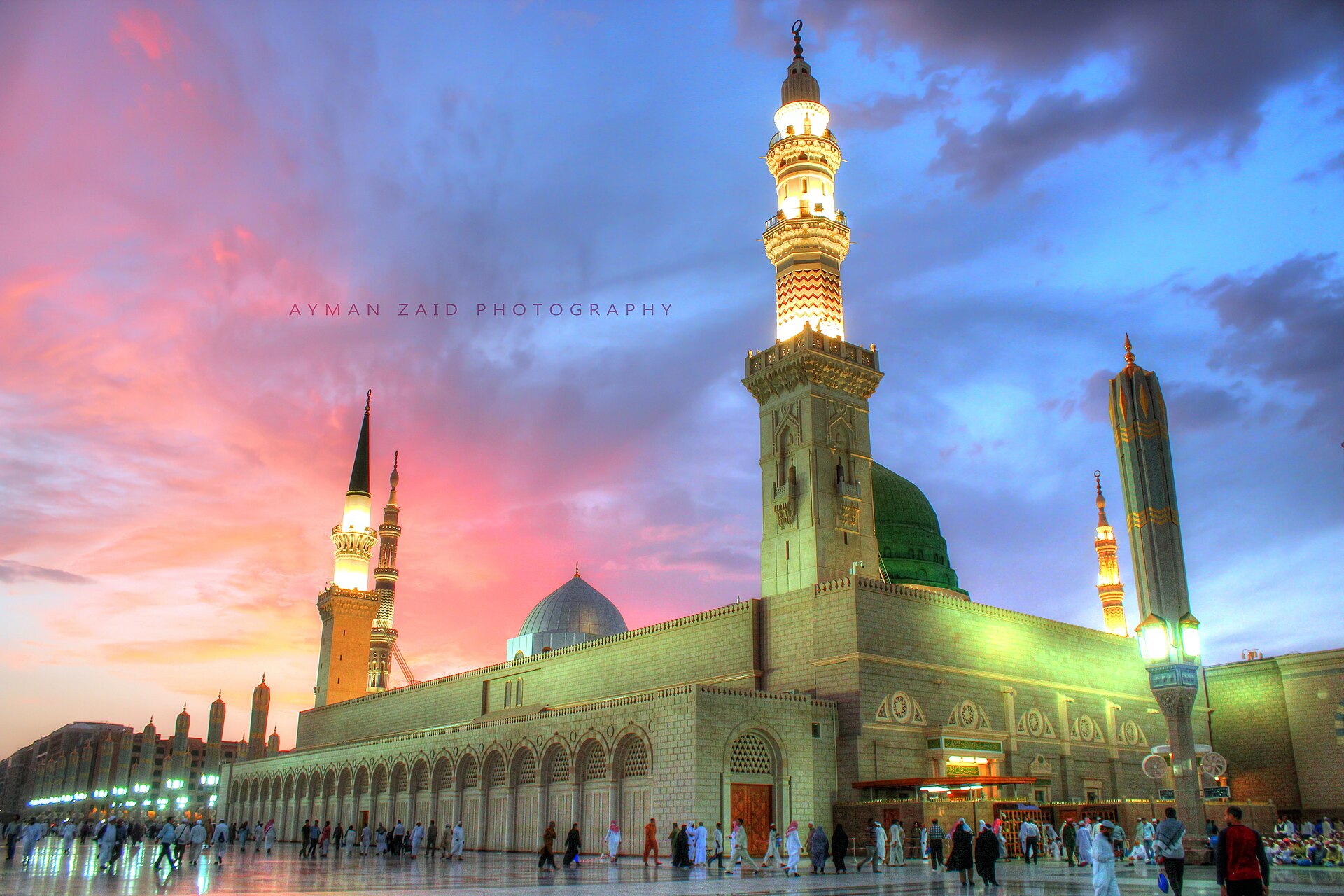
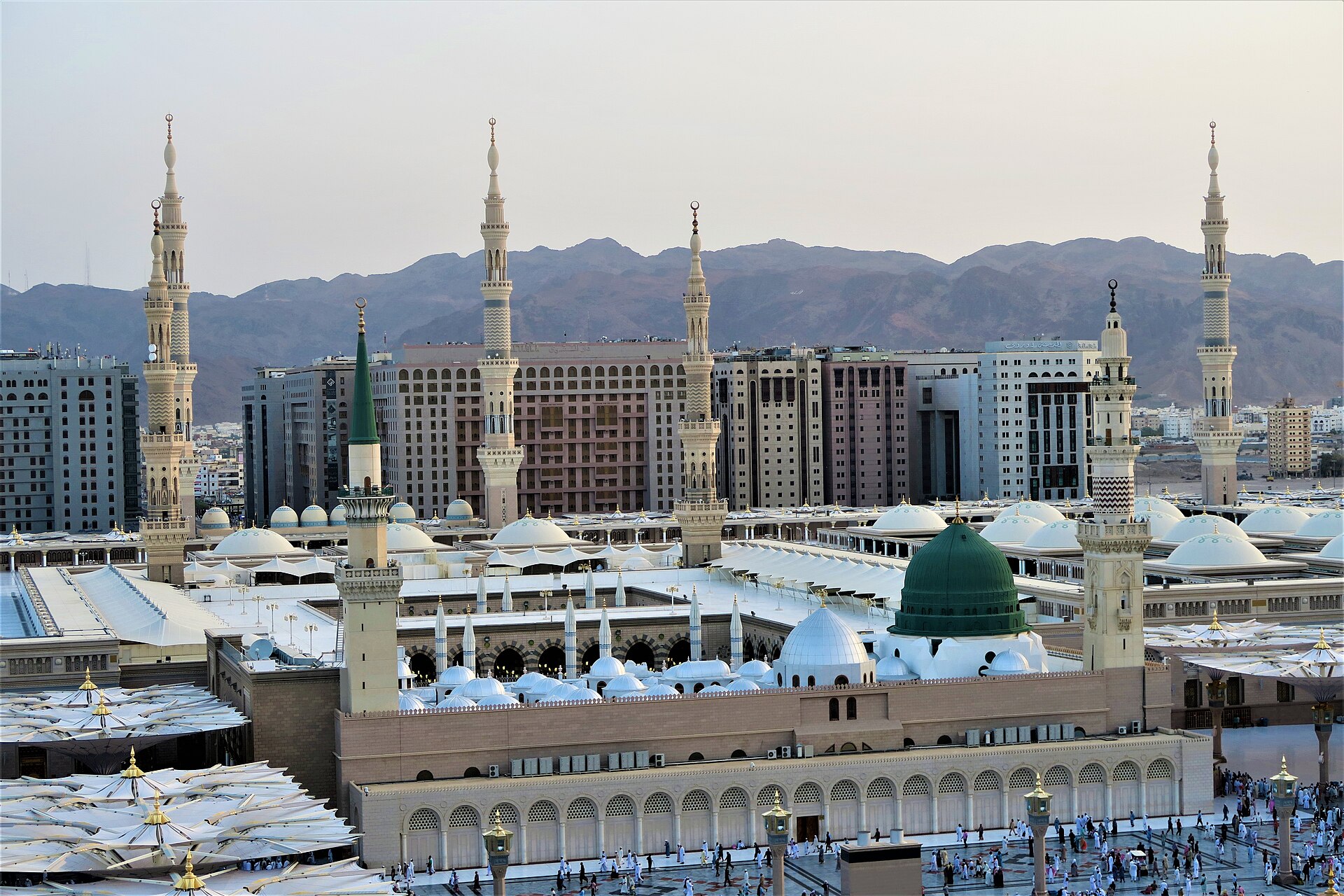
When the Prophet ﷺ arrived in Madinah after the Hijrah, his camel knelt on a plot used for drying dates; the land was bought and the first mosque was built there of mud brick and palm trunks, with the Prophet ﷺ himself carrying bricks. His home stood beside it, and when he died in 632 CE he was buried in the room of his wife Aisha — the place now beneath the Green Dome. Abu Bakr and Umar were later buried next to him.
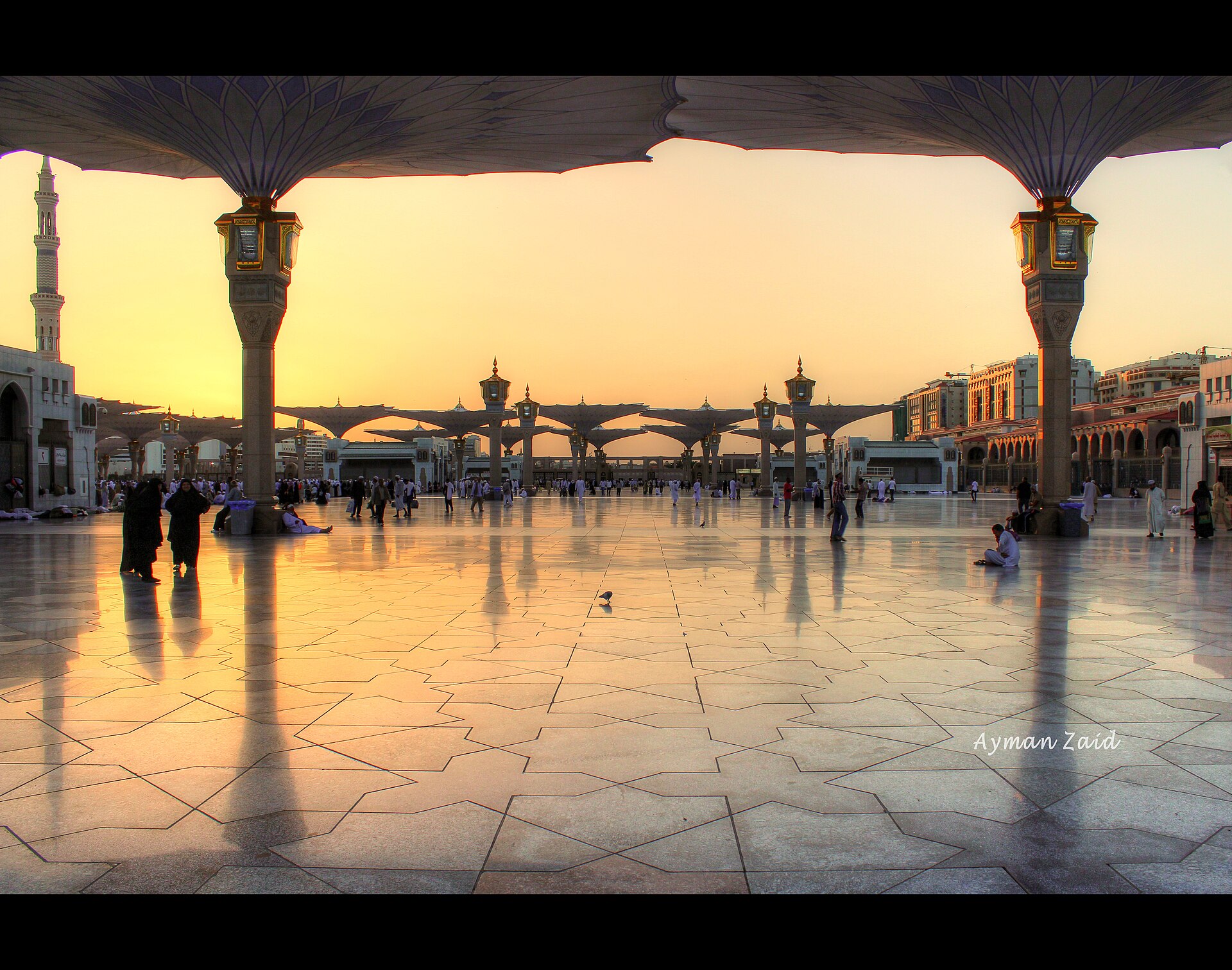
The mosque has been enlarged again and again — by the caliphs Umar and Uthman, by the Umayyad caliph al-Walid, by the Mamluks (who added the first dome) and by the Ottomans, whose prayer hall with its domes and calligraphy still forms the oldest part. The Saudi expansions of the 20th century multiplied its size, adding the retractable domes and the famous umbrella-covered courtyards. Between the Prophet's pulpit and his home lies the Rawdah, described in hadith as "a garden from the gardens of Paradise".

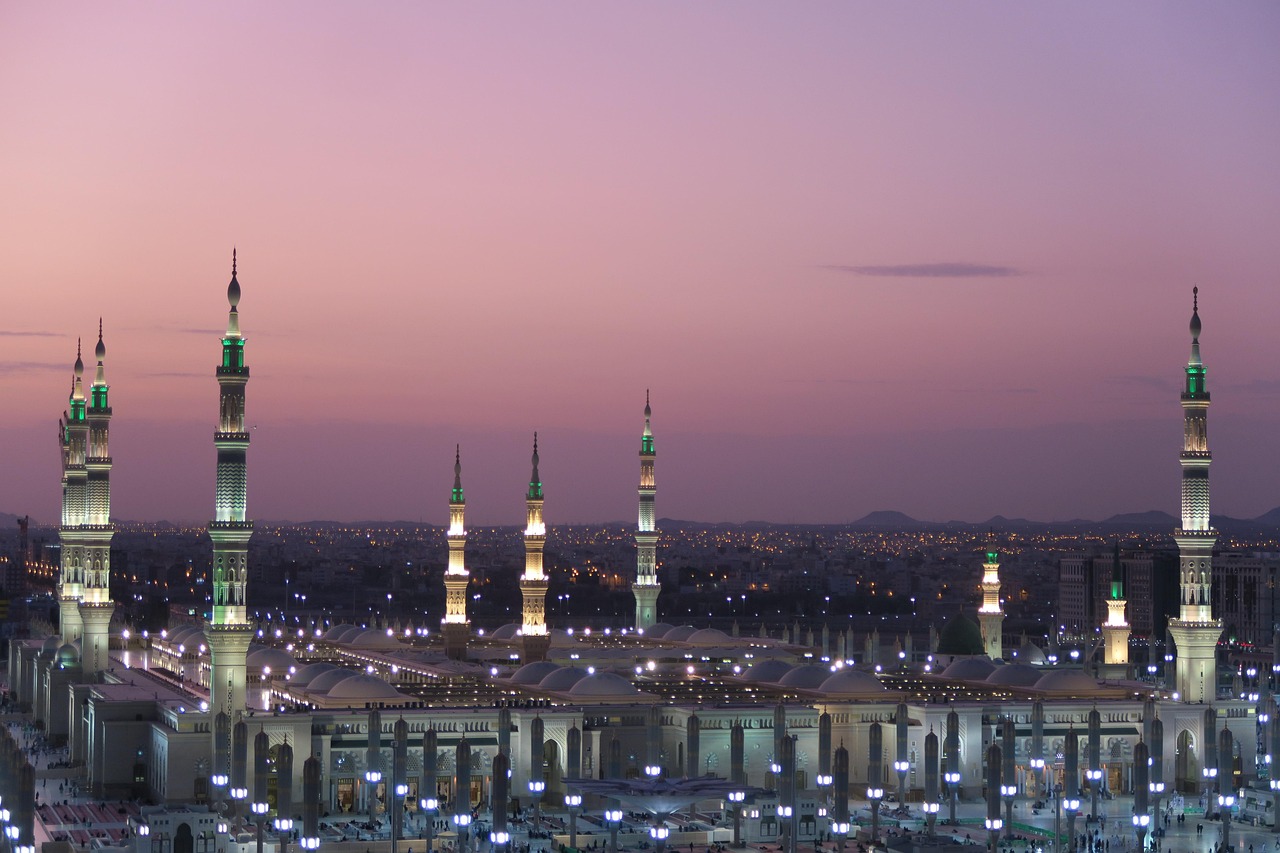
 Madinah, Saudi Arabia