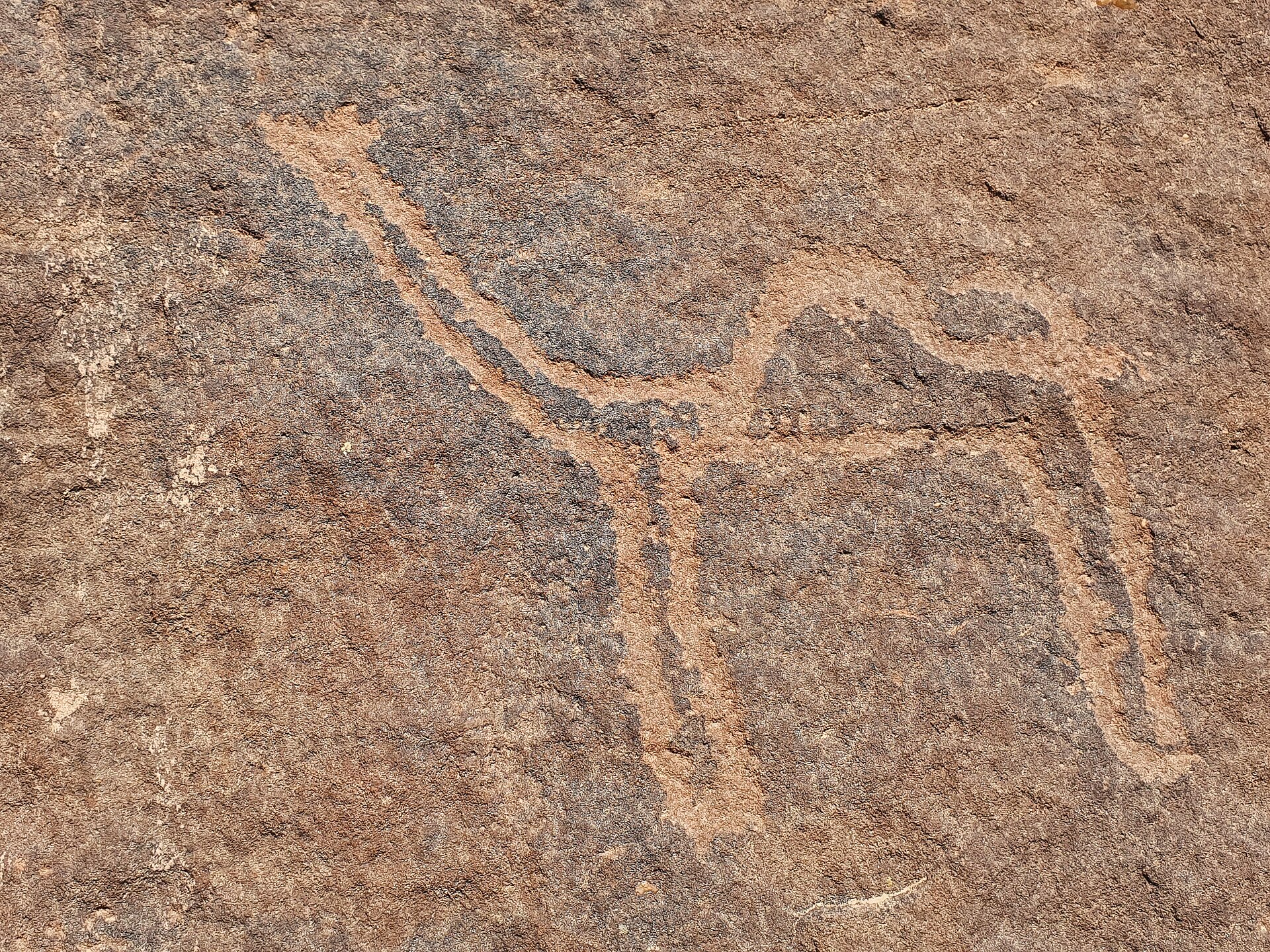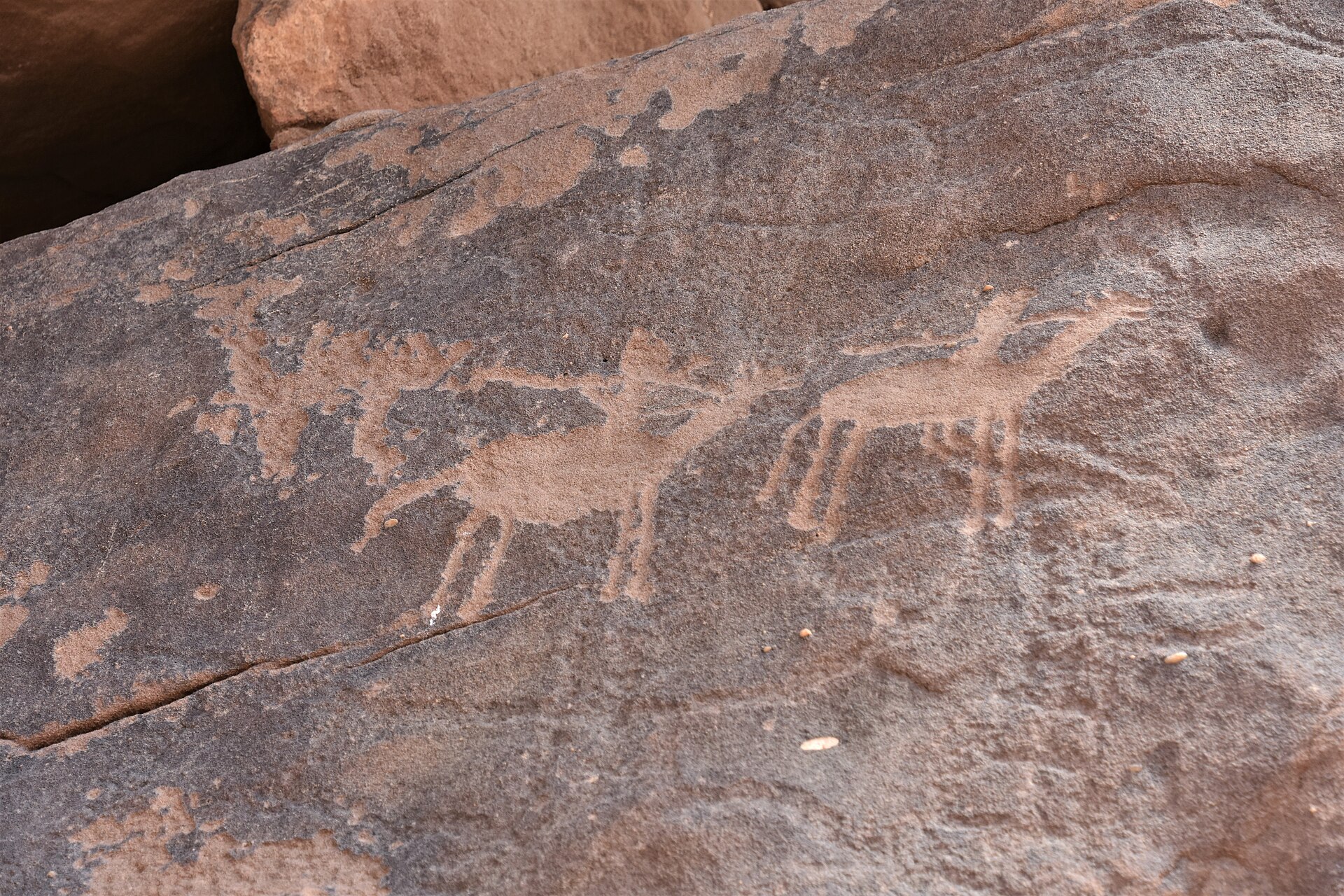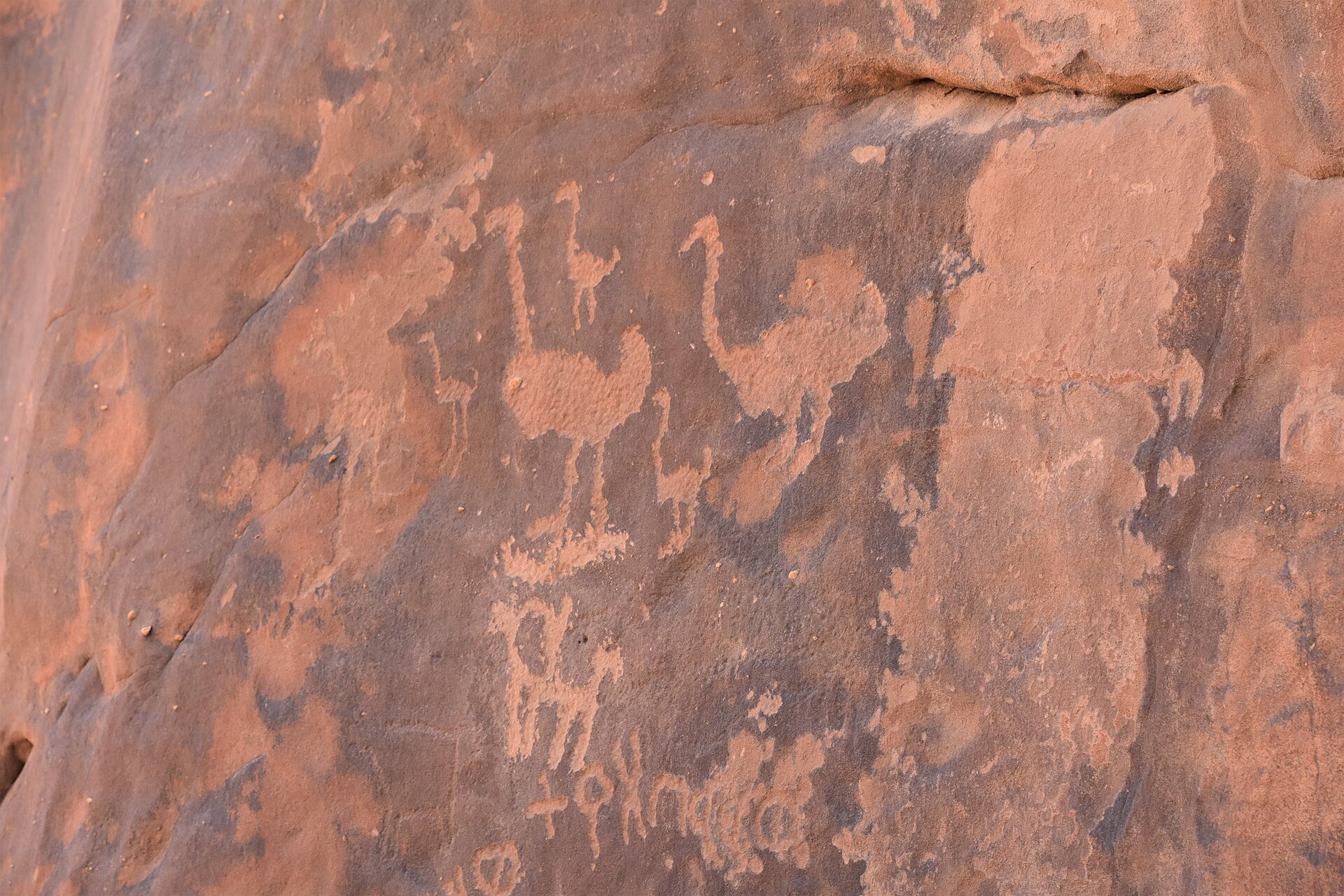
Carved panels of Jabal Umm Sinman
Rock faces near Jubbah
Large panels of human figures, camels and other animals cut into the sandstone.
Open in Google Maps (opens in a new tab)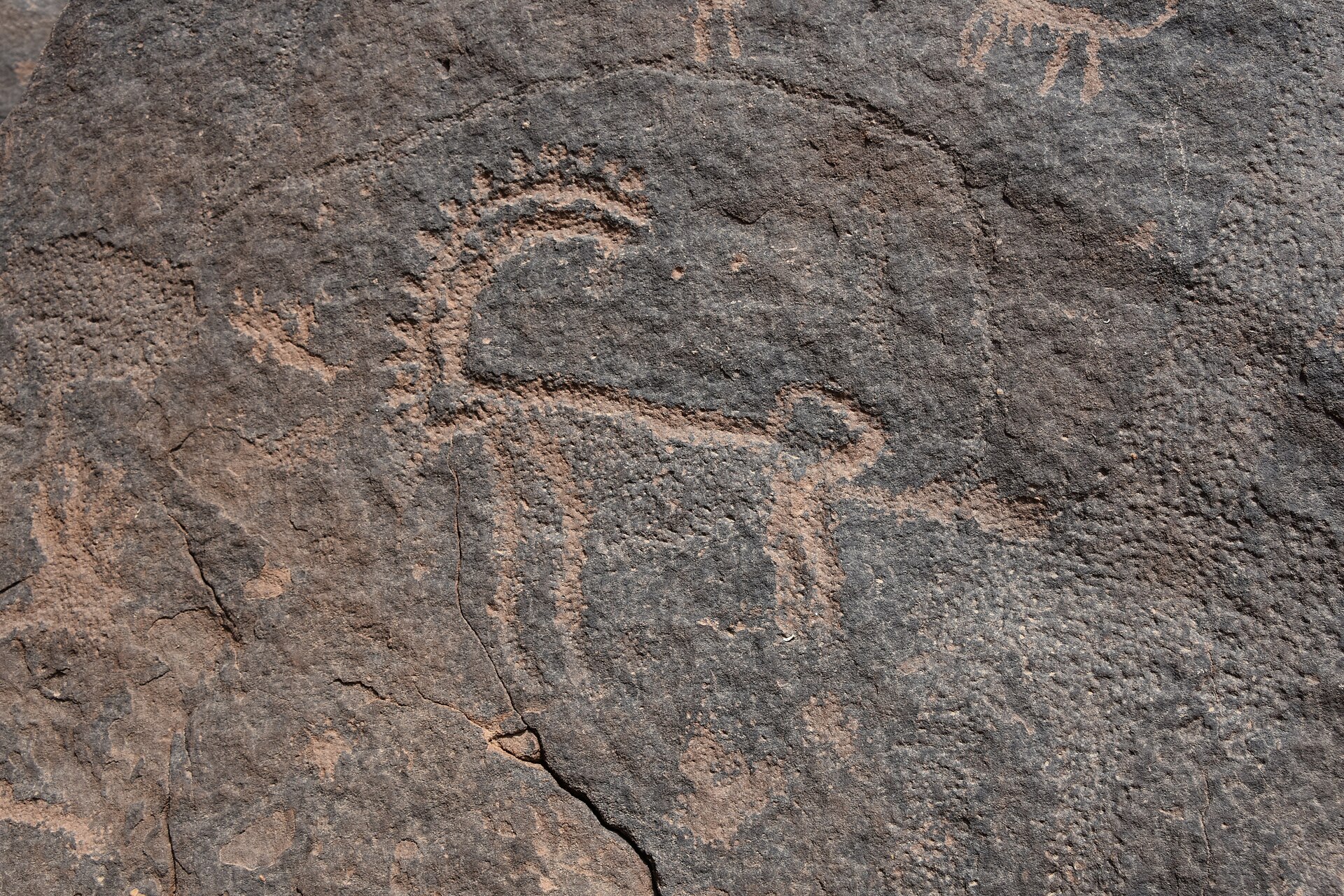
 Hail, Saudi Arabia
Thousands of ancient rock carvings of people, camels and other animals on Jabal Umm Sinman near the town of Jubbah, part of a UNESCO World Heritage Site since 2015.
Rock faces near Jubbah
Large panels of human figures, camels and other animals cut into the sandstone.
Open in Google Maps (opens in a new tab)Among the carvings
Writing in ancient north Arabian scripts left by later travellers and inhabitants.
Open in Google Maps (opens in a new tab)Below the mountain
An old oasis town with palm gardens and traditional houses.
Open in Google Maps (opens in a new tab)Around Jubbah
Red sand dunes that surround the basin — beautiful at sunset.
Open in Google Maps (opens in a new tab)South-west of Hail
The second part of the UNESCO site, in a remote area that requires a separate long trip with a specialist guide.
Open in Google Maps (opens in a new tab)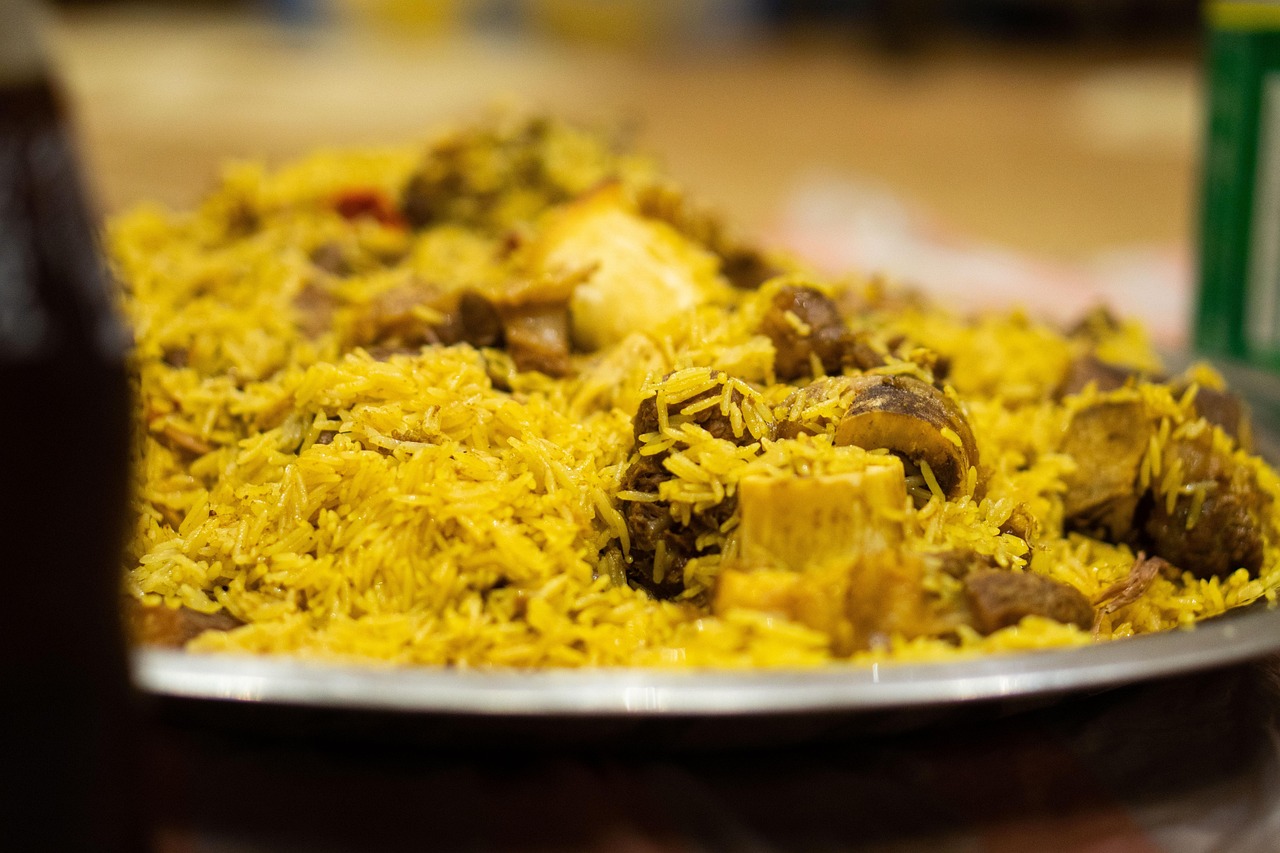
Hail, Saudi Arabia
The national dish: long-grain rice cooked in a spiced broth with chicken or lamb, served on a large shared platter with nuts, raisins and a tomato-chilli sauce (daqoos).
Hail, Saudi Arabia
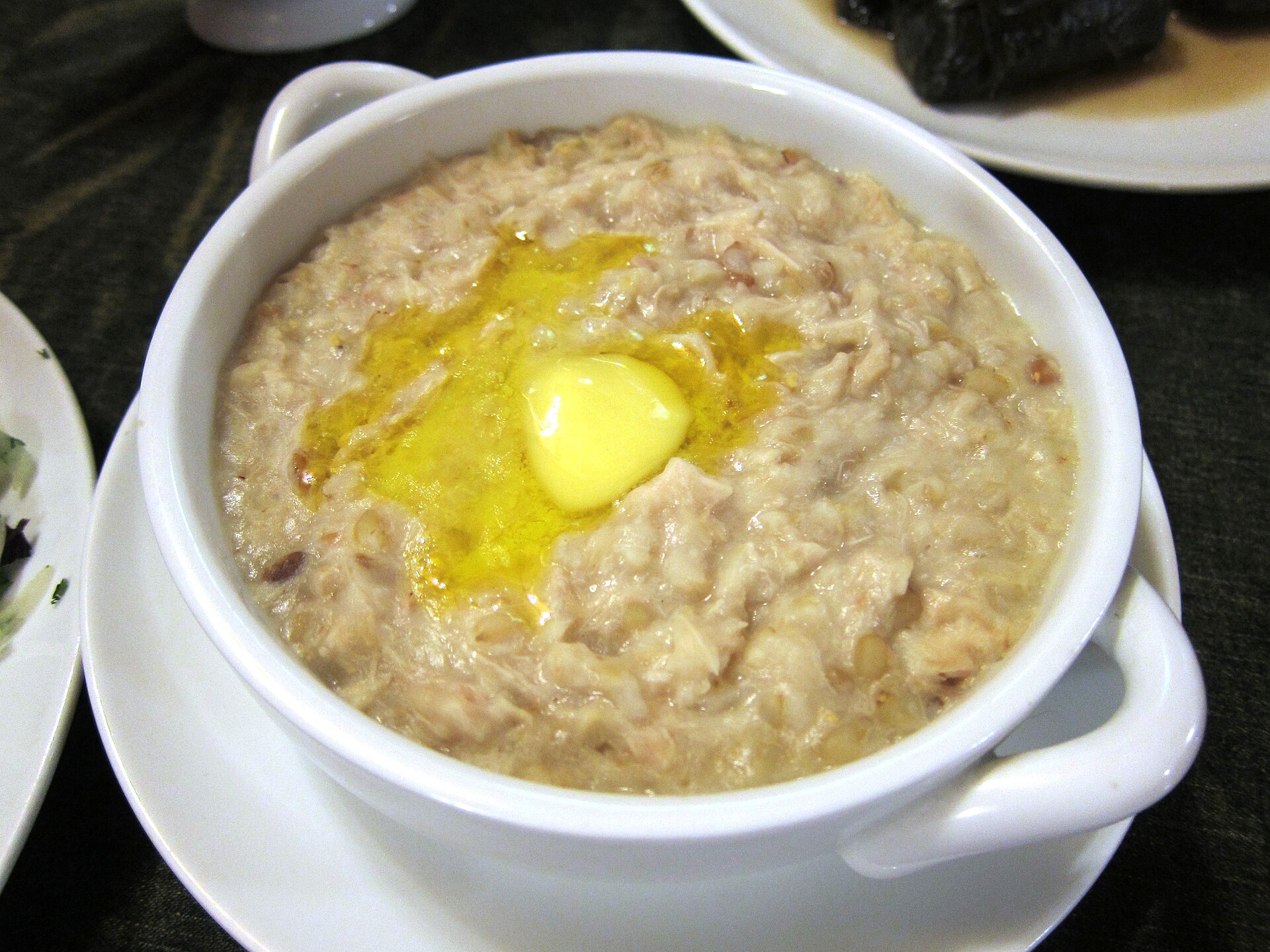
Cracked wheat slow-cooked with meat or chicken, onion and spices into a soft, porridge-like dish, finished with ghee and fried onions. A classic of central and northern Saudi kitchens.
Hail, Saudi Arabia
Near the site
A few simple local eateries; bring snacks and water for the day.
Open in Google Maps (opens in a new tab)Central and northern Hail
Family restaurants, Saudi and Middle Eastern grills, bakeries and modern cafés along the main avenues. Most have family seating.
Open in Google Maps (opens in a new tab)Hail, Saudi Arabia
Hotels and furnished apartments near the Barzan area, Al-Qishlah Palace and A’arif Fort — the most convenient base for sightseeing.
Open in Google Maps (opens in a new tab)Hail, Saudi Arabia
In the cooler months, some guides and camps offer overnight stays in the Nafud. Book only through an established local operator.
Open in Google Maps (opens in a new tab)The rock art shows camels, ibex, hunters and dancers — a record of life in Arabia long before the modern era. Local people in Jubbah are proud of the site and its UNESCO status.
Jubbah lies in a basin on the southern edge of the Great Nafud desert, north-west of Hail. Thousands of years ago the basin held a lake, and the people who lived around it carved and inscribed the sandstone of Jabal Umm Sinman with human figures, animals and later inscriptions in ancient scripts.
The carvings span many millennia, and together with those of Shuwaymis to the south of Hail they form the “Rock Art in the Hail Region”, inscribed on the UNESCO World Heritage List in 2015. They are one of the largest and most important rock-art landscapes in the Arabian Peninsula.
Cross the edge of the Nafud towards Jubbah.
Explore the carvings with a guide.
Walk among the palms and old houses.
Stop in the red sands before returning to Hail.
October to March, in the morning or late afternoon when the low light shows the carvings best.