
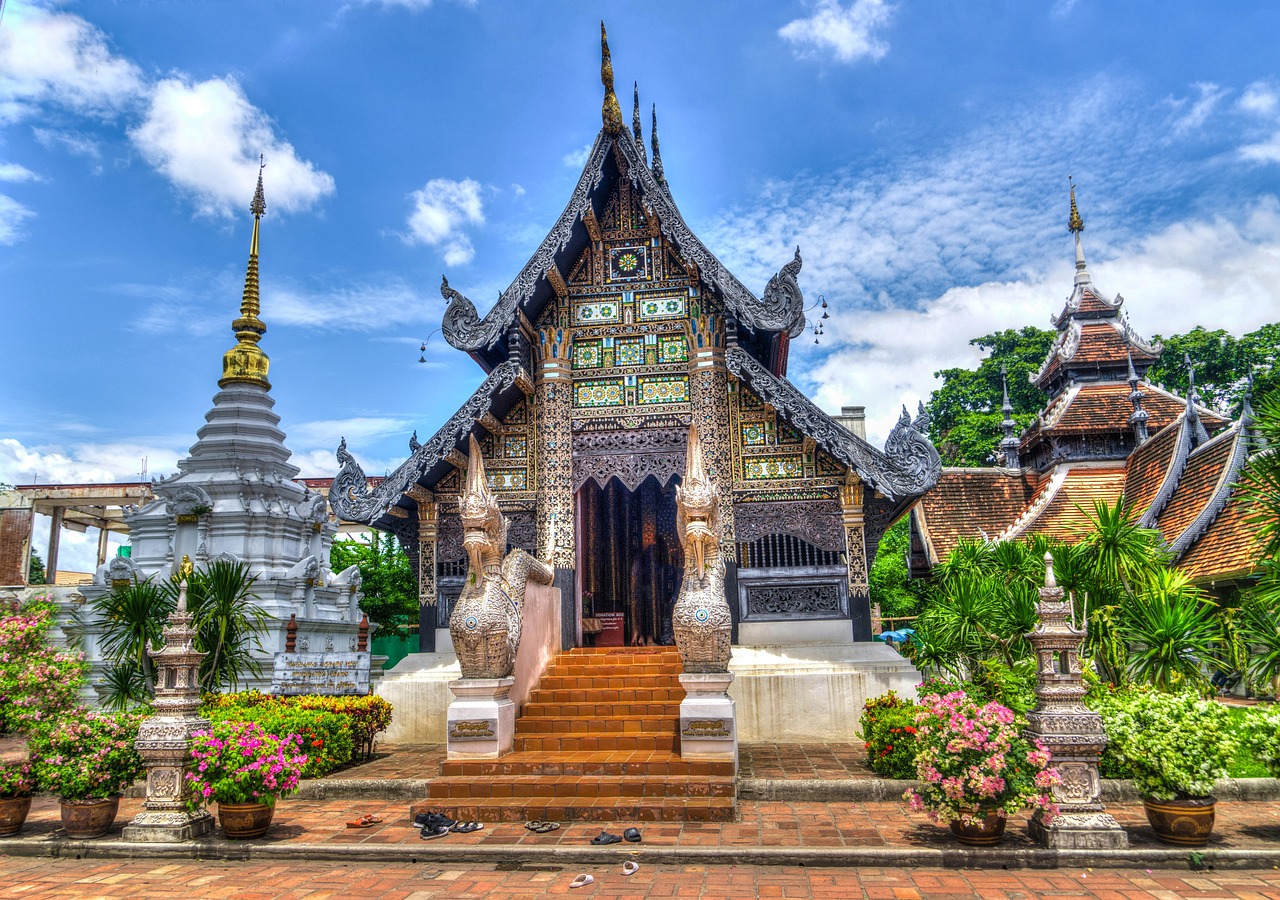
A Lanna temple hall in Chiang Mai

Chiang Mai, Thailand

Wat Chedi Luang

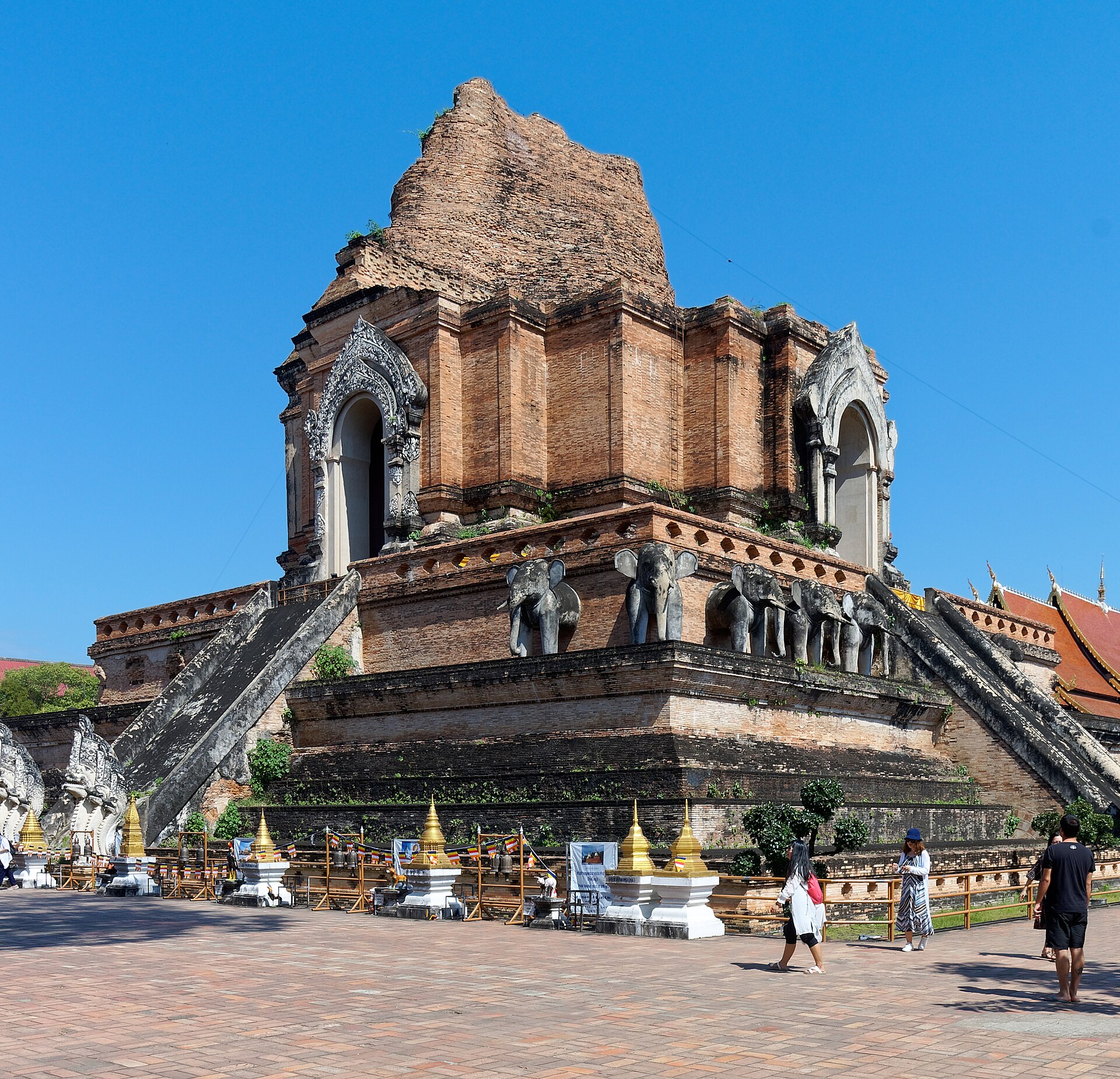
The great ruined brick chedi in the middle of the old city, once the tallest building in Lanna and the home of the Emerald Buddha.

Favourite places

  • The great chedi

    Centre of the temple grounds

    The massive brick ruin, still one of the largest structures in the old city. Its base is guarded by stone elephants and its four sides have naga stairways leading up to niches with Buddha images.

    Open in Google Maps (opens in a new tab)
  • The eastern niche

    East face of the chedi

    Where the Emerald Buddha sat in the 15th and 16th centuries. A black jade replica was placed here in 1995 for the chedi’s 600th anniversary.

    Open in Google Maps (opens in a new tab)
  • The main viharn

    In front of the chedi, facing the road

    A large assembly hall with naga stairs at the entrance and a tall standing Buddha image, Phra Chao Attarot, inside.

    Open in Google Maps (opens in a new tab)
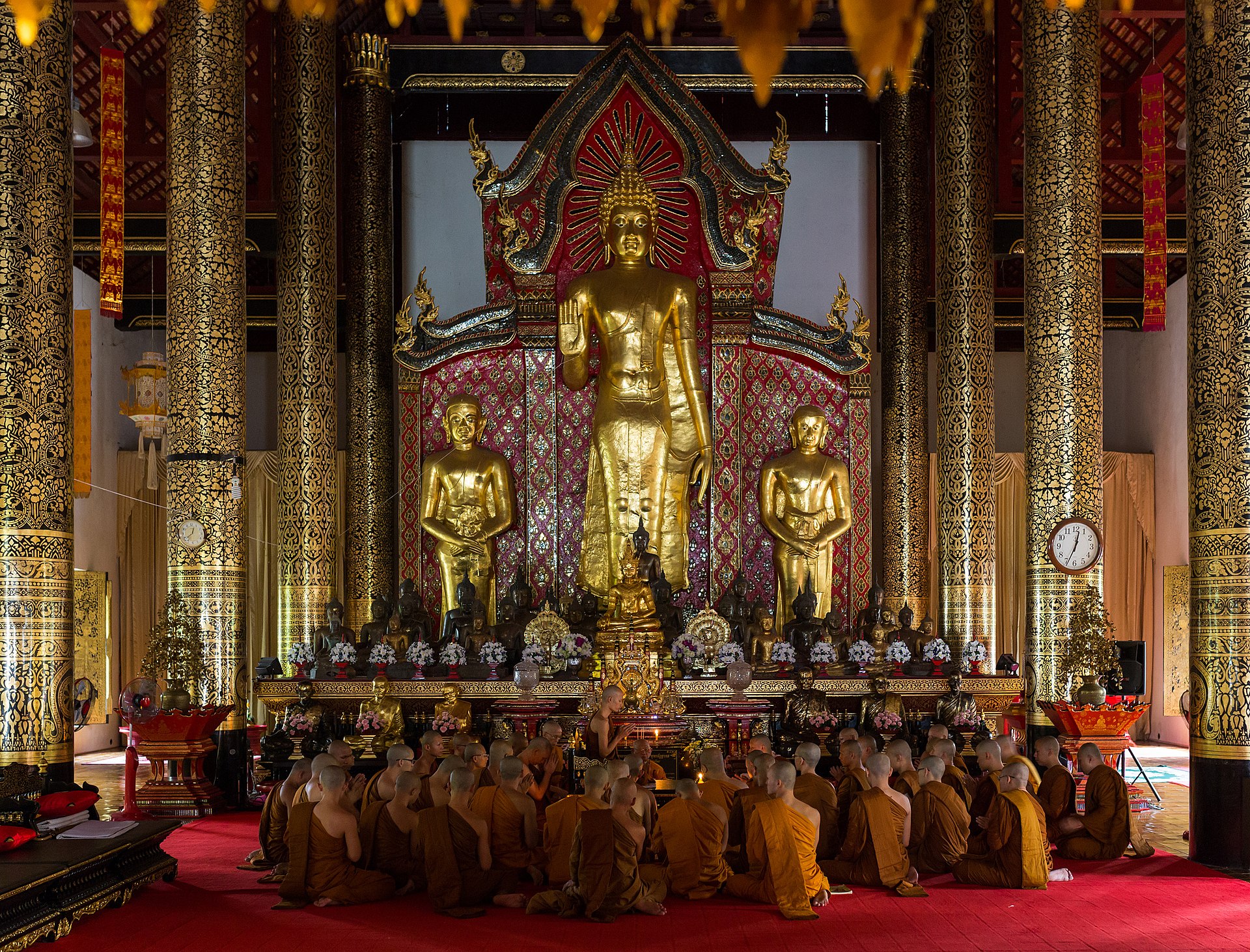
  • The city pillar shrine (Sao Inthakin)

    Near the main entrance

    The shrine of Chiang Mai's city pillar, moved here from its original site in 1800. By tradition women do not enter the pillar shrine itself.

    Open in Google Maps (opens in a new tab)
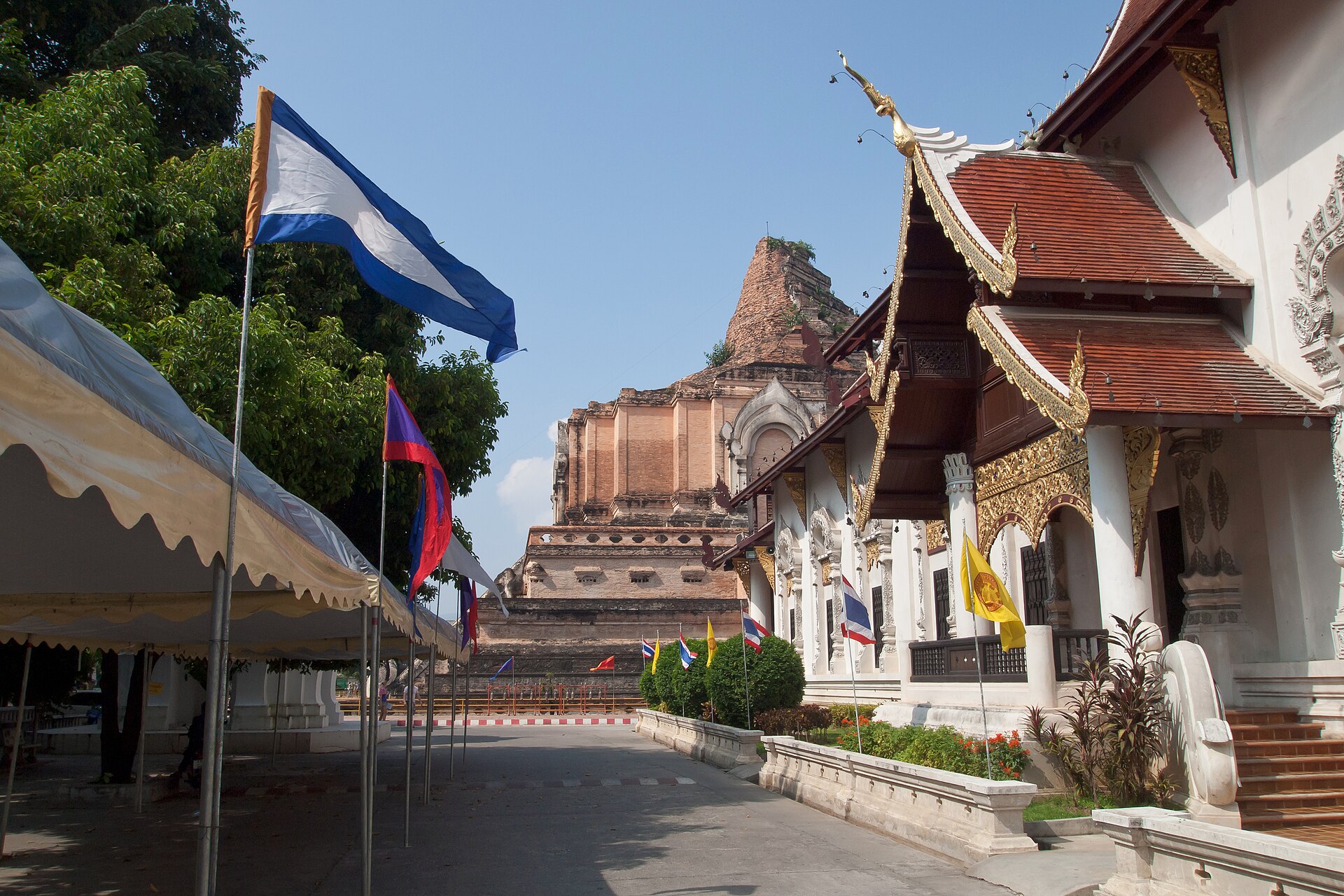
  • Monk chat

    Tables in the temple grounds

    Novice monks sit at tables to practise English and answer questions about Buddhism and monastic life — a friendly way to learn about the temple.

    Open in Google Maps (opens in a new tab)

Historical places

  • Wat Phan Tao

    Next door, on Prapokklao Road

    A small temple with a beautiful old viharn built entirely of teak, once part of a royal residence. Its carved wooden gable is a fine example of Lanna craftsmanship.

    Open in Google Maps (opens in a new tab)

Local food

  • Khao soi

    Chiang Mai, Thailand

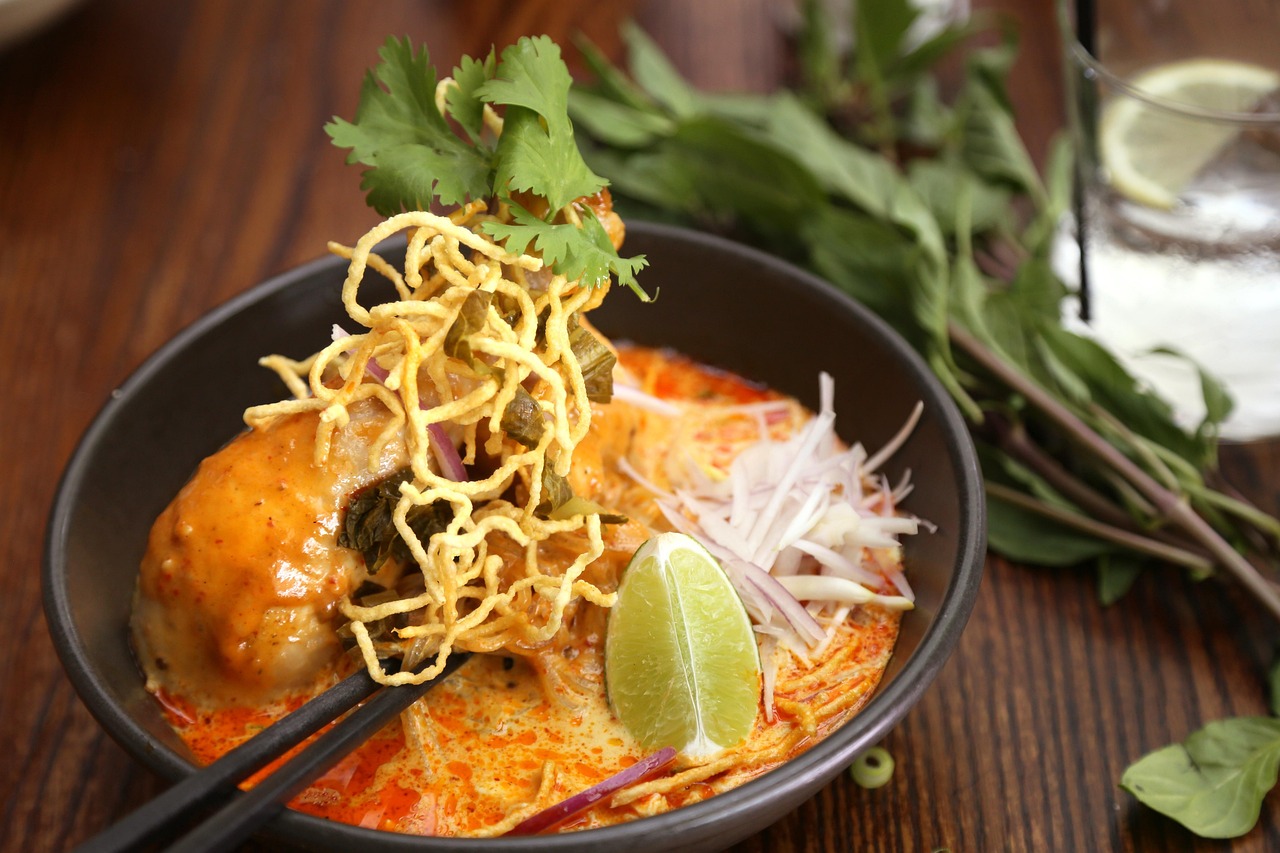
    The signature noodle soup of northern Thailand: egg noodles in a rich coconut curry broth, usually with chicken or beef, topped with crispy fried noodles and served with pickled mustard greens, shallots and lime.

  • Khanom jeen nam ngiao

    Chiang Mai, Thailand

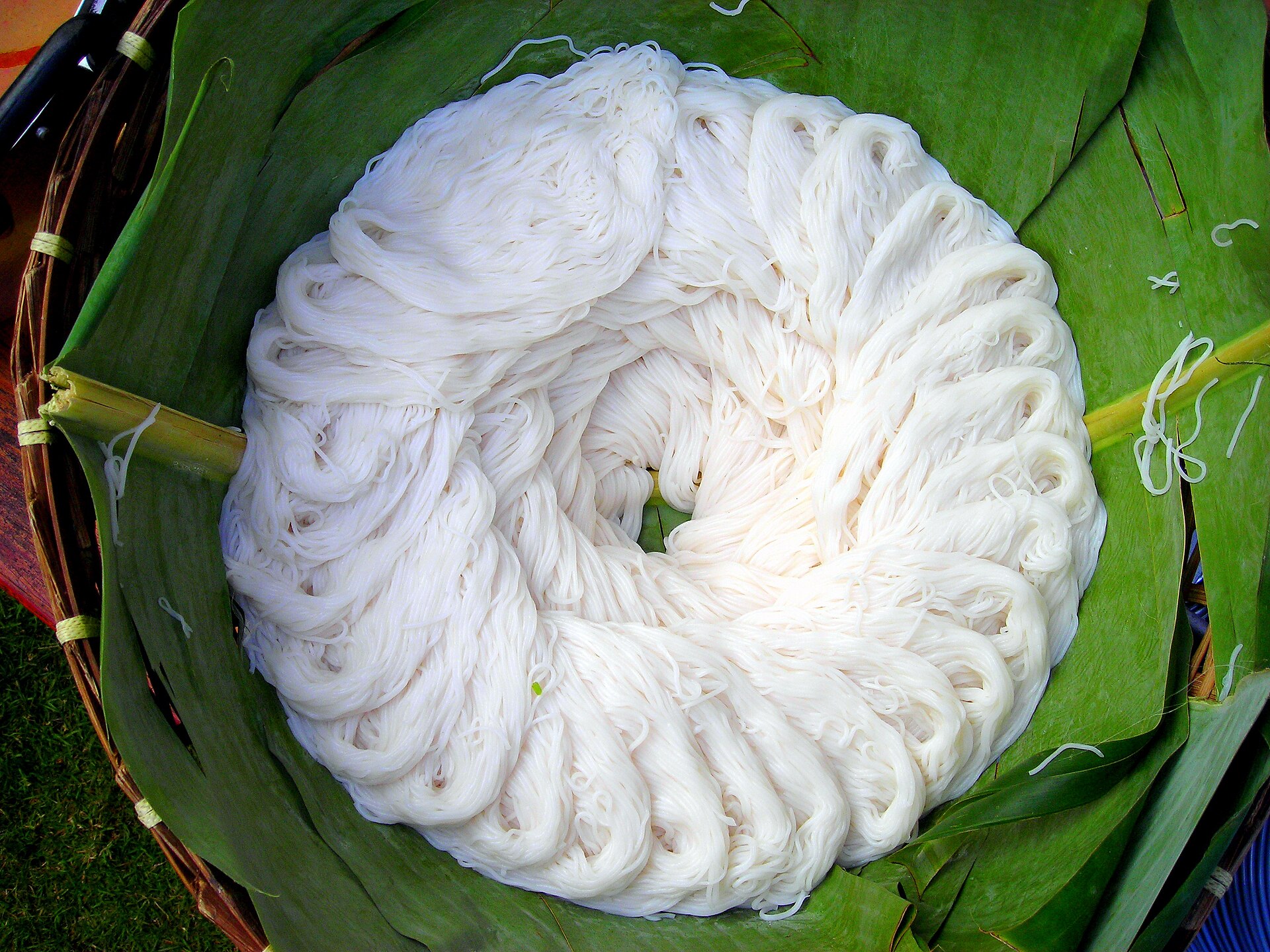
    Fresh rice noodles in a tangy tomato and pork broth flavoured with dried red cotton-tree flowers — a Lanna favourite for breakfast or lunch.

  • Sai ua

    Chiang Mai, Thailand

    Grilled northern Thai pork sausage packed with lemongrass, kaffir lime, chilli and herbs. Sold in coils at markets and eaten with sticky rice.

Where to eat

  • Chiang Mai Gate Market

    Chiang Mai Gate, south side of the old city

    A local fresh market by day and a busy street-food market in the evening, with noodles, grilled meats, curries over rice and Thai desserts.

    Open in Google Maps (opens in a new tab)
  • Sunday Walking Street food courts

    Ratchadamnoen Road, a few steps north

    On Sunday evenings the temple courtyards along Ratchadamnoen Road turn into food courts serving northern dishes.

    Open in Google Maps (opens in a new tab)
  • Old-city noodle and rice shops

    Prapokklao and Ratchamanka roads

    Small family-run shops in the surrounding lanes serve khao soi, noodle soups and curries over rice at lunchtime.

    Open in Google Maps (opens in a new tab)

Where to stay

  • Old City (inside the moat)

    Chiang Mai, Thailand

    Quiet lanes of guesthouses and boutique hotels between the temples, within walking distance of Tha Phae Gate and the Sunday Walking Street. The easiest base for first-time visitors.

    Open in Google Maps (opens in a new tab)
  • Night Bazaar & Ping Riverside

    Chiang Mai, Thailand

    East of Tha Phae Gate, between the Night Bazaar and the Ping River: larger hotels, riverside restaurants and Warorot Market close by.

    Open in Google Maps (opens in a new tab)

Culture

Wat Chedi Luang is home to the city pillar, and every May–June Chiang Mai holds the Inthakin festival here, when people bring flowers and candles to honour the city's guardian spirits. Cover shoulders and knees, take your shoes off before entering a hall, and never point your feet at a Buddha image or a monk. Walk around a chedi clockwise, keeping it on your right. Women should not touch monks or hand things to them directly.

History

Begun in the 14th century and enlarged in the 15th, the chedi once rose to around 80 metres before an earthquake brought its top down in the 1500s. The Emerald Buddha, now in Bangkok, sat in its eastern niche for some 80 years.

The temple also holds the city pillar, and runs friendly "monk chats" where visitors can talk with novice monks.

Tour plans

Old-city temples on foot

Half day
  1. Step 1: Wat Chedi Luang

    Start early at the great chedi and the city pillar shrine; stop for a monk chat.

  2. Step 2: Wat Phan Tao

    Step next door to see the teak viharn.

  3. Step 3: Wat Phra Singh

    Walk west along Ratchamanka or Ratchadamnoen Road to the Viharn Lai Kham.

  4. Step 4: Lunch in the old city

    Try khao soi or khanom jeen nam ngiao in a local shop nearby.

Map

Open in Google Maps (opens in a new tab)

Travel information

Best time to visit

All year, coolest from November to February; visit in the early morning for soft light, or after dark when the chedi is floodlit.

How to get there

In the centre of the old city on Prapokklao Road — walk or cycle.

Getting around

The temple is in the very middle of the old city, so walking or cycling is easiest. From outside the moat, any red songthaew or Grab driver knows Wat Chedi Luang.

Travel tips

Cover shoulders and knees and take your shoes off before entering the halls. Sarongs are usually available to borrow or rent at the entrance. Come back after dark, when the chedi is lit up.

All destinations