
Wat Mahathat

Ayutthaya, Thailand

Wat Mahathat

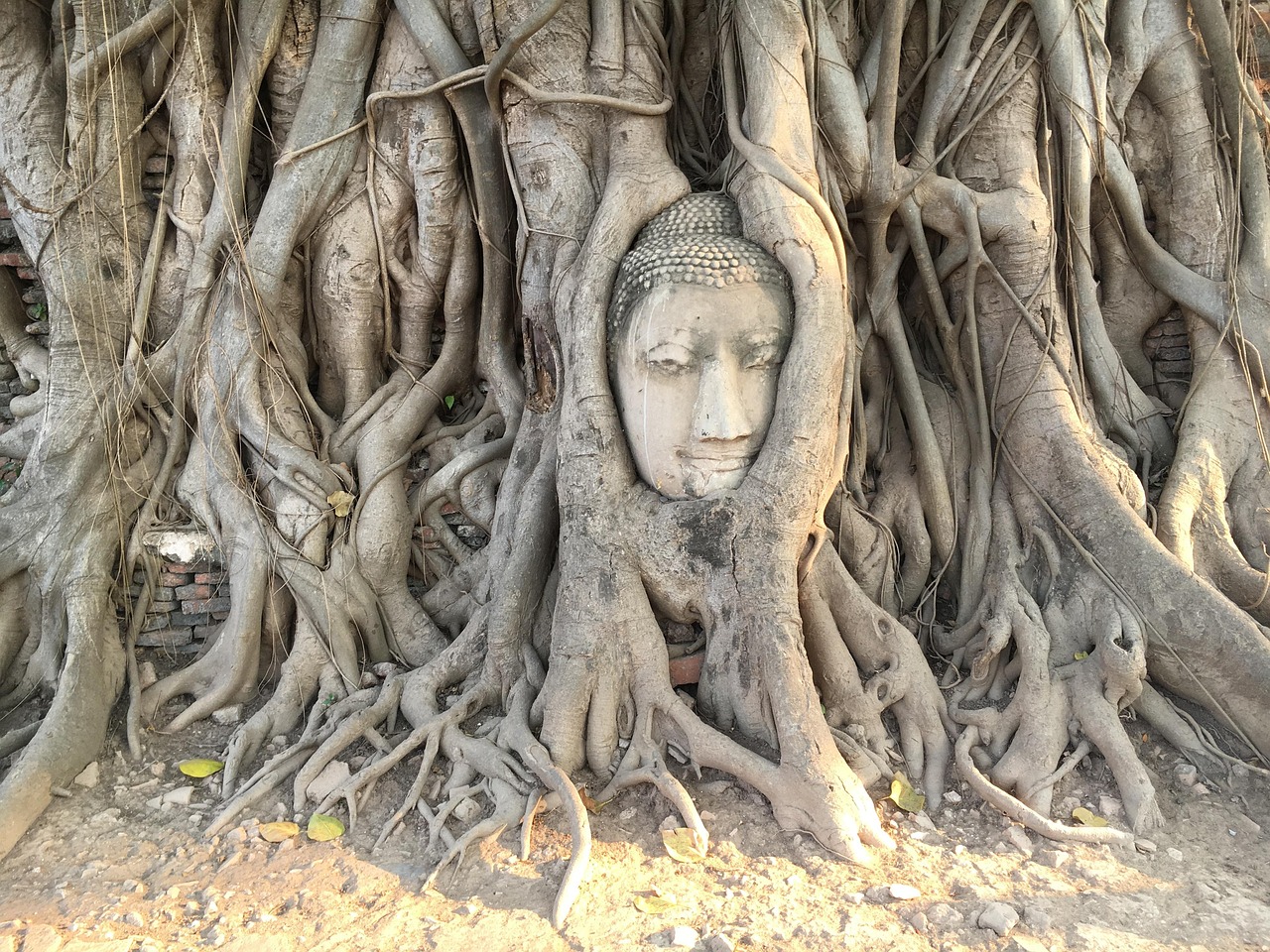
The famous sandstone Buddha head held in the roots of a bodhi tree, in the ruins of the kingdom's religious centre.

Favourite places

  • The Buddha head in the tree

    South-east corner of the grounds

    A sandstone Buddha head wrapped in the roots of a bodhi tree, gazing out calmly. It is fenced off; a guard often reminds visitors to crouch for photos.

    Open in Google Maps (opens in a new tab)
  • Base of the great prang

    Centre of the temple

    Only the base of the huge central prang still stands. It once held relics of the Buddha, and climbing its remains is not allowed.

    Open in Google Maps (opens in a new tab)
  • Rows of headless Buddha images

    Around the cloister walls

    Lines of seated Buddha images, most of them missing heads, show where the cloisters once stood — a striking reminder of the sack of 1767.

    Open in Google Maps (opens in a new tab)
  • Leaning chedis and prangs

    Throughout the grounds

    Smaller brick chedis and prangs of different styles lean at odd angles across the site, good for photos in the morning light.

    Open in Google Maps (opens in a new tab)

Historical places

  • Relic chamber finds

    Now in the Chao Sam Phraya National Museum

    Excavations in the 1950s found a relic casket of nested miniature stupas and gold objects under the main prang. They are displayed at the national museum nearby.

    Open in Google Maps (opens in a new tab)

Local food

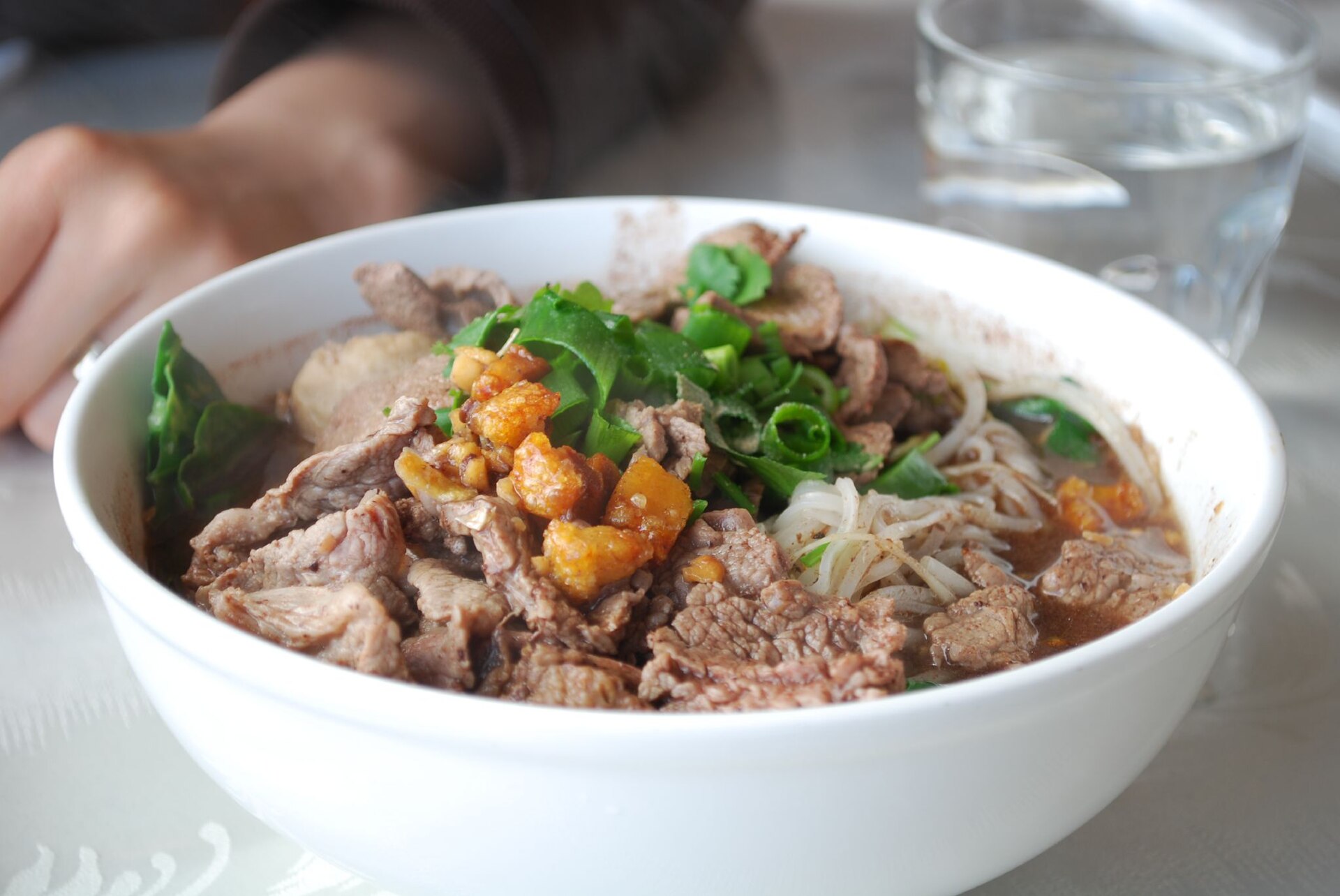
  • Boat noodles (kuay teow reua)

    Ayutthaya, Thailand

    Small bowls of rich, dark noodle soup with pork or beef, once sold from boats on the canals. Ayutthaya is known for them, and people usually order several bowls each.

  • Roti sai mai

    Ayutthaya, Thailand

    Ayutthaya's signature sweet: thin, soft roti wrappers rolled around fine threads of coloured spun sugar. Sold in bags from stalls on U Thong Road and around town to take home.

Where to eat

  • Bang Lan night market

    Bang Lan Road, middle of the island

    An evening food market near the main temples with grilled meats, noodles, Thai desserts and fruit. An easy place to try several local dishes after a day of ruins.

    Open in Google Maps (opens in a new tab)
  • Chao Phrom market

    East side of the island, by the Pa Sak River

    Ayutthaya's busy daytime market near the ferry from the railway station, with noodle shops, snacks and fruit stalls.

    Open in Google Maps (opens in a new tab)

Where to stay

  • The old island (around Naresuan Road)

    Ayutthaya, Thailand

    Stay inside the ring of rivers and you can cycle to the main ruins in minutes. Guesthouses and small hotels cluster near the Historical Park and the night market.

    Open in Google Maps (opens in a new tab)
  • Riverside near the railway station

    Ayutthaya, Thailand

    Across the Pa Sak River from the island, close to the trains from Bangkok. Riverside guesthouses here are a short ferry or bridge ride from the old town.

    Open in Google Maps (opens in a new tab)

Culture

Even in ruins these are sacred places: dress modestly (shoulders and knees covered), do not climb on Buddha images or ruined walls, and never pose in a way that puts your head above a Buddha image or turns your back to it for a selfie. Headless Buddha images are a reminder of the sack of 1767 and of later looting — treat them with the same respect as a whole image. At the Buddha head, crouch or kneel so that your head stays lower than it.

History

Wat Mahathat was founded in the 14th century and held relics of the Buddha. Its great prang collapsed long after the city was sacked in 1767. How the Buddha head became wrapped in the tree roots is not known — it is one of Thailand's best-known images.

Tour plans

Heart of the island

Half day
  1. Step 1: Wat Mahathat

    Arrive early for the Buddha head.

  2. Step 2: Wat Ratchaburana

    Cross the road and climb into the prang crypt.

  3. Step 3: Chao Sam Phraya National Museum

    See the gold treasures found in both temples.

  4. Step 4: Lunch

    Boat noodles near the Historical Park.

Travel information

Best time to visit

November–February; early morning, before the tour buses and the heat, gives the softest light on the Buddha head.

How to get there

In the middle of the island on Naresuan Road.

Getting around

The old city sits on an island formed by three rivers, and the main ruins are spread out across it. A rented bicycle is the classic way to see them — the island is flat, but the sun is strong, so start early. Tuk-tuks can be hired by the hour for a temple circuit; agree the route and time before you set off. Sights off the island, such as Wat Chaiwatthanaram and Wat Yai Chai Mongkhon, are easier by tuk-tuk or on an evening boat tour around the island.

Travel tips

Keep your head lower than the Buddha head when taking photos — crouch or kneel.

All destinations