The great chedi
Centre of the temple
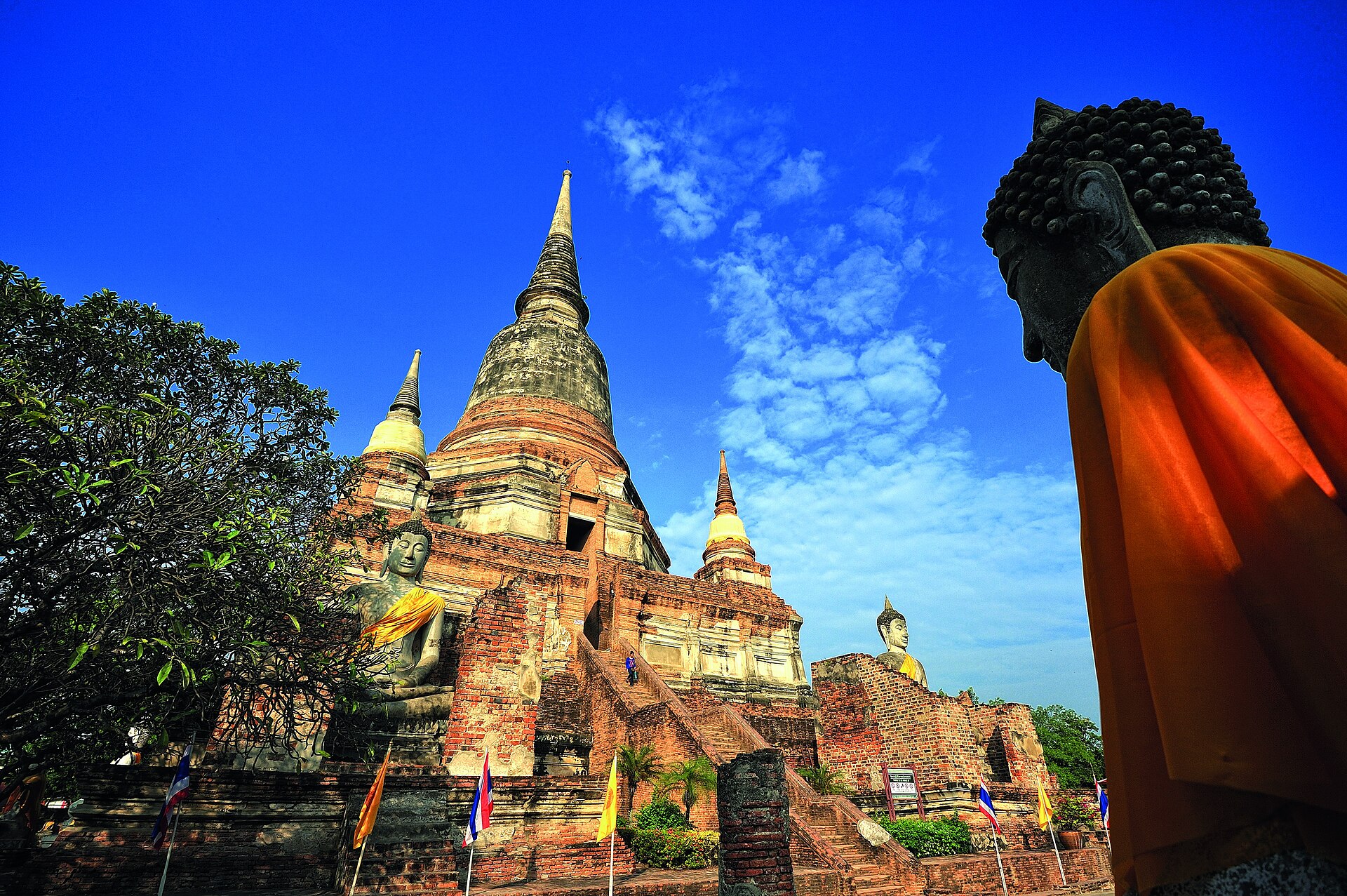
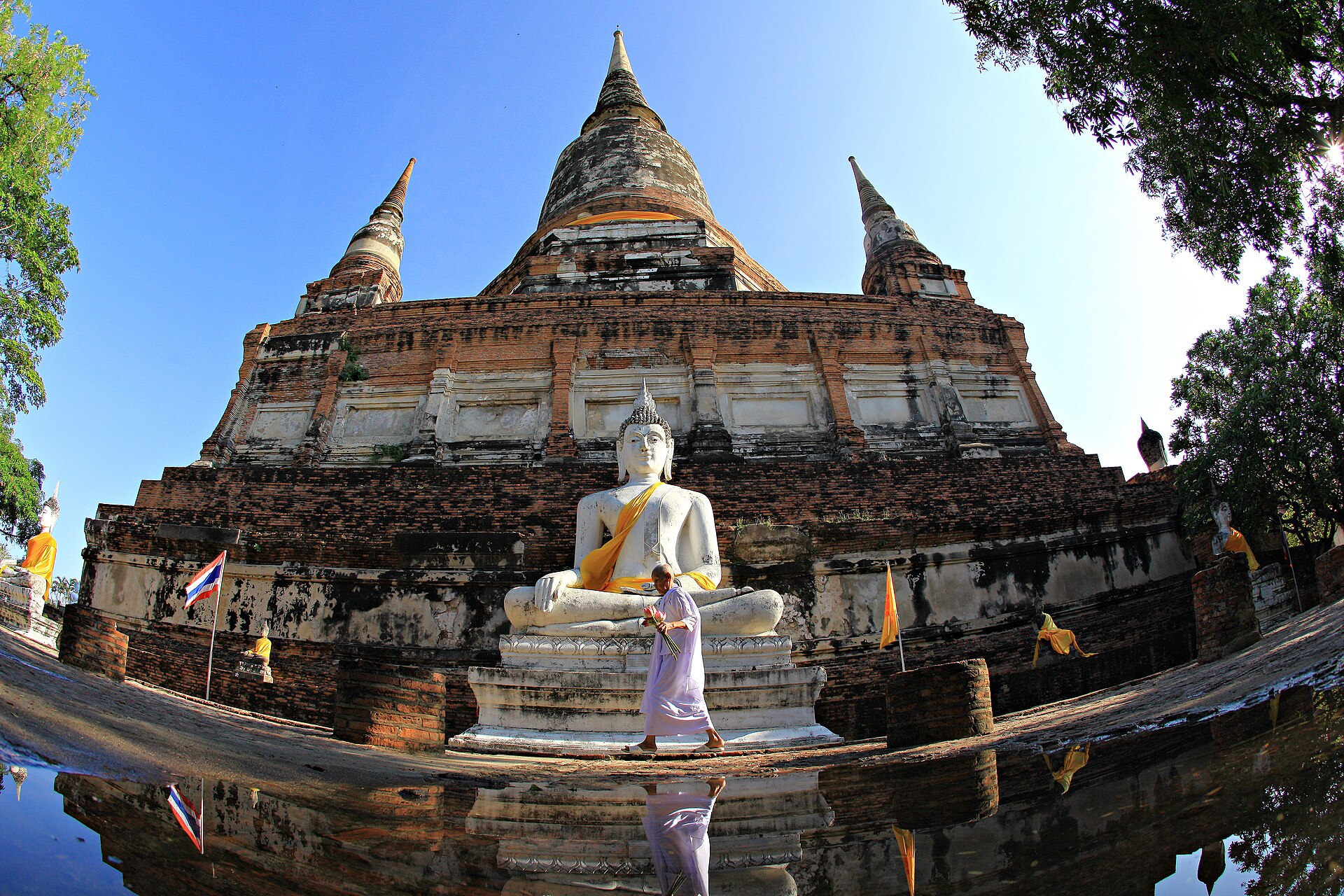
A huge bell-shaped chedi visible from far across the plain. Steep steps lead up to a chamber in its side, where people leave offerings and look out over the grounds.
Open in Google Maps (opens in a new tab)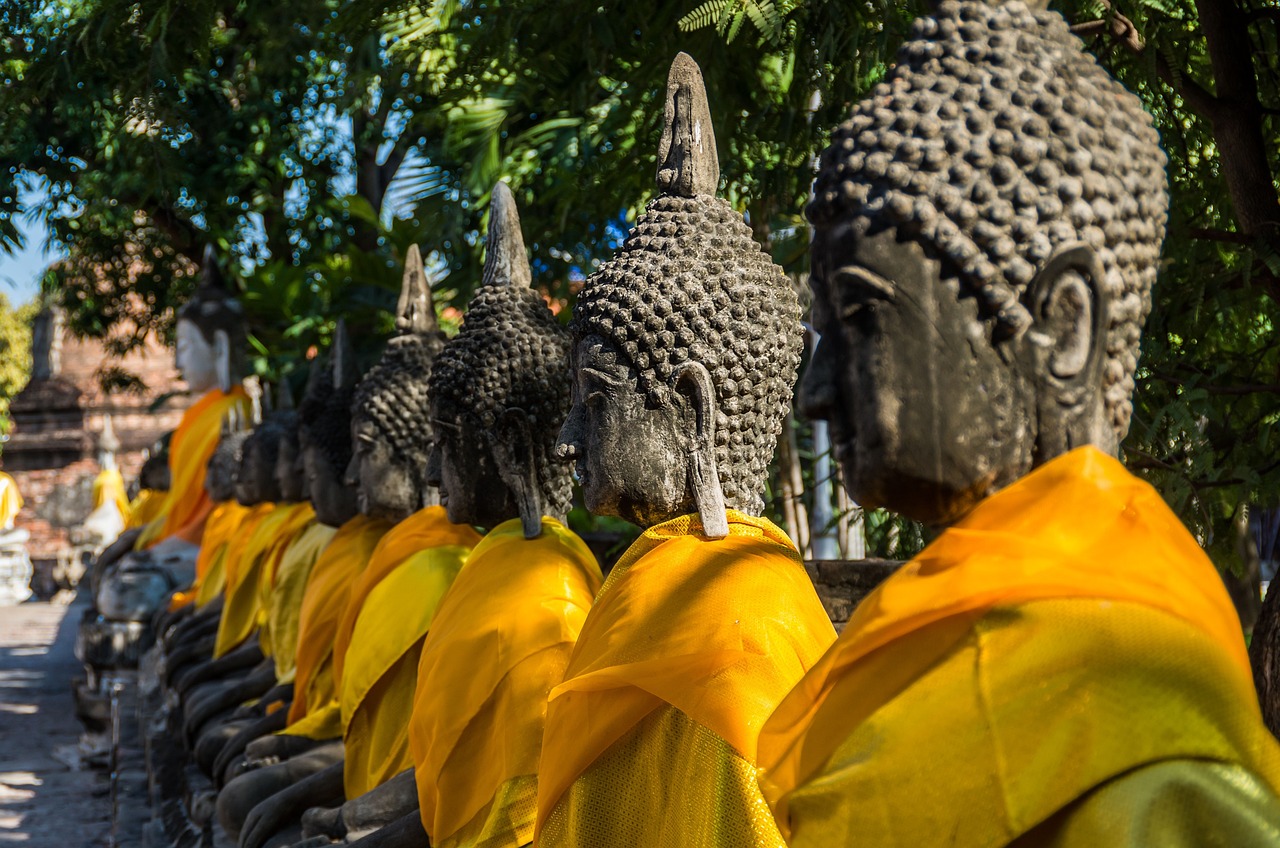
 Ayutthaya, Thailand
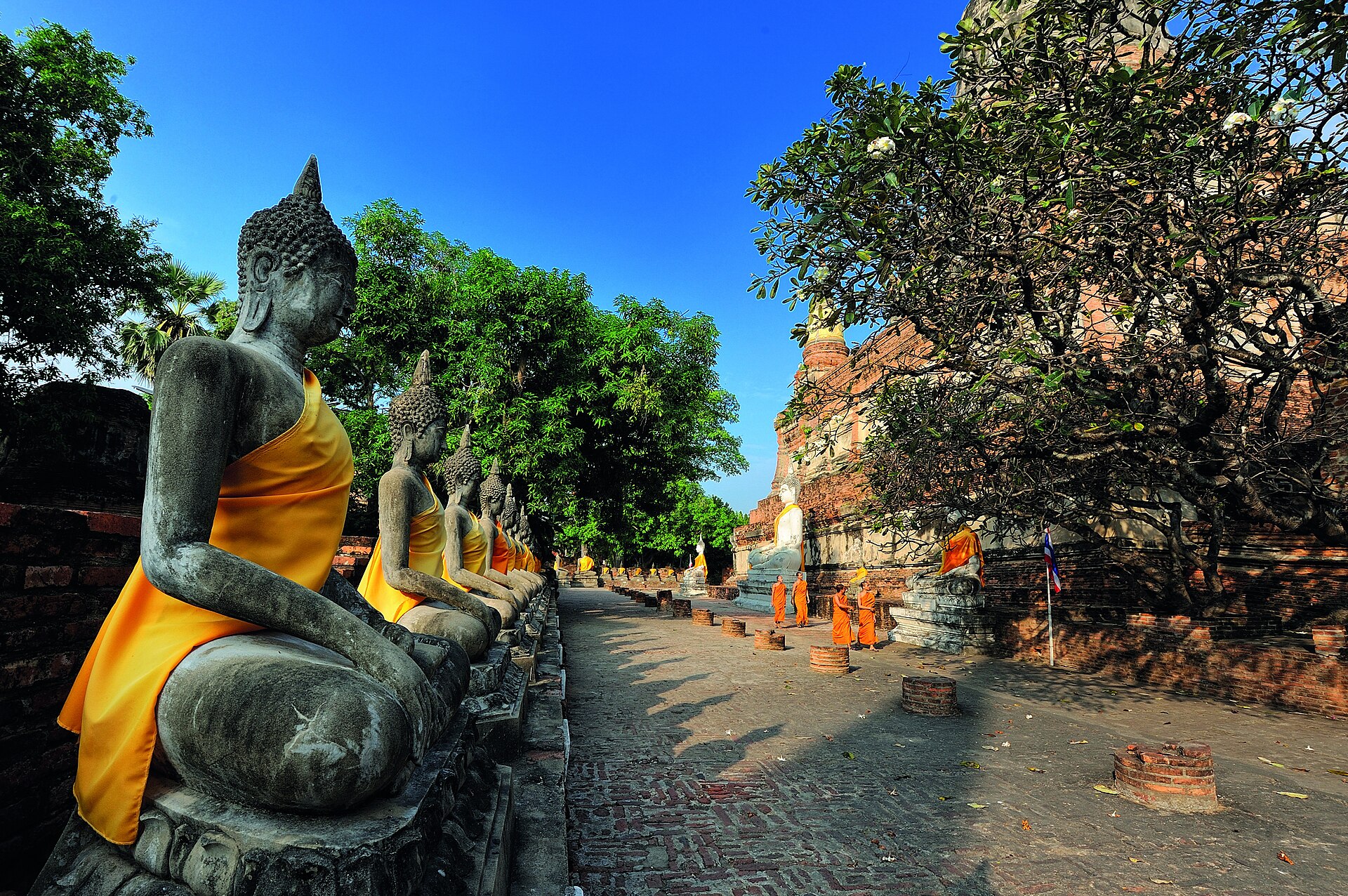
A great chedi surrounded by rows of saffron-robed Buddha images, and a large reclining Buddha, south-east of the island.
Centre of the temple
A huge bell-shaped chedi visible from far across the plain. Steep steps lead up to a chamber in its side, where people leave offerings and look out over the grounds.
Open in Google Maps (opens in a new tab)Around the cloister of the chedi
Dozens of seated Buddha images wrapped in saffron sashes line the courtyard — the classic photo of this temple.
Open in Google Maps (opens in a new tab)Near the entrance
A large white reclining Buddha in the open air, often wrapped in saffron cloth and surrounded by offerings.
Open in Google Maps (opens in a new tab)In the grounds
A shrine to the warrior king, where visitors leave rooster figures — said to honour his love of cockfighting — in thanks for wishes granted.
Open in Google Maps (opens in a new tab)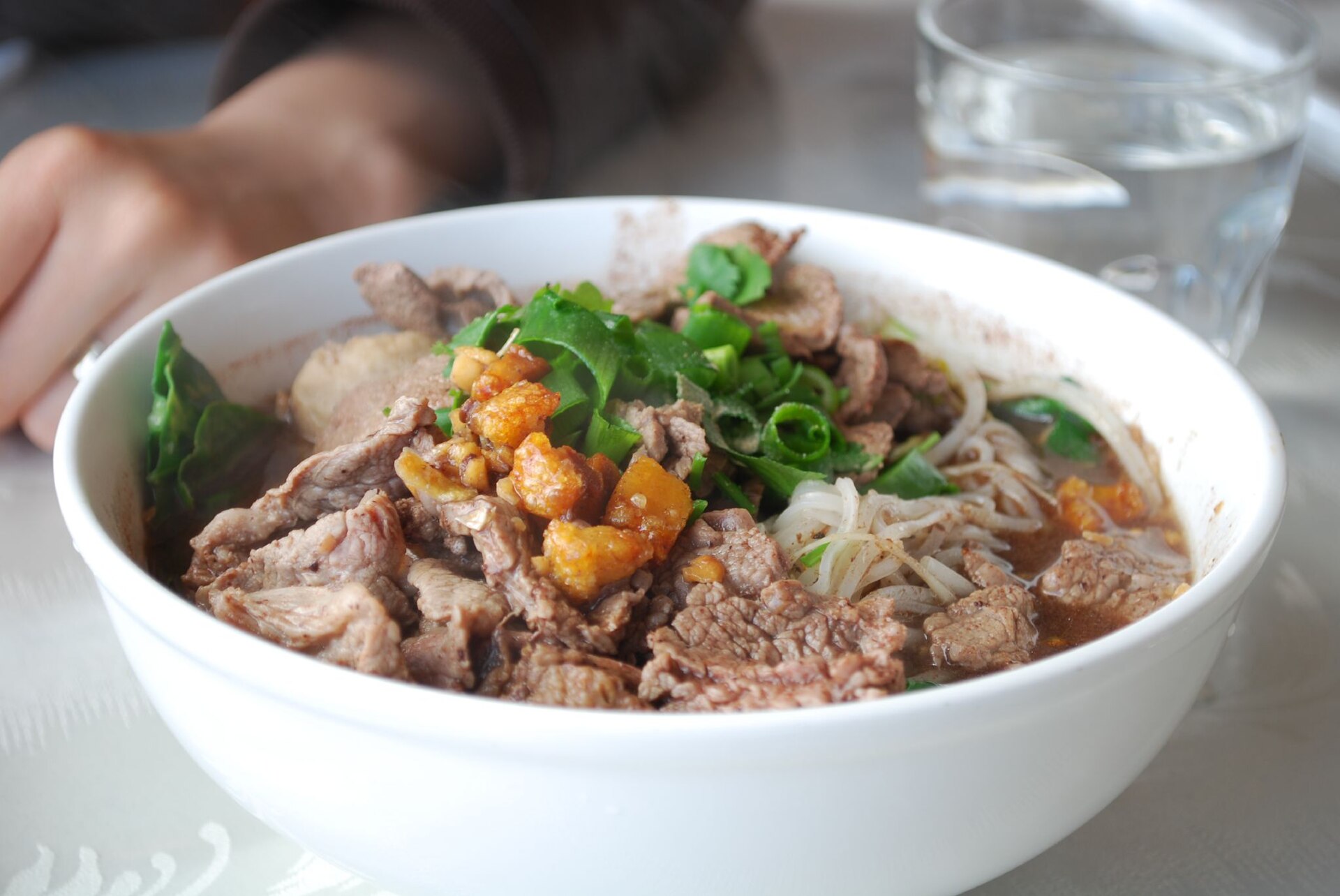
Ayutthaya, Thailand
Small bowls of rich, dark noodle soup with pork or beef, once sold from boats on the canals. Ayutthaya is known for them, and people usually order several bowls each.
Ayutthaya, Thailand
Ayutthaya's signature sweet: thin, soft roti wrappers rolled around fine threads of coloured spun sugar. Sold in bags from stalls on U Thong Road and around town to take home.
East side of the island, by the Pa Sak River
Ayutthaya's busy daytime market near the ferry from the railway station, with noodle shops, snacks and fruit stalls.
Open in Google Maps (opens in a new tab)Bang Lan Road, middle of the island
An evening food market near the main temples with grilled meats, noodles, Thai desserts and fruit. An easy place to try several local dishes after a day of ruins.
Open in Google Maps (opens in a new tab)Ayutthaya, Thailand
Across the Pa Sak River from the island, close to the trains from Bangkok. Riverside guesthouses here are a short ferry or bridge ride from the old town.
Open in Google Maps (opens in a new tab)Ayutthaya, Thailand
Stay inside the ring of rivers and you can cycle to the main ruins in minutes. Guesthouses and small hotels cluster near the Historical Park and the night market.
Open in Google Maps (opens in a new tab)Unlike the ruins on the island, this is a working monastery with resident monks — dress modestly, keep your voice down and do not touch monks if you are a woman. Draping a saffron cloth over a Buddha image or adding gold leaf is a way Thai Buddhists make merit.
Founded by King U Thong in 1357 for monks returning from Sri Lanka, the temple's great chedi is said to have been built by King Naresuan to mark his victory over the Burmese in 1592. It is still an active temple.
Climb the great chedi early in the morning.
See the giant seated Buddha by the river.
The museum of the foreign trading quarters.
Lunch at Chao Phrom market.
November–February; early morning, when monks and local worshippers are about and the light is soft on the chedi.
About 10 minutes by tuk-tuk from the island, across the Pa Sak River.
The old city sits on an island formed by three rivers, and the main ruins are spread out across it. A rented bicycle is the classic way to see them — the island is flat, but the sun is strong, so start early. Tuk-tuks can be hired by the hour for a temple circuit; agree the route and time before you set off. Sights off the island, such as Wat Chaiwatthanaram and Wat Yai Chai Mongkhon, are easier by tuk-tuk or on an evening boat tour around the island.
Cover shoulders and knees and take your shoes off before entering the halls. Sarongs are usually available to borrow or rent at the entrance.