
The canyon walls
Along the valley
Huge red and golden sandstone cliffs and rock pillars that glow at sunrise and sunset.
Open in Google Maps (opens in a new tab) Tabuk, Saudi Arabia
A dramatic sandstone canyon south-west of Tabuk, with towering cliffs, palm trees, reeds and running water — one of the most beautiful valleys in Saudi Arabia.
Along the valley
Huge red and golden sandstone cliffs and rock pillars that glow at sunrise and sunset.
Open in Google Maps (opens in a new tab)Valley floor
Date palms, reeds and running water — a rare green oasis in the desert.
Open in Google Maps (opens in a new tab)Side valleys
Wind-carved shapes and arches in the sandstone, great for photography.
Open in Google Maps (opens in a new tab)Above the valley
Guides can take you to high points with sweeping views over the canyon.
Open in Google Maps (opens in a new tab)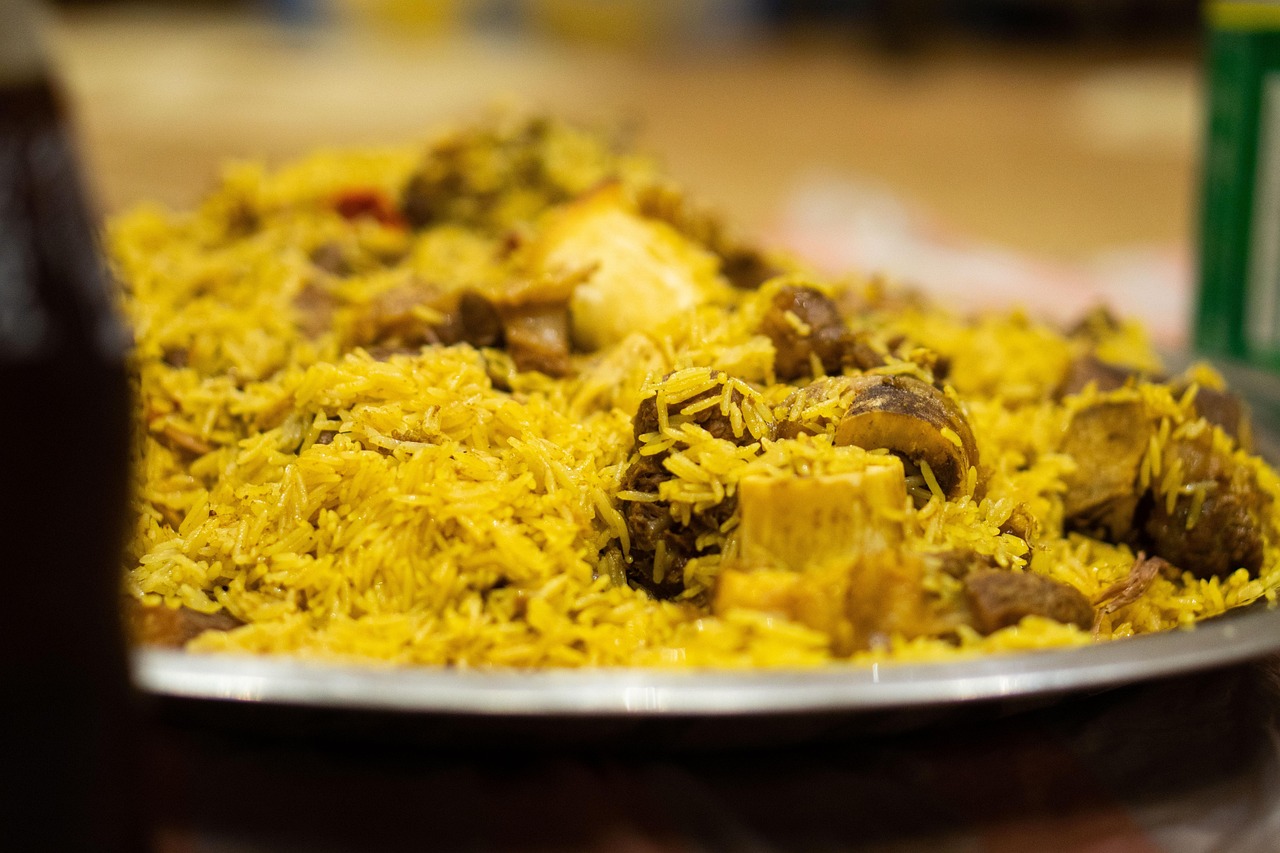
Tabuk, Saudi Arabia
The national dish: long-grain rice cooked in a spiced broth with chicken or lamb, served on a large shared platter with nuts, raisins and a tomato-chilli sauce (daqoos).
Tabuk, Saudi Arabia
Lamb or chicken cooked slowly in a closed pit or oven over smoky heat and served on fragrant rice. Common across southern Saudi Arabia, with roots shared with neighbouring Yemen.

Tabuk, Saudi Arabia
In the valley
There are few or no restaurants in the wadi. Bring food and water, or book a guided trip that includes a meal.
Open in Google Maps (opens in a new tab)Central Tabuk, near the castle and the old market
The streets around Tabuk Castle and the traditional market are lined with simple local restaurants serving kabsa, mandi and grilled meats, plus bakeries and shawarma counters.
Open in Google Maps (opens in a new tab)Tabuk, Saudi Arabia
Hotels and furnished apartments close to Tabuk Castle, the Hejaz Railway station and the old market. The easiest base without a car.
Open in Google Maps (opens in a new tab)Tabuk, Saudi Arabia
Some local operators organise overnight camping near the valley in the cooler months. Book only with an established guide.
Open in Google Maps (opens in a new tab)The valley lies in the lands of local tribes, and you may meet farmers tending palms or families picnicking at weekends. Be respectful of private gardens and ask before photographing people.
Wadi Al Disah is a long valley cut through the sandstone mountains of the Tabuk Region. Springs feed a stream that flows through parts of it for much of the year, so date palms, reeds and grasses grow along the valley floor below cliffs hundreds of metres high.
People have lived and travelled through the area for thousands of years, and rock inscriptions and carvings can be found in the region. Today it is known mainly as a natural wonder and a place for hiking, photography and camping.
Leave at dawn with your 4x4 guide.
Drive the valley floor between the cliffs and palm groves.
Short walks by the stream and lunch in the shade.
Watch the cliffs glow in the evening light before heading back.
October to April. Avoid summer heat, and never enter the valley when rain is forecast — flash floods can happen.