Muradiye Complex
Muradiye, west of the centre
The 15th-century külliye of Sultan Murad II, with a mosque and a garden of richly decorated royal tombs — a quiet, beautiful corner of the city.
Open in Google Maps (opens in a new tab)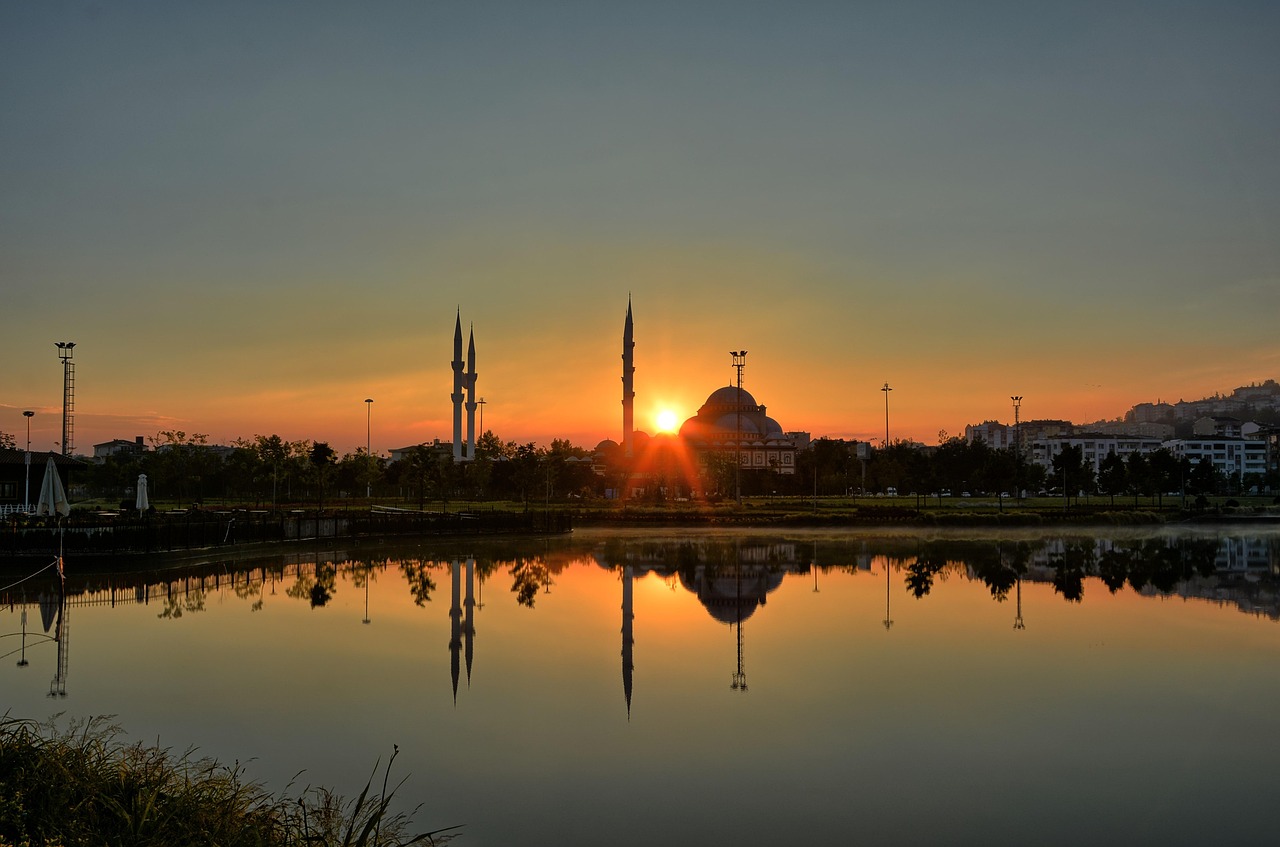
 Bursa, Türkiye
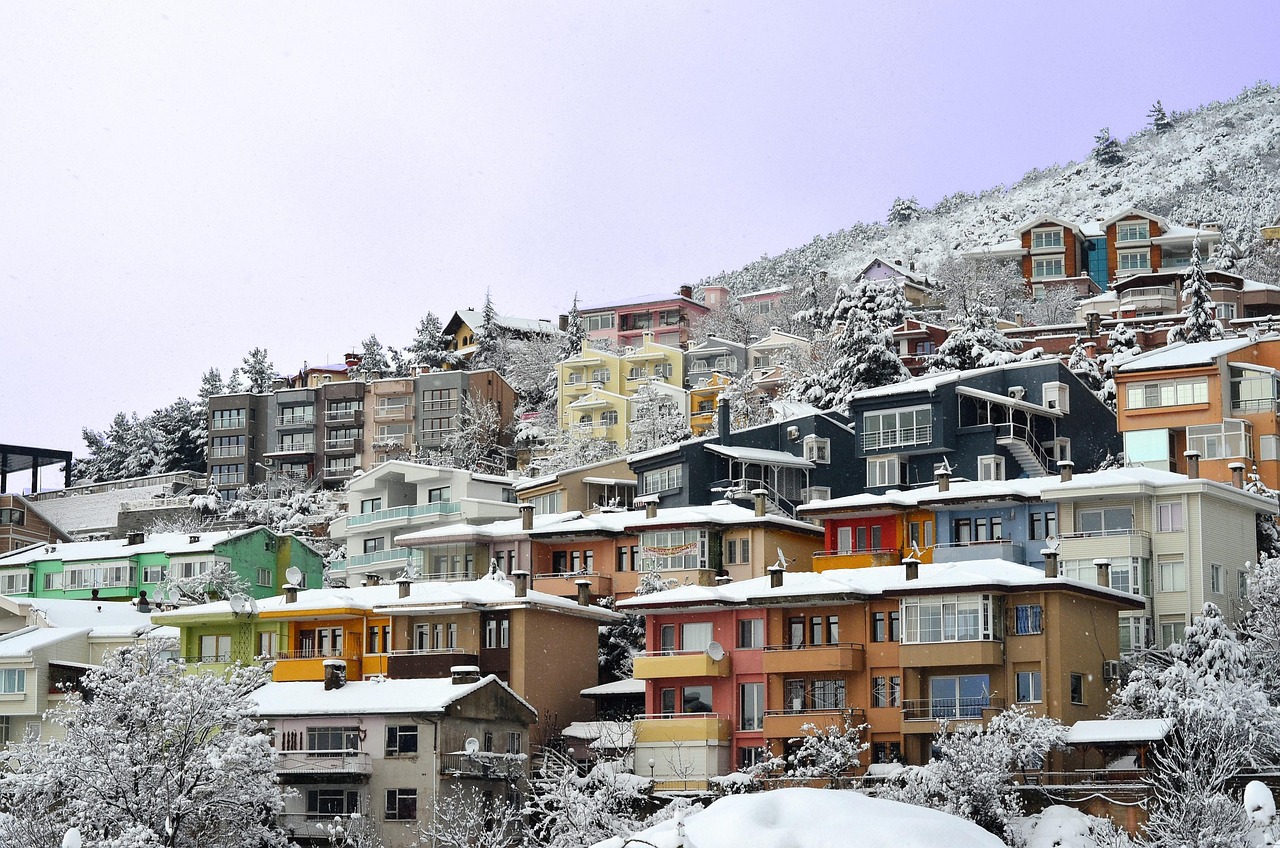
The first capital of the Ottoman Empire, at the foot of Mount Uludağ: early Ottoman mosques and tombs, silk hans and covered bazaars, thermal baths, the original İskender kebab and the old village of Cumalıkızık.
Village, UNESCO
Bursa, Türkiye
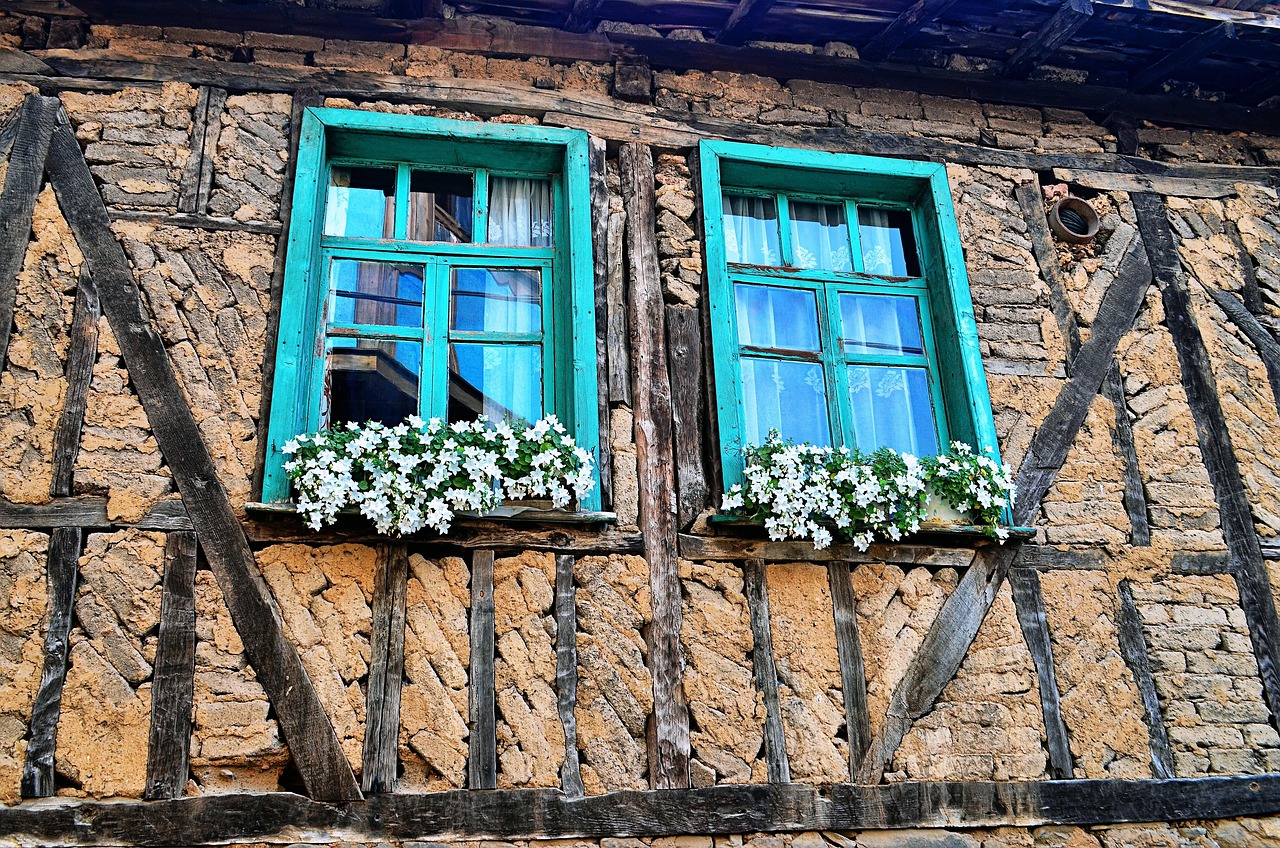
A well-preserved early Ottoman village on the slopes of Uludağ, with cobbled lanes, colourful timber-framed houses and village breakfasts — part of the UNESCO site.
Explore Cumalıkızık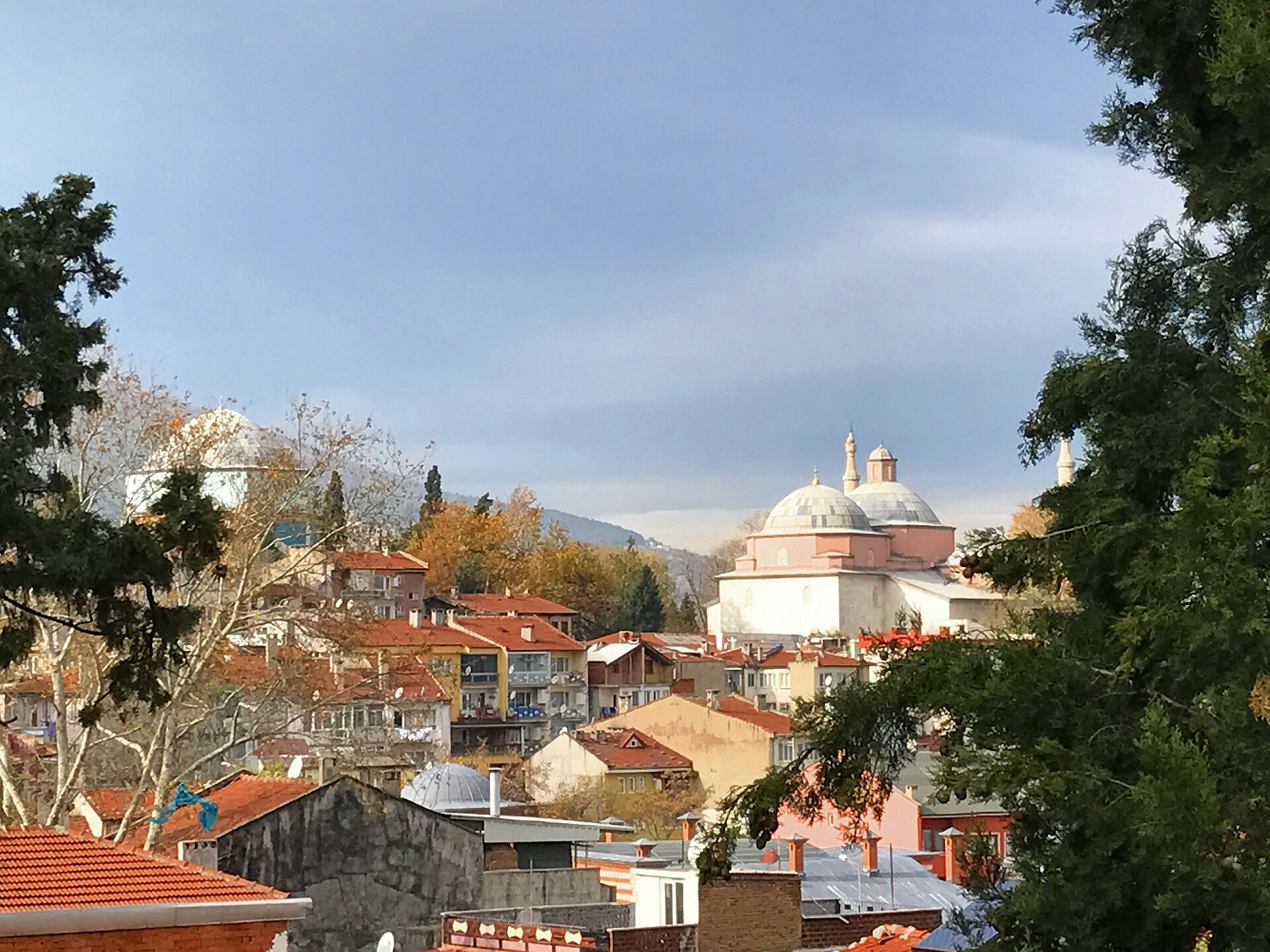
Mosque, Heritage
Bursa, Türkiye
An early 15th-century mosque and the turquoise-tiled tomb of Sultan Mehmed I, facing each other on a hill east of the centre — masterpieces of early Ottoman tilework.
Explore Green Mosque and Green Tomb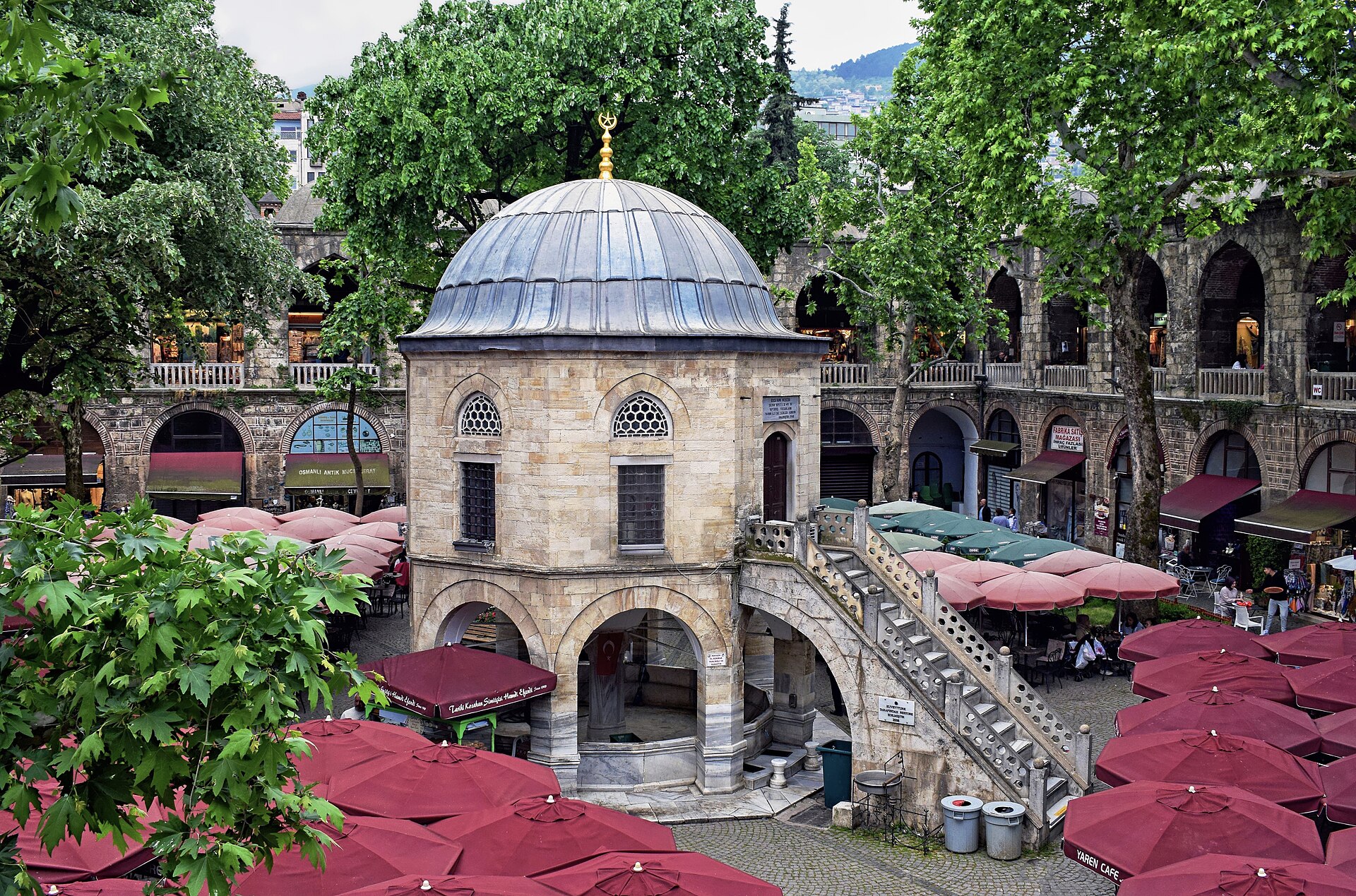
Market, Heritage
Bursa, Türkiye
Bursa's 15th-century silk market around a courtyard with a tiny mosque, at the heart of a covered bazaar of hans, silk scarves, towels and knives.
Explore Koza Han and the covered bazaar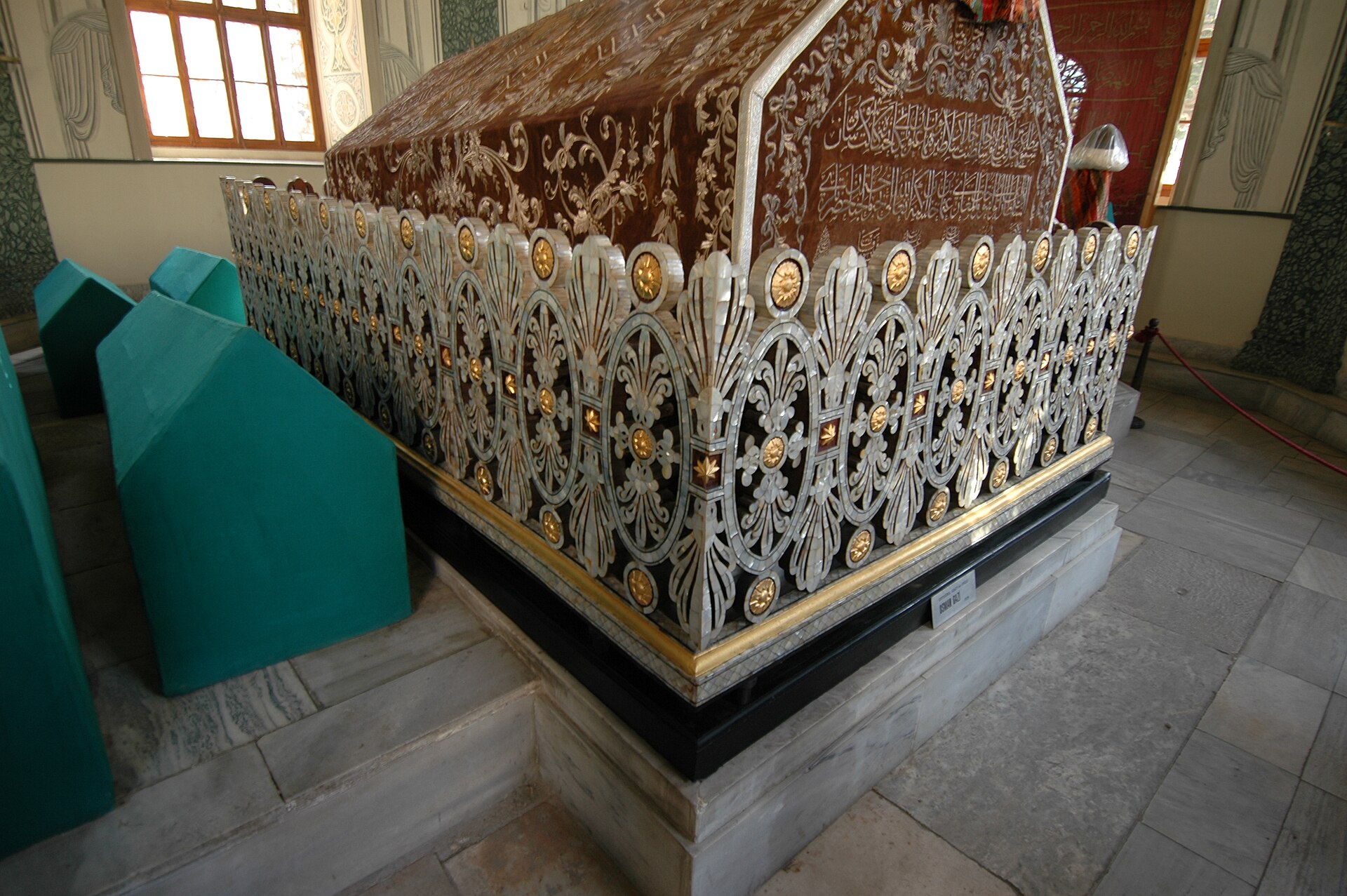
Heritage, Viewpoint
Bursa, Türkiye
The tombs of Osman Gazi and Orhan Gazi, founders of the Ottoman dynasty, in the Tophane park on the old citadel hill, with a clock tower and views over Bursa.
Explore Tombs of Osman and Orhan (Tophane)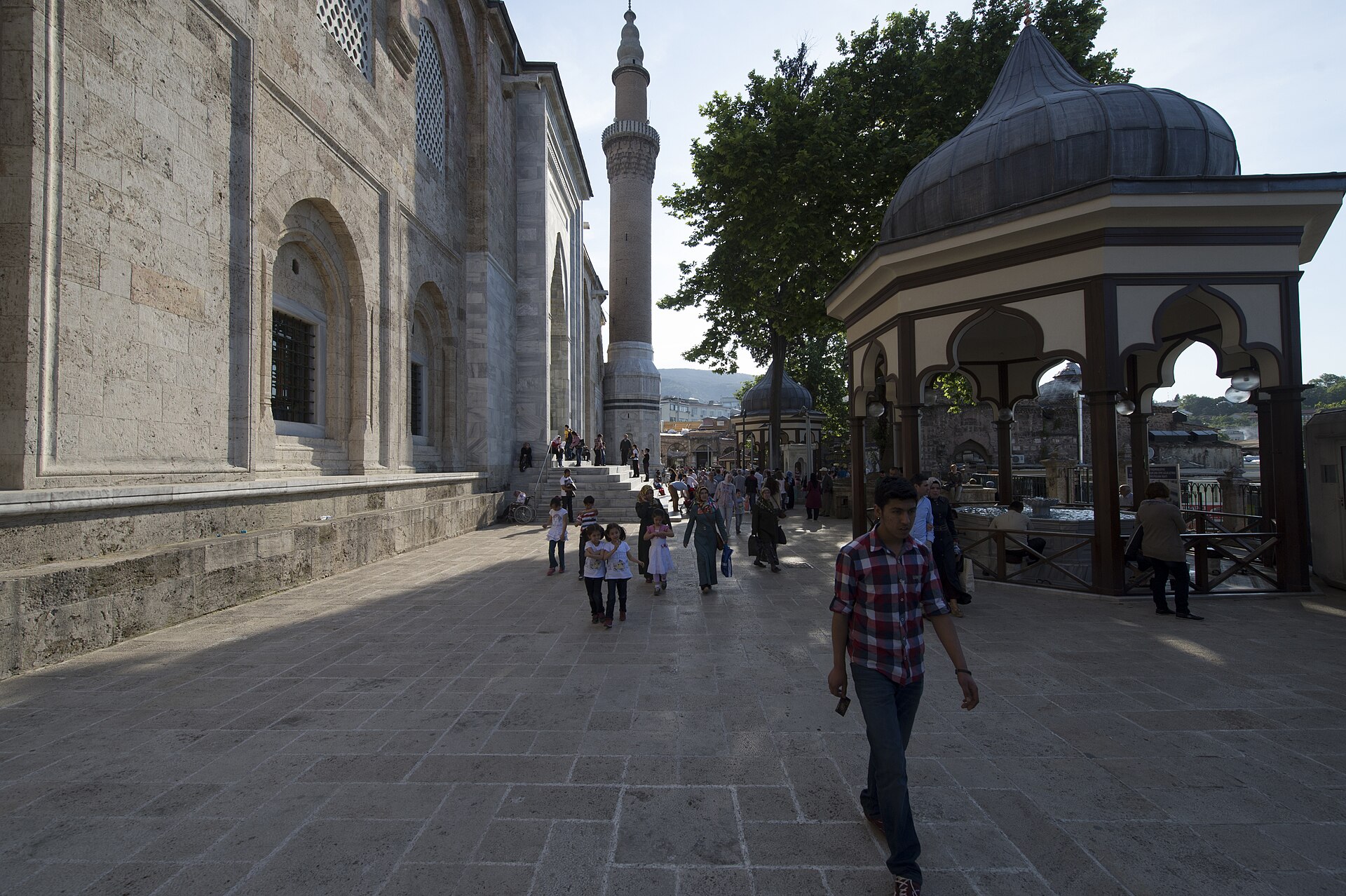
Mosque, Heritage
Bursa, Türkiye
Bursa's great mosque, built around 1400 with twenty domes over a forest of pillars, famous for its giant wall calligraphy and the fountain inside the prayer hall.
Explore Ulu Cami (Grand Mosque)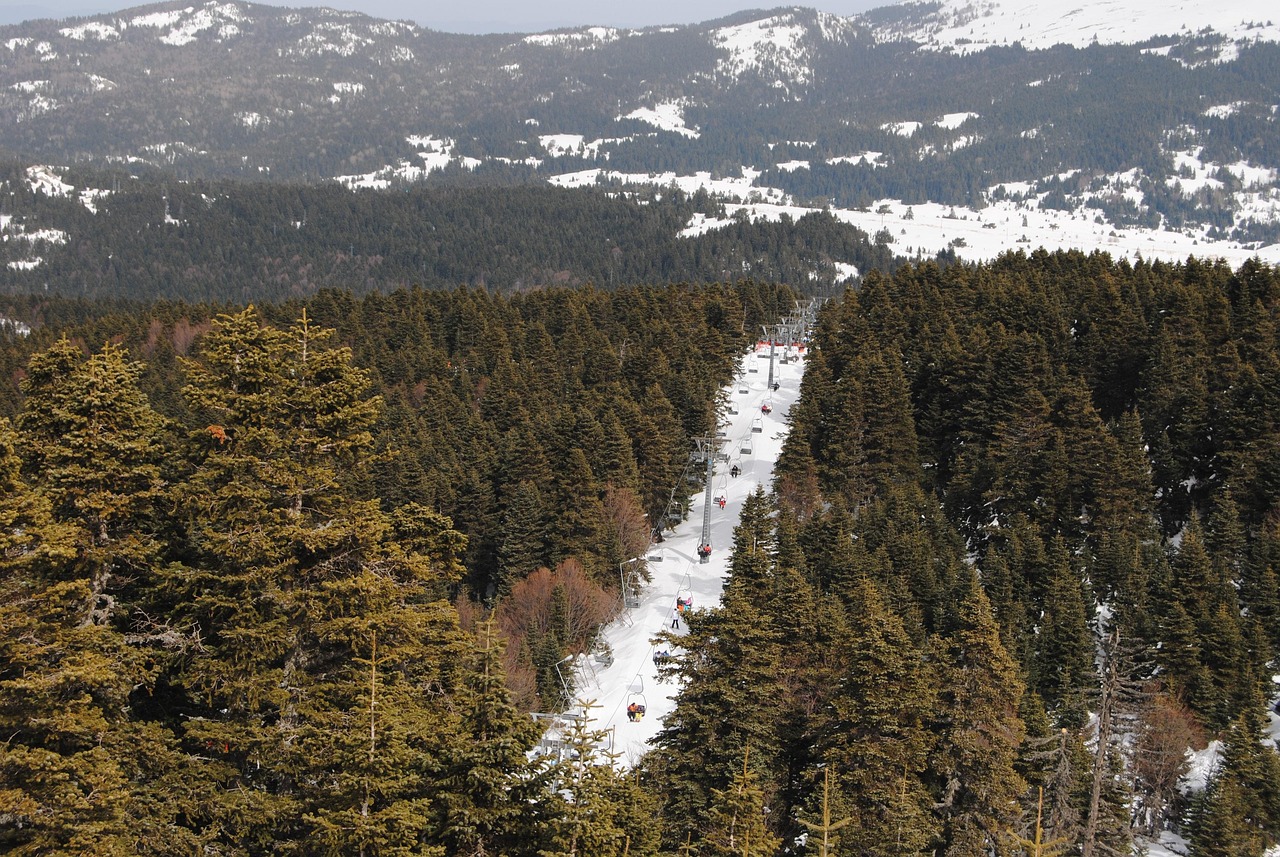
Nature, Mountain
Bursa, Türkiye
The mountain above Bursa — Türkiye's best-known ski resort in winter and a cool, forested national park for walks and picnics in summer, reached by one of the longest cable cars in the country.
Explore UludağMuradiye, west of the centre
The 15th-century külliye of Sultan Murad II, with a mosque and a garden of richly decorated royal tombs — a quiet, beautiful corner of the city.
Open in Google Maps (opens in a new tab)Emirsultan, east of the centre
A much-visited mosque and tomb of a revered 15th-century saint, with views over the city.
Open in Google Maps (opens in a new tab)Çekirge
Historic Ottoman baths such as Eski Kaplıca and Yeni Kaplıca, still fed by the hot springs.
Open in Google Maps (opens in a new tab)Village, UNESCO
Bursa, Türkiye
A well-preserved early Ottoman village on the slopes of Uludağ, with cobbled lanes, colourful timber-framed houses and village breakfasts — part of the UNESCO site.
Explore CumalıkızıkMosque, Heritage
Bursa, Türkiye
An early 15th-century mosque and the turquoise-tiled tomb of Sultan Mehmed I, facing each other on a hill east of the centre — masterpieces of early Ottoman tilework.
Explore Green Mosque and Green TombMarket, Heritage
Bursa, Türkiye
Bursa's 15th-century silk market around a courtyard with a tiny mosque, at the heart of a covered bazaar of hans, silk scarves, towels and knives.
Explore Koza Han and the covered bazaarHeritage, Viewpoint
Bursa, Türkiye
The tombs of Osman Gazi and Orhan Gazi, founders of the Ottoman dynasty, in the Tophane park on the old citadel hill, with a clock tower and views over Bursa.
Explore Tombs of Osman and Orhan (Tophane)Mosque, Heritage
Bursa, Türkiye
Bursa's great mosque, built around 1400 with twenty domes over a forest of pillars, famous for its giant wall calligraphy and the fountain inside the prayer hall.
Explore Ulu Cami (Grand Mosque)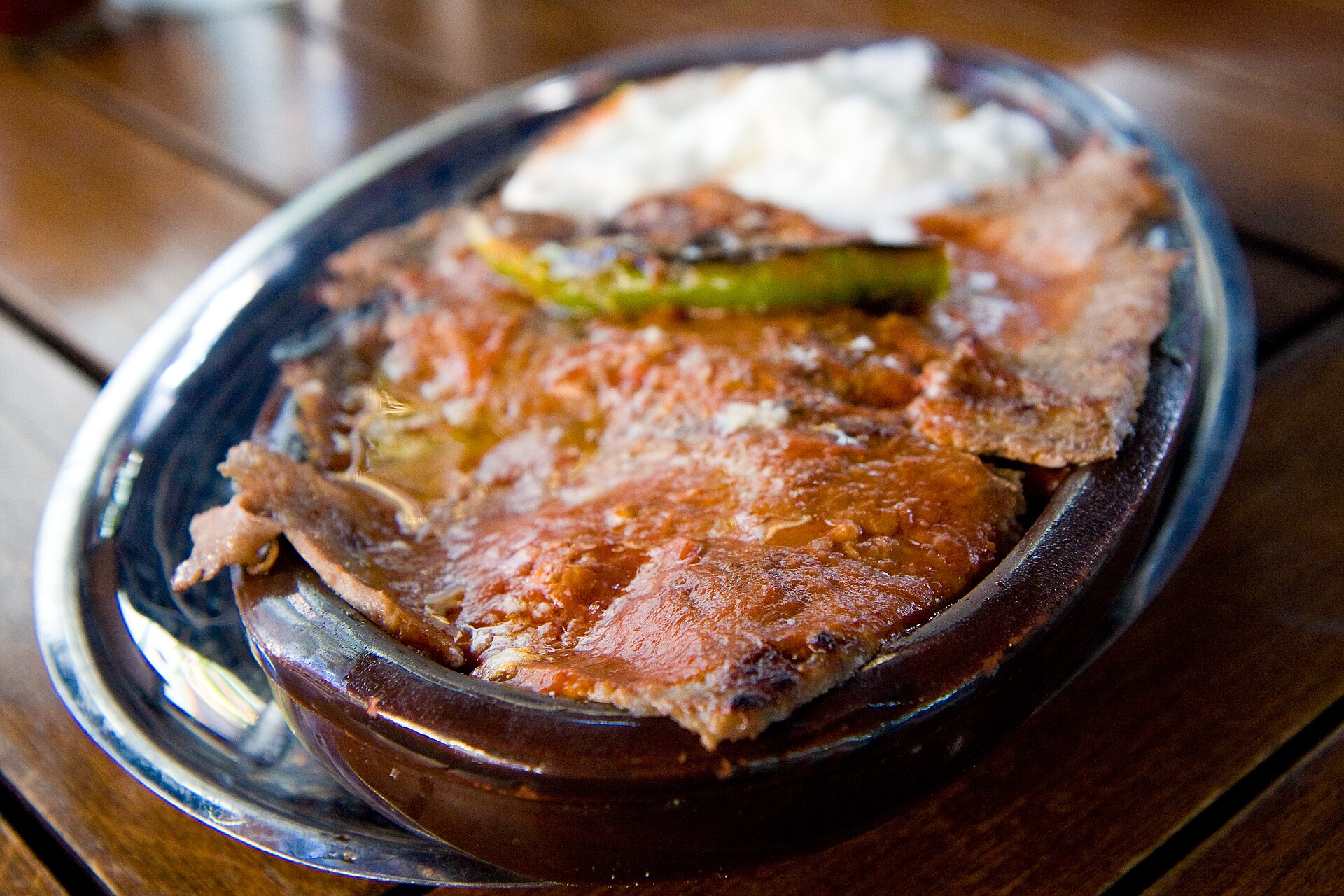
Bursa, Türkiye
Bursa, Türkiye
Another Bursa favourite in the same style as İskender: grilled meatballs on pide bread with tomato sauce, melted butter and yoghurt.
Bursa, Türkiye
A Bursa street pastry: a small open pide topped with minced meat, onion and tomato, eaten hot from bakeries in the morning or as a snack.
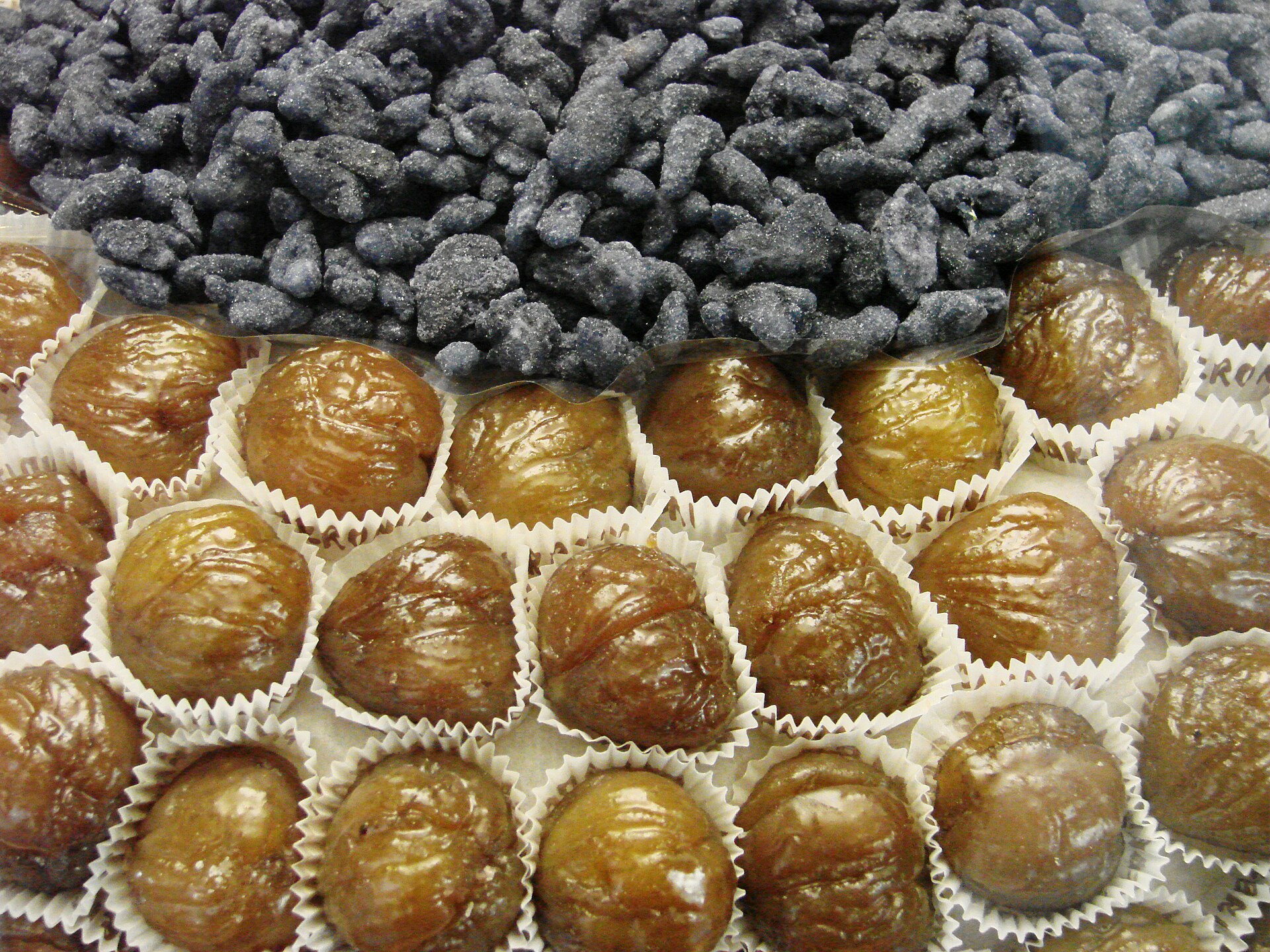
Bursa, Türkiye
Chestnuts slowly candied in syrup, Bursa's signature sweet. Sold in sweet shops across the city, especially around the bazaar and Heykel, plain or dipped in chocolate.
Bursa, Türkiye
Bursa, Türkiye
Heykel, Atatürk Street and the streets around the covered bazaar
The family-run kebab houses descended from İskender Efendi, and many others, serve İskender and pideli köfte in the old centre. Expect a lunchtime crowd.
Open in Google Maps (opens in a new tab)Kapalıçarşı and the hans around Ulu Cami
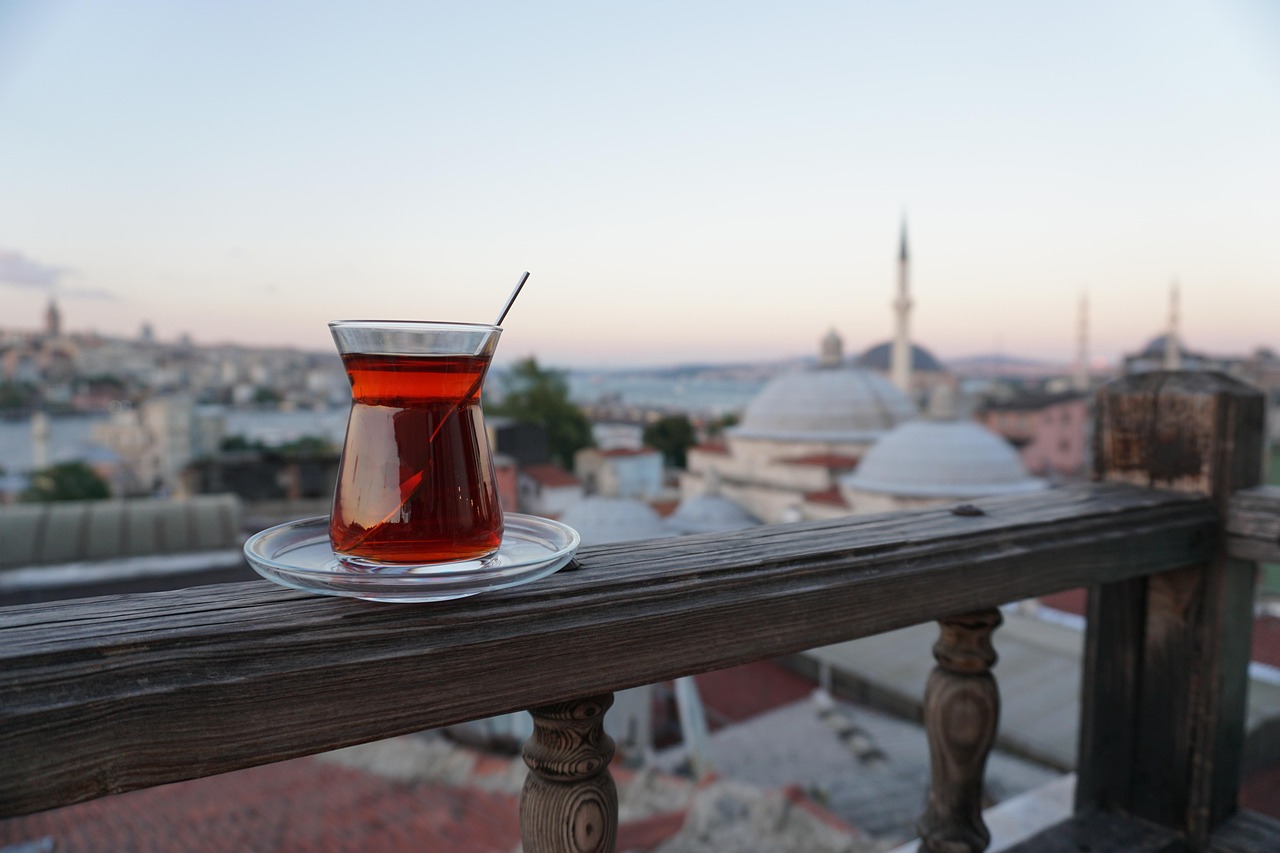
Tea gardens in the courtyards of the old hans, simple lokantas, sweet shops selling kestane şekeri and bakeries with cantık.
Open in Google Maps (opens in a new tab)Cumalıkızık, east of the city
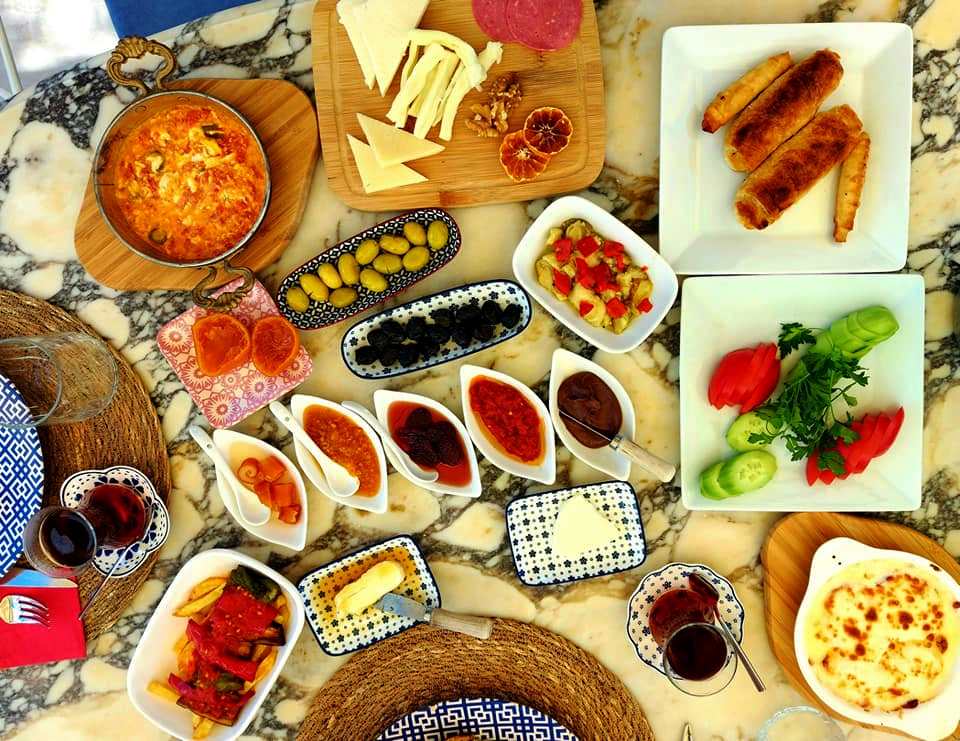
Village houses and garden cafés serving long Turkish breakfasts with homemade jams, gözleme (stuffed flatbread) and local fruit.
Open in Google Maps (opens in a new tab)Çekirge and the slopes towards Uludağ
Restaurants and tea gardens with views over the city, near the thermal hotels, and grill houses on the road up the mountain.
Open in Google Maps (opens in a new tab)Bursa, Türkiye
Walking distance to Ulu Cami, the covered bazaar, Koza Han and the Green Mosque. Mostly mid-range city hotels.
Open in Google Maps (opens in a new tab)Bursa, Türkiye
The historic spa district on the western hills, with thermal hotels that pipe mineral water into their own baths. Quieter, a short ride from the centre.
Open in Google Maps (opens in a new tab)Bursa, Türkiye
Mountain hotels at the ski area, busiest in winter. Most visitors stay in the city and go up for the day by cable car or road.
Open in Google Maps (opens in a new tab)Bursa is a conservative, proud city where the Ottoman story began. Families still gather in the courtyard tea gardens of the old hans, and the city is known for Karagöz, the traditional shadow-puppet theatre whose legendary characters are said to have lived here — there is a Karagöz museum in the city.
It is famous for silk, towels and textiles, İskender kebab, candied chestnuts and its thermal waters, and for the green orchards and peach trees that surround it.
Bursa was founded in antiquity as Prusa, at the foot of the mountain the Greeks called Mysian Olympus, now Uludağ. Its hot springs made it a spa town under the Romans and Byzantines.
In 1326 the city was taken by Orhan Gazi, son of Osman, founder of the Ottoman dynasty, and it became the first Ottoman capital. The early sultans filled it with mosques, schools, baths and külliyes (charitable complexes), and buried their dead here — Osman and Orhan rest in their tombs at Tophane. Even after the capital moved to Edirne and then Istanbul, Bursa stayed rich from the silk trade, at the western end of the caravan routes.
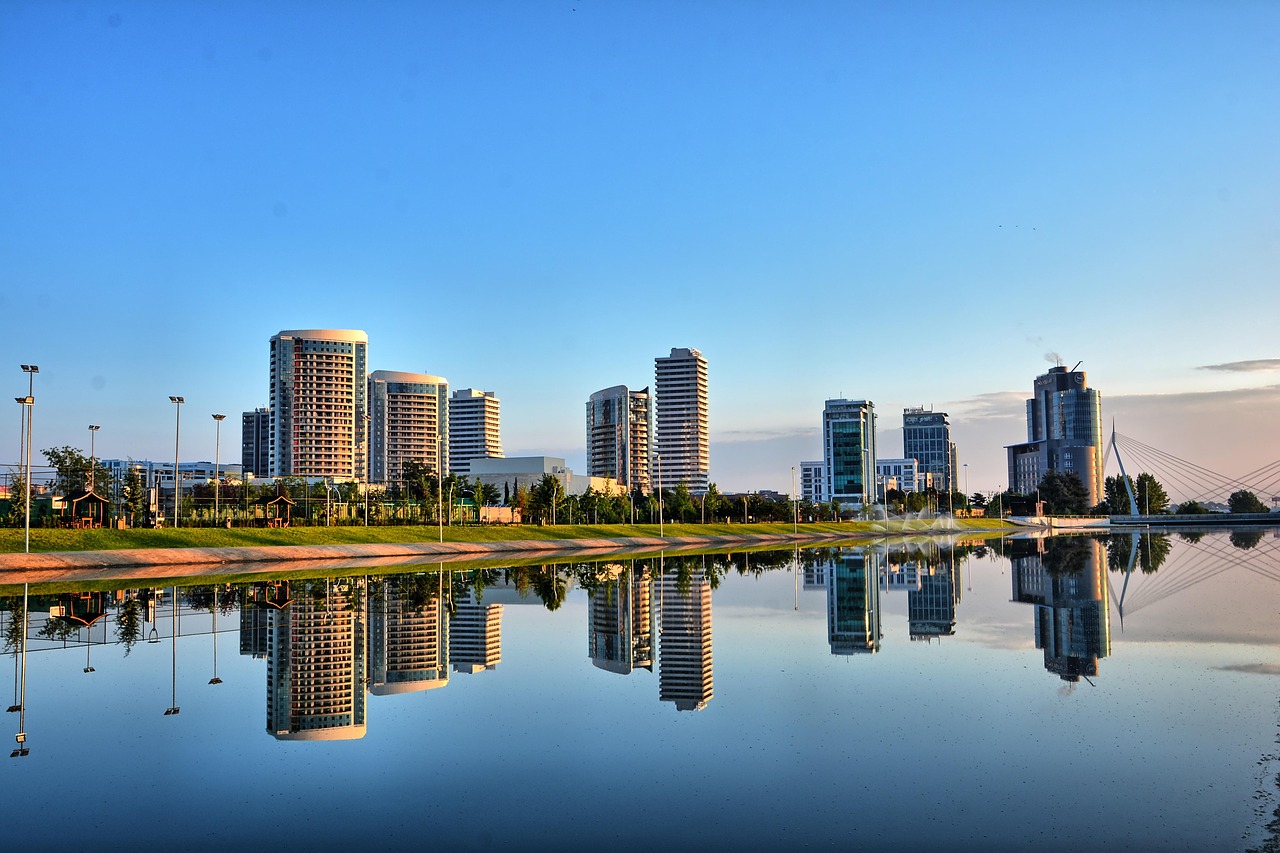
In 2014 UNESCO listed "Bursa and Cumalıkızık: the Birth of the Ottoman Empire" as a World Heritage Site. Today Bursa is one of Türkiye's biggest industrial cities, but its historic core and green slopes keep the feel of the old capital — it is often called Yeşil Bursa, "Green Bursa".
Ulu Cami, the covered bazaar and Koza Han in the morning, İskender kebab for lunch, then the Green Mosque and Green Tomb and the tombs of Osman and Orhan at Tophane for sunset over the city. Evening bath in Çekirge.
Breakfast in Cumalıkızık and a walk through its lanes, then the cable car up Uludağ for the afternoon, back down for dinner.
Sea bus from Yenikapı, then on to the city centre.
The great mosque, Koza Han and the covered market.
At one of the historic kebab houses.
Early Ottoman tiles and the founders' tombs, then back to Istanbul.
April to June and September to October for sightseeing. December to March for skiing on Uludağ; summers are warm and the mountain is a cool escape.
Most visitors come from Istanbul. Fly into Istanbul (IST or SAW), then:
By air: Bursa Yenişehir Airport (YEI), about an hour east of the city, has a limited number of domestic flights — check what is operating.
By train: high-speed YHT trains run to Bilecik/Bozüyük, with connecting buses to Bursa; check current services.