Ajwa dates
Madinah, Saudi Arabia
 Madinah, Saudi Arabia
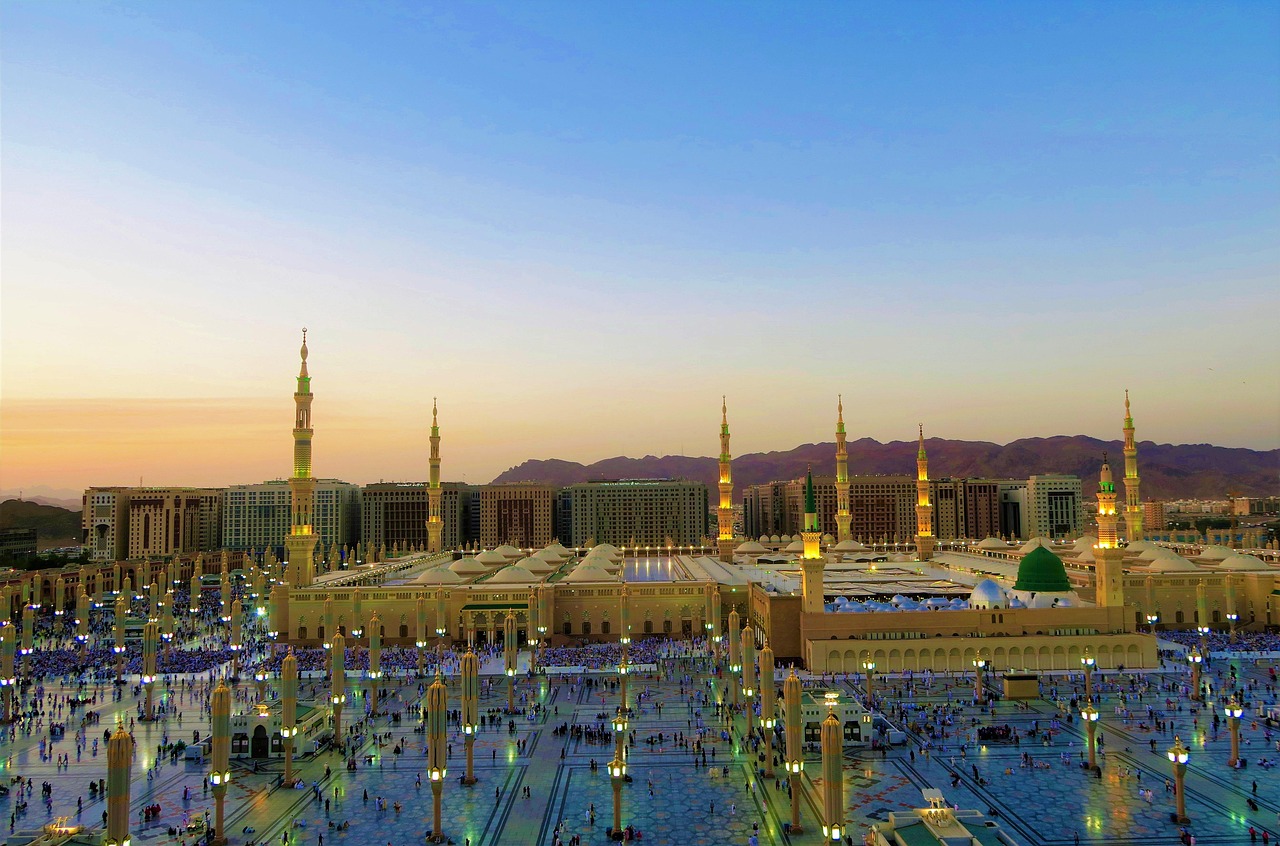
Al-Madinah al-Munawwarah, "the Illuminated City", is the second holiest city in Islam and home of the Prophet's Mosque, where the Prophet Muhammad ﷺ is buried. A calm, green city of palm groves and historic mosques — Quba, Qiblatayn, the Seven Mosques — and the battlefield of Uhud, visited by millions of Muslims every year, often together with Umrah in Makkah.
Mosque, Heritage
Madinah, Saudi Arabia
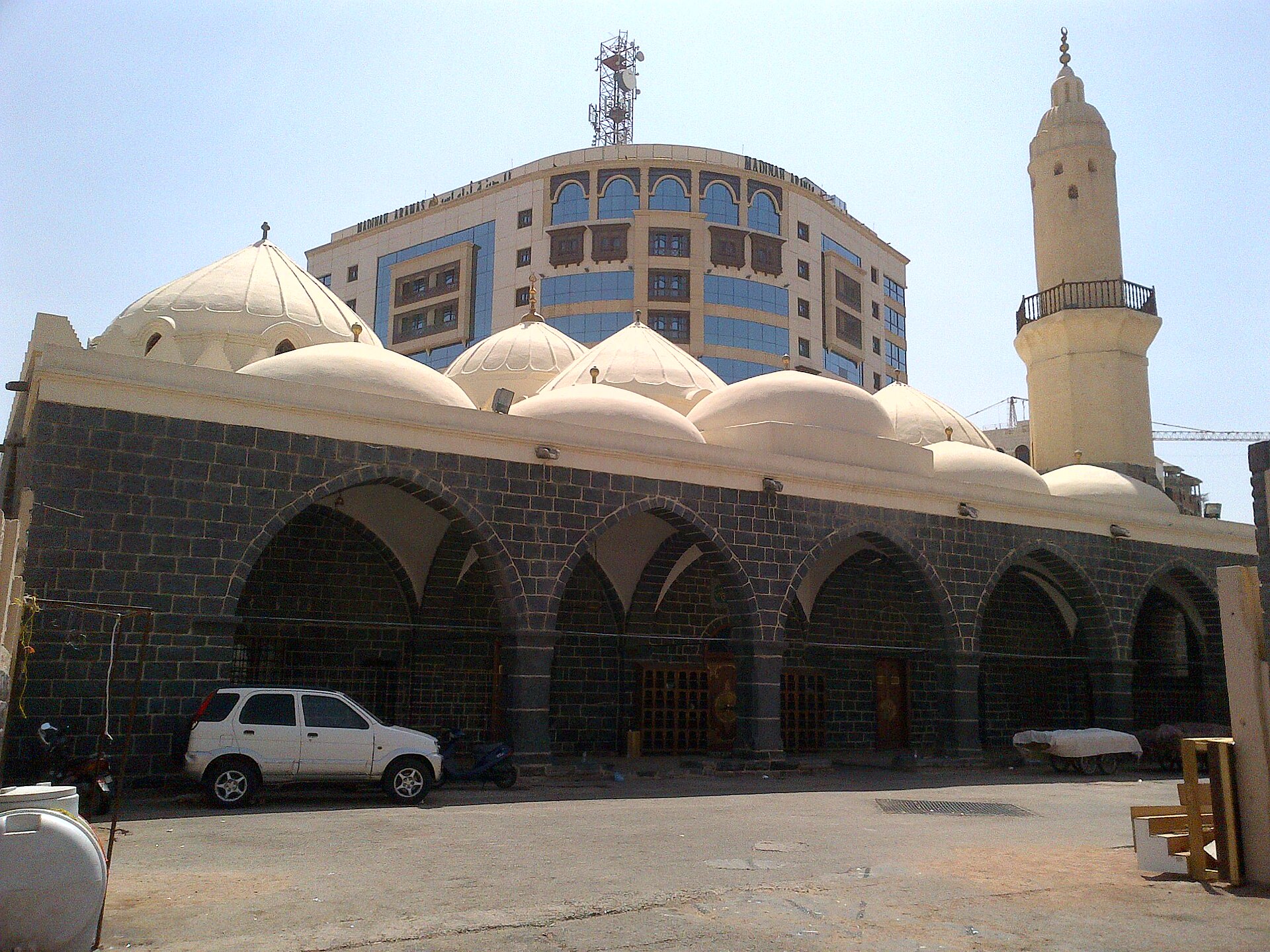
A small historic mosque near the Prophet's Mosque, on the spot where the Prophet ﷺ prayed the Eid prayers and the prayer for rain. Its name means "the cloud".
Explore Al-Ghamamah Mosque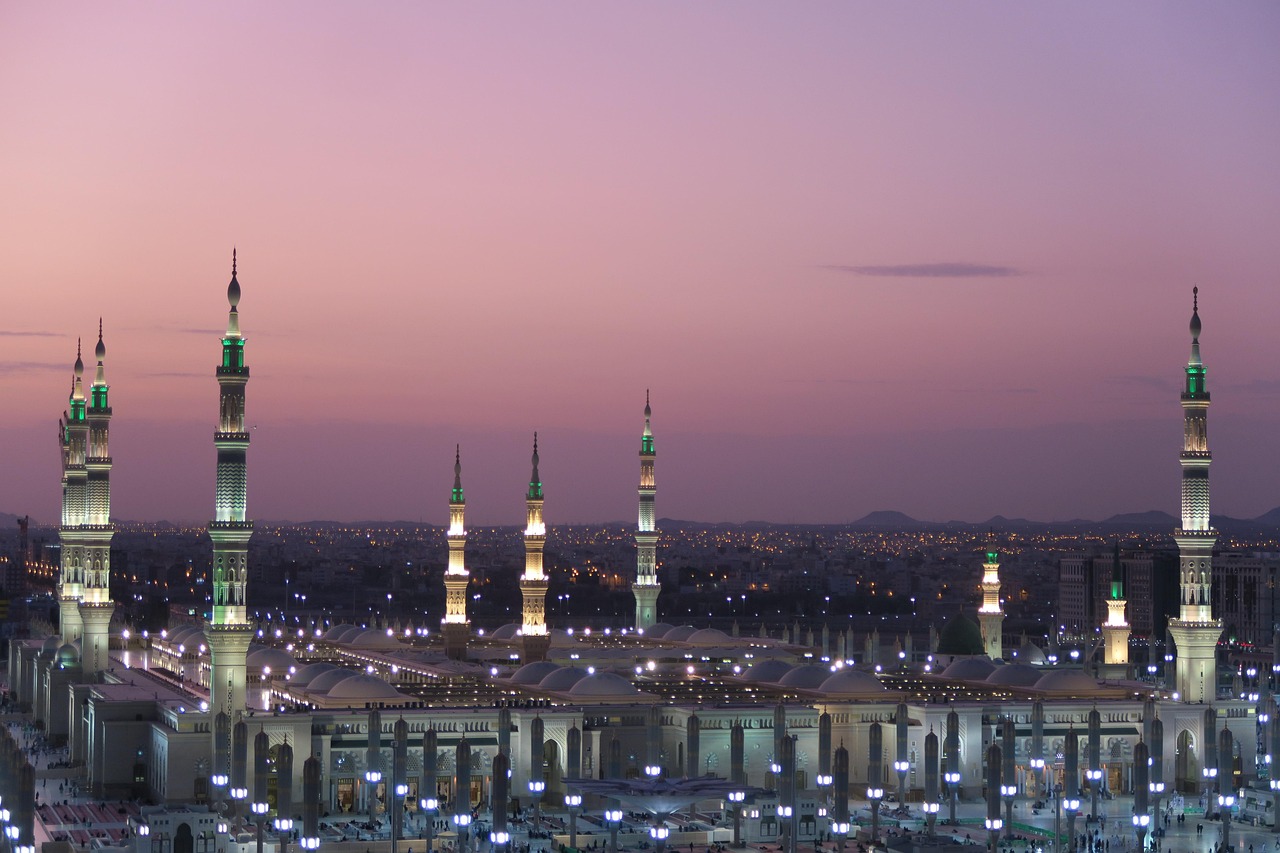
Mosque
Madinah, Saudi Arabia
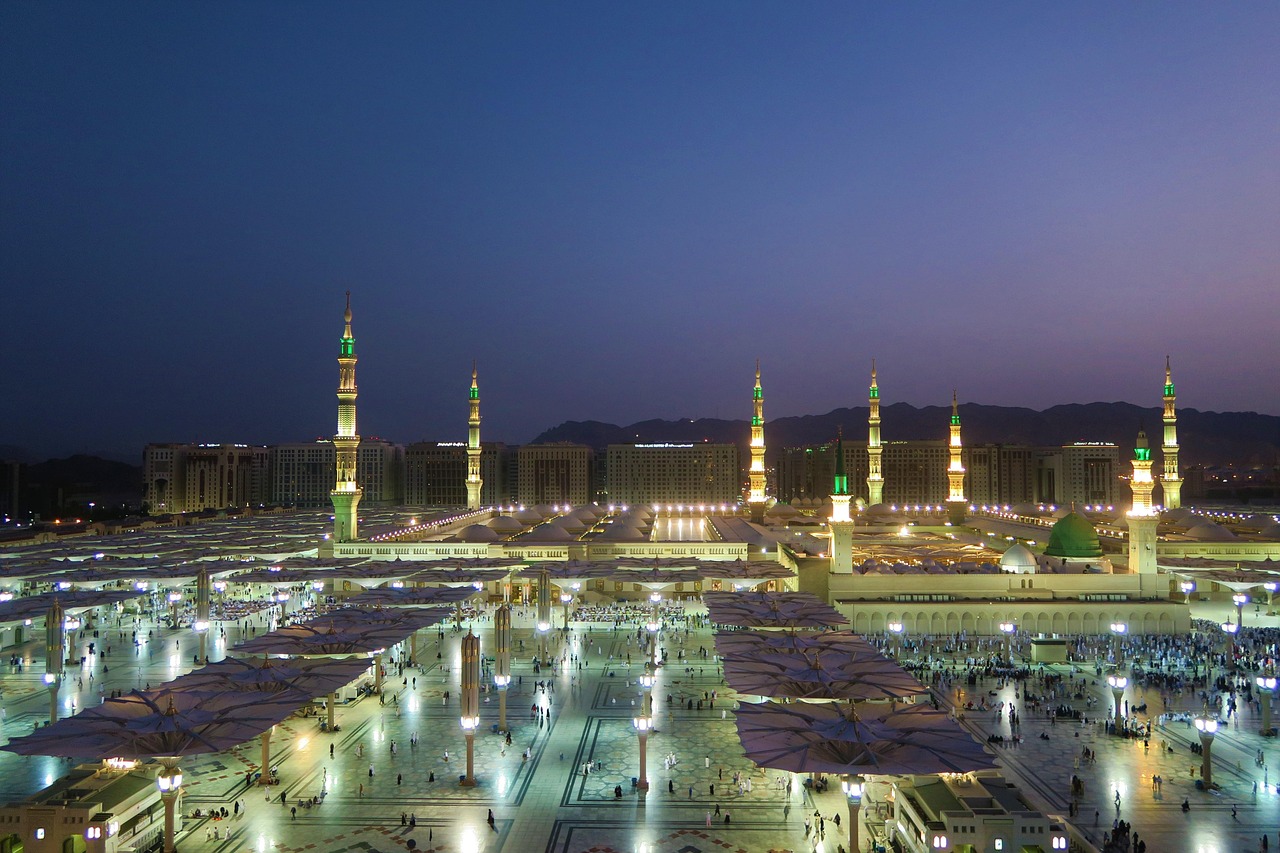
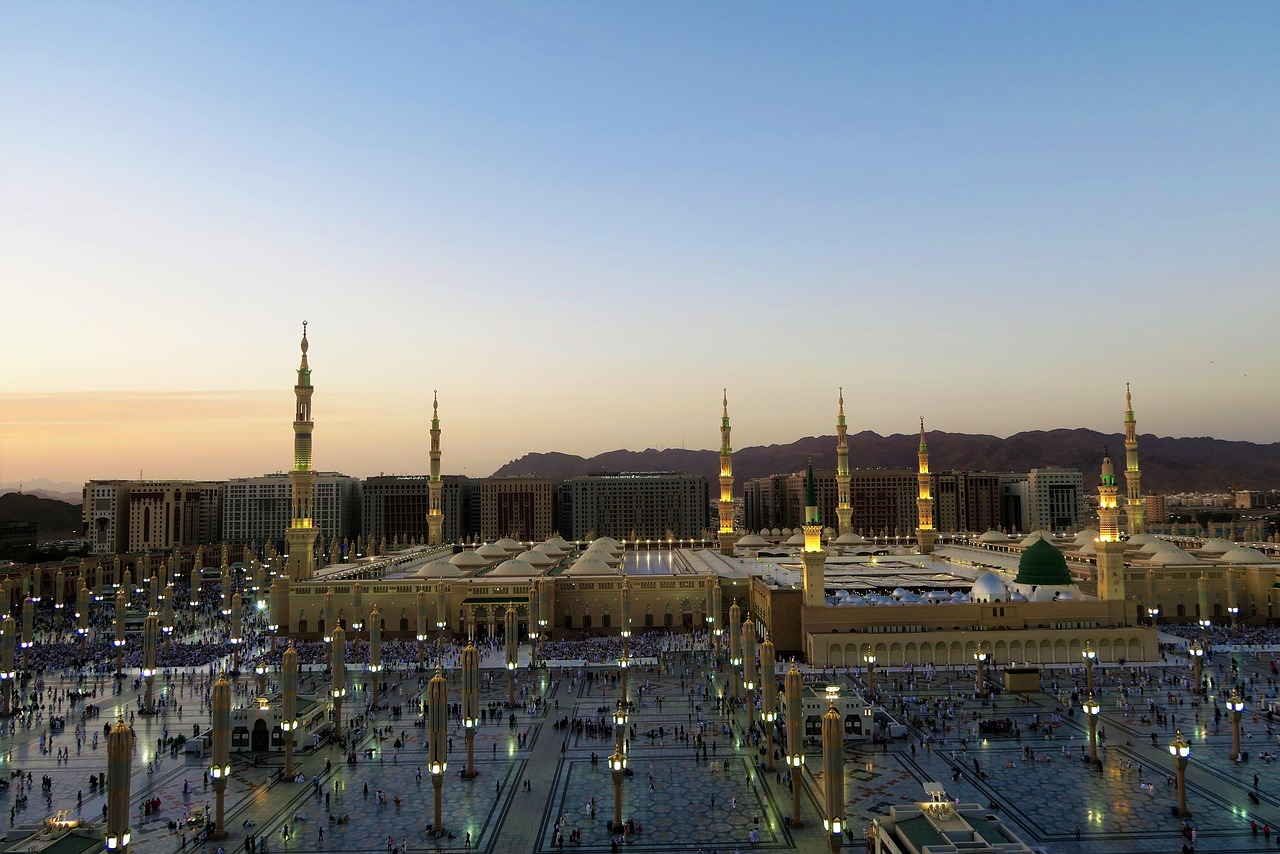
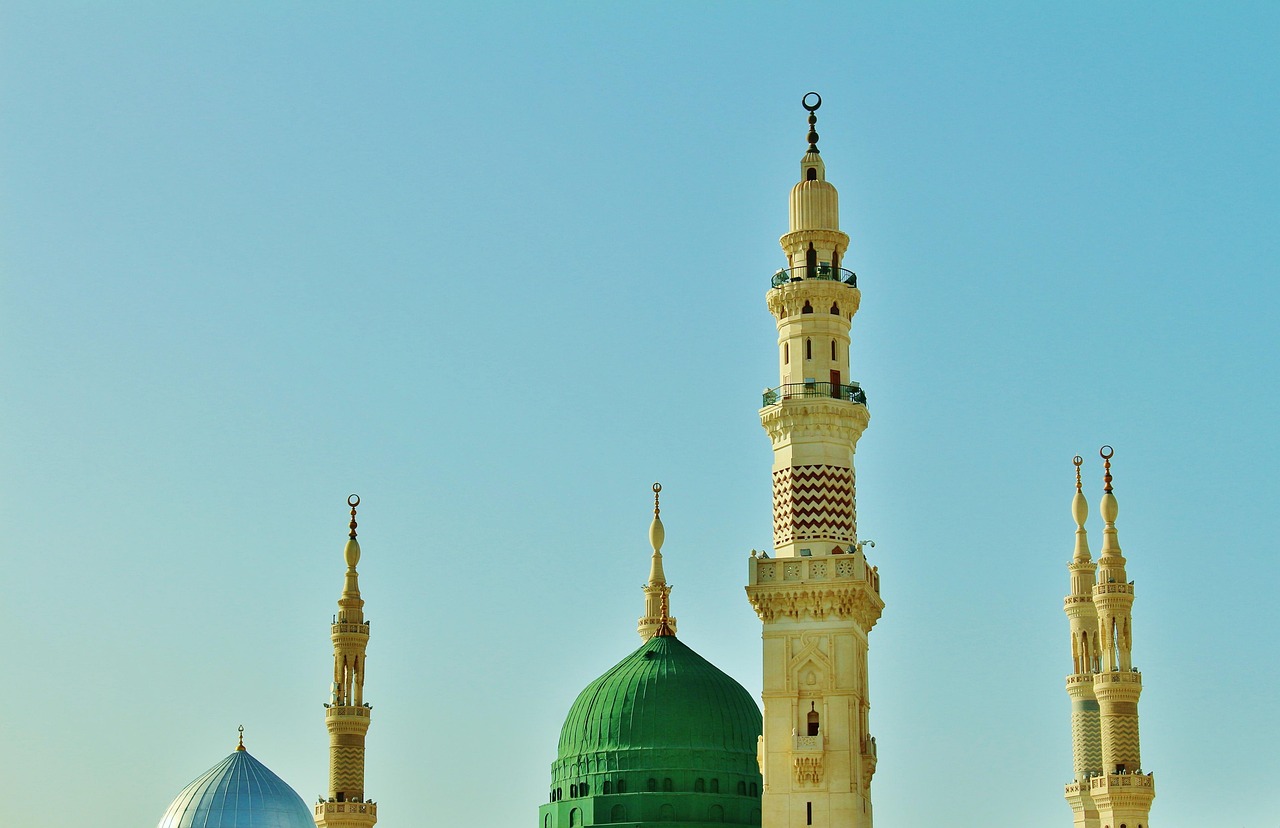
The second holiest mosque in Islam, built by the Prophet Muhammad ﷺ in 622 CE and home to his resting place beneath the Green Dome. Its vast marble courtyards and giant shade umbrellas hold hundreds of thousands of worshippers.
Explore Al-Masjid an-Nabawi (The Prophet's Mosque)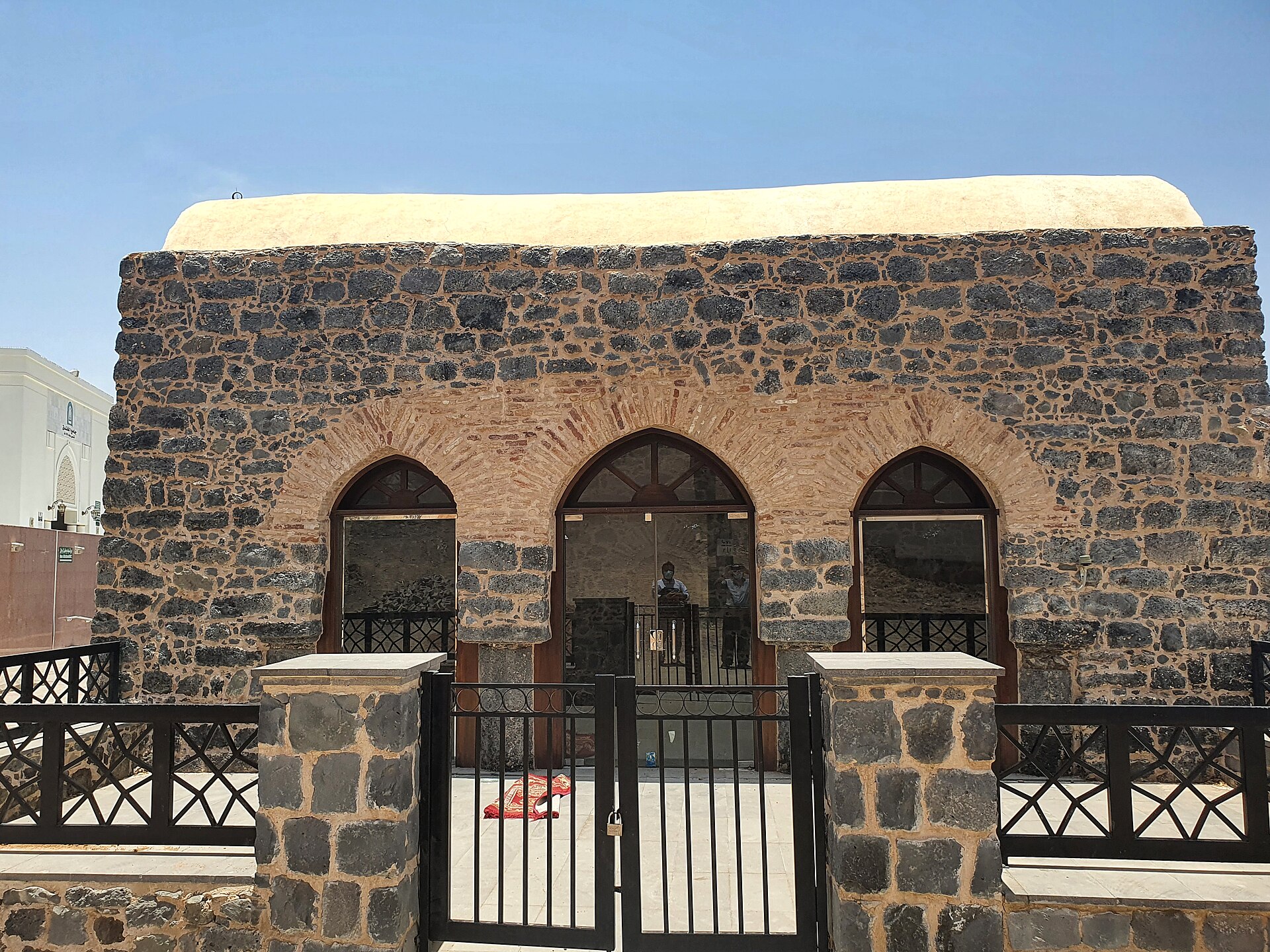
Heritage, Mosque
Madinah, Saudi Arabia
The site of the Battle of the Trench (al-Khandaq) in 627 CE on the slopes of Mount Sila, where a group of small mosques — traditionally called the Seven Mosques — marks the places of the Prophet ﷺ and his companions during the siege.
Explore Battle of the Trench / Seven Mosques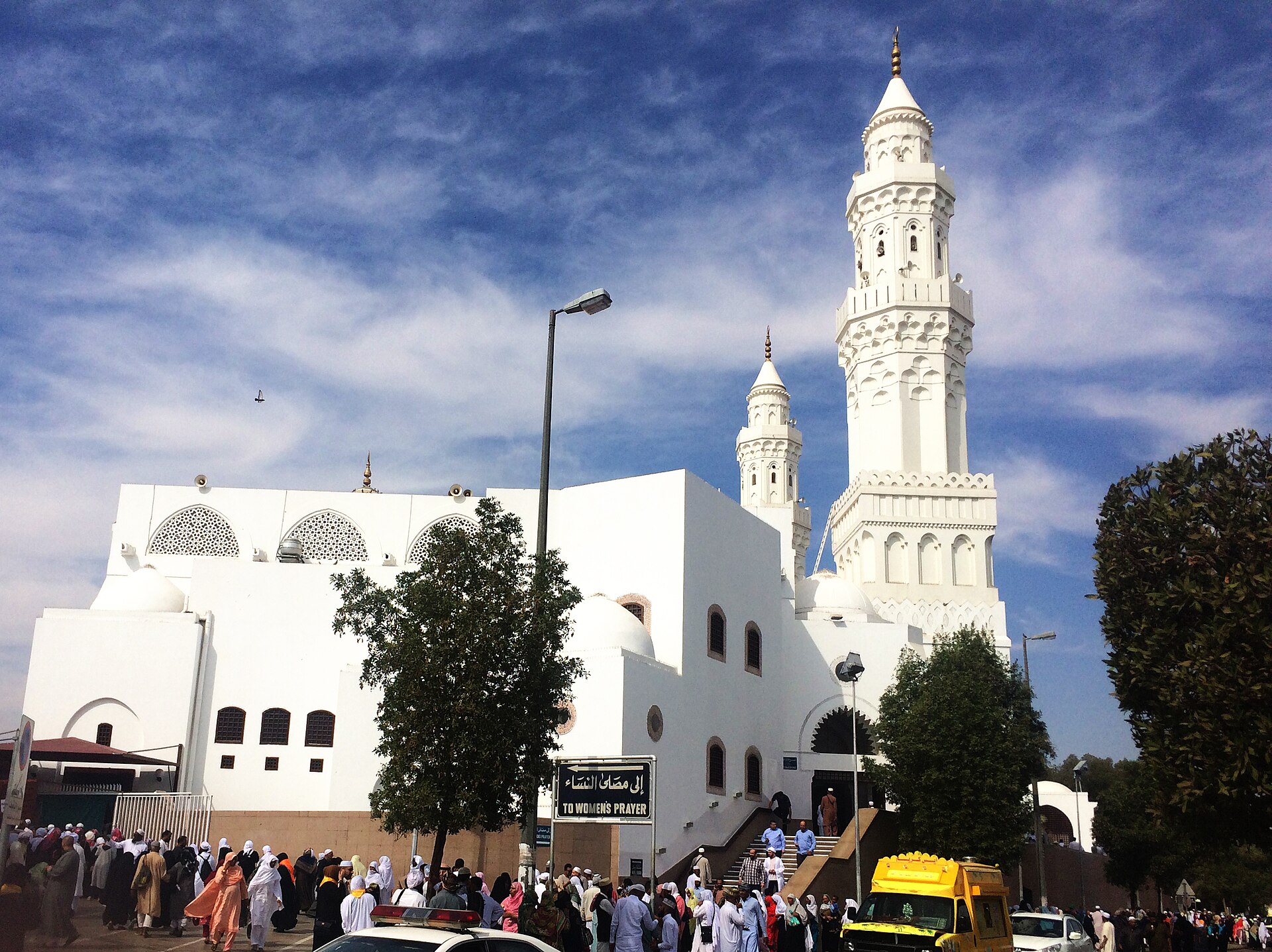
Mosque
Madinah, Saudi Arabia
The "Mosque of the Two Qiblas", where — according to Islamic tradition — the command came during prayer to turn the qibla from Jerusalem to the Ka'bah in Makkah.
Explore Masjid al-Qiblatayn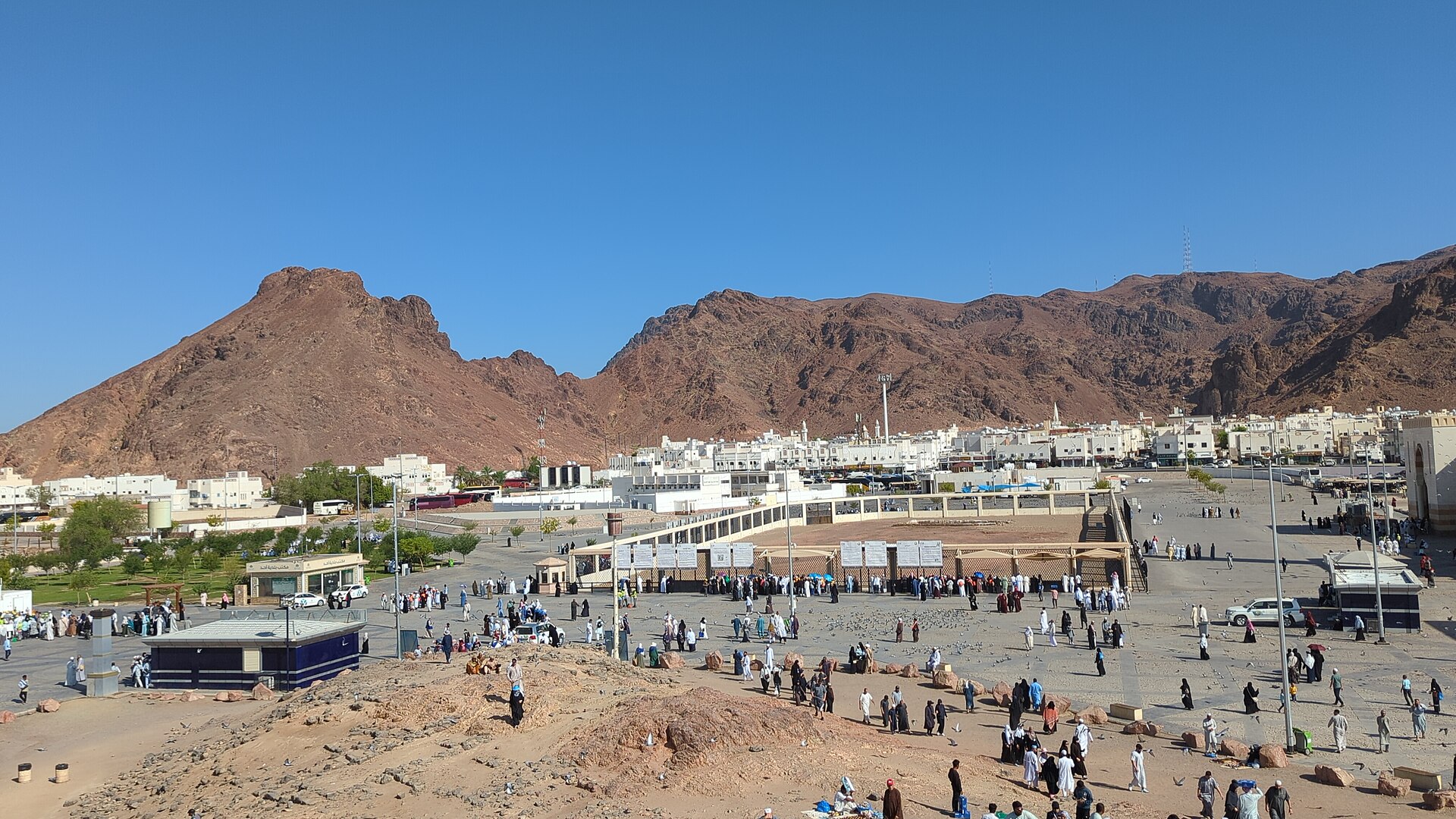
Heritage, Mountain
Madinah, Saudi Arabia
The red granite mountain north of Madinah where the Battle of Uhud was fought in 625 CE, with the graves of its martyrs — among them Hamza ibn Abd al-Muttalib, the Prophet's uncle — and the Archers' Hill.
Explore Mount Uhud & Martyrs' Cemetery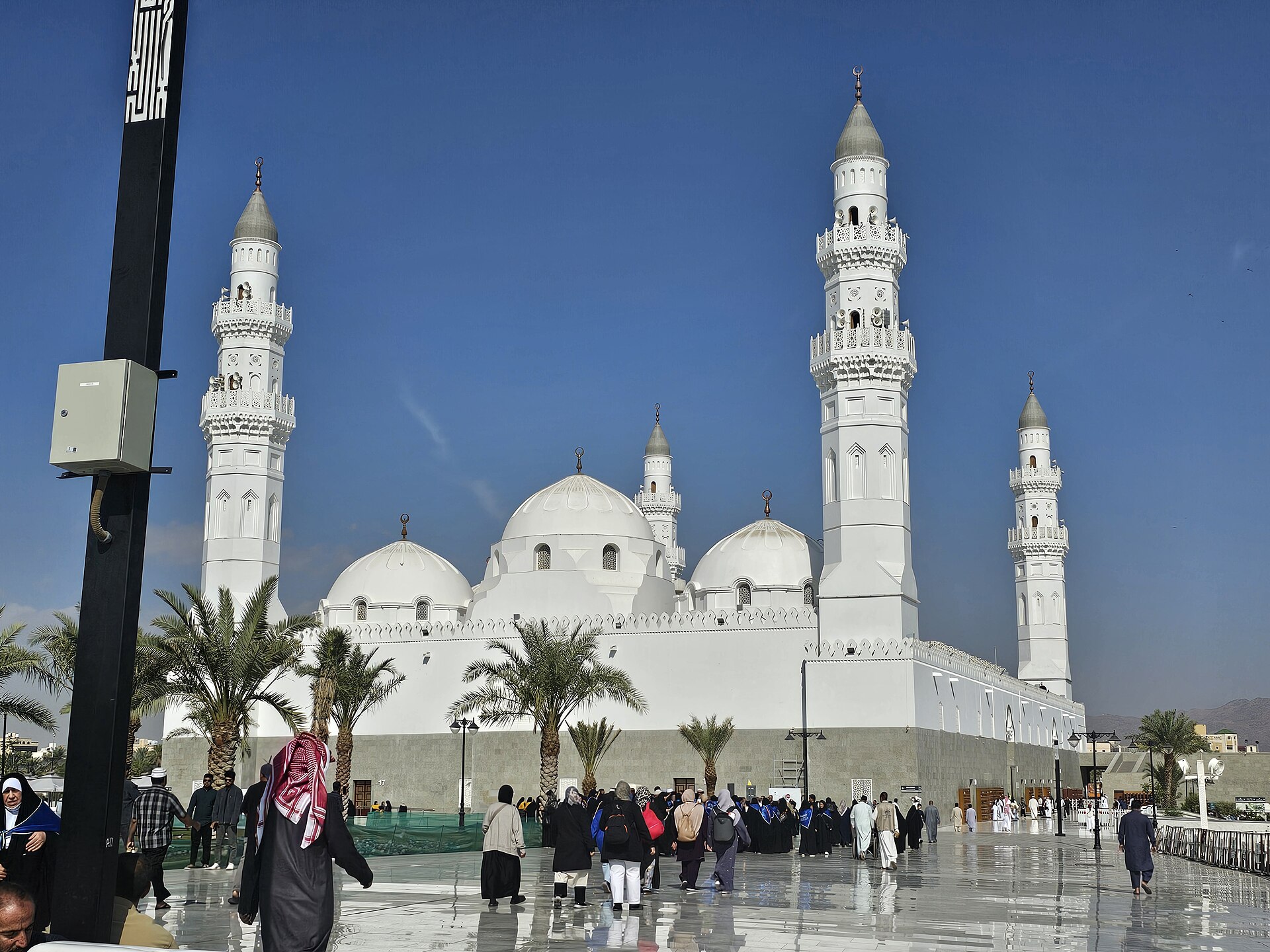
Mosque
Madinah, Saudi Arabia
The first mosque built in Islam, founded by the Prophet ﷺ on his arrival at Madinah in 622 CE. Praying two rak'ahs here carries, according to hadith, the reward of an Umrah.
Explore Quba MosqueMosque, Heritage
Madinah, Saudi Arabia
A small historic mosque near the Prophet's Mosque, on the spot where the Prophet ﷺ prayed the Eid prayers and the prayer for rain. Its name means "the cloud".
Explore Al-Ghamamah MosqueMosque
Madinah, Saudi Arabia
The second holiest mosque in Islam, built by the Prophet Muhammad ﷺ in 622 CE and home to his resting place beneath the Green Dome. Its vast marble courtyards and giant shade umbrellas hold hundreds of thousands of worshippers.
Explore Al-Masjid an-Nabawi (The Prophet's Mosque)Heritage, Mosque
Madinah, Saudi Arabia
The site of the Battle of the Trench (al-Khandaq) in 627 CE on the slopes of Mount Sila, where a group of small mosques — traditionally called the Seven Mosques — marks the places of the Prophet ﷺ and his companions during the siege.
Explore Battle of the Trench / Seven MosquesMosque
Madinah, Saudi Arabia
The "Mosque of the Two Qiblas", where — according to Islamic tradition — the command came during prayer to turn the qibla from Jerusalem to the Ka'bah in Makkah.
Explore Masjid al-QiblataynHeritage, Mountain
Madinah, Saudi Arabia
The red granite mountain north of Madinah where the Battle of Uhud was fought in 625 CE, with the graves of its martyrs — among them Hamza ibn Abd al-Muttalib, the Prophet's uncle — and the Archers' Hill.
Explore Mount Uhud & Martyrs' CemeteryMosque
Madinah, Saudi Arabia
The first mosque built in Islam, founded by the Prophet ﷺ on his arrival at Madinah in 622 CE. Praying two rak'ahs here carries, according to hadith, the reward of an Umrah.
Explore Quba MosqueMadinah, Saudi Arabia
Madinah, Saudi Arabia
Lamb or chicken cooked slowly over long-grain spiced rice, traditionally in a pit oven so the meat turns tender and smoky. Served on a big shared platter with a tomato and chilli salsa (daqoos).
Madinah, Saudi Arabia
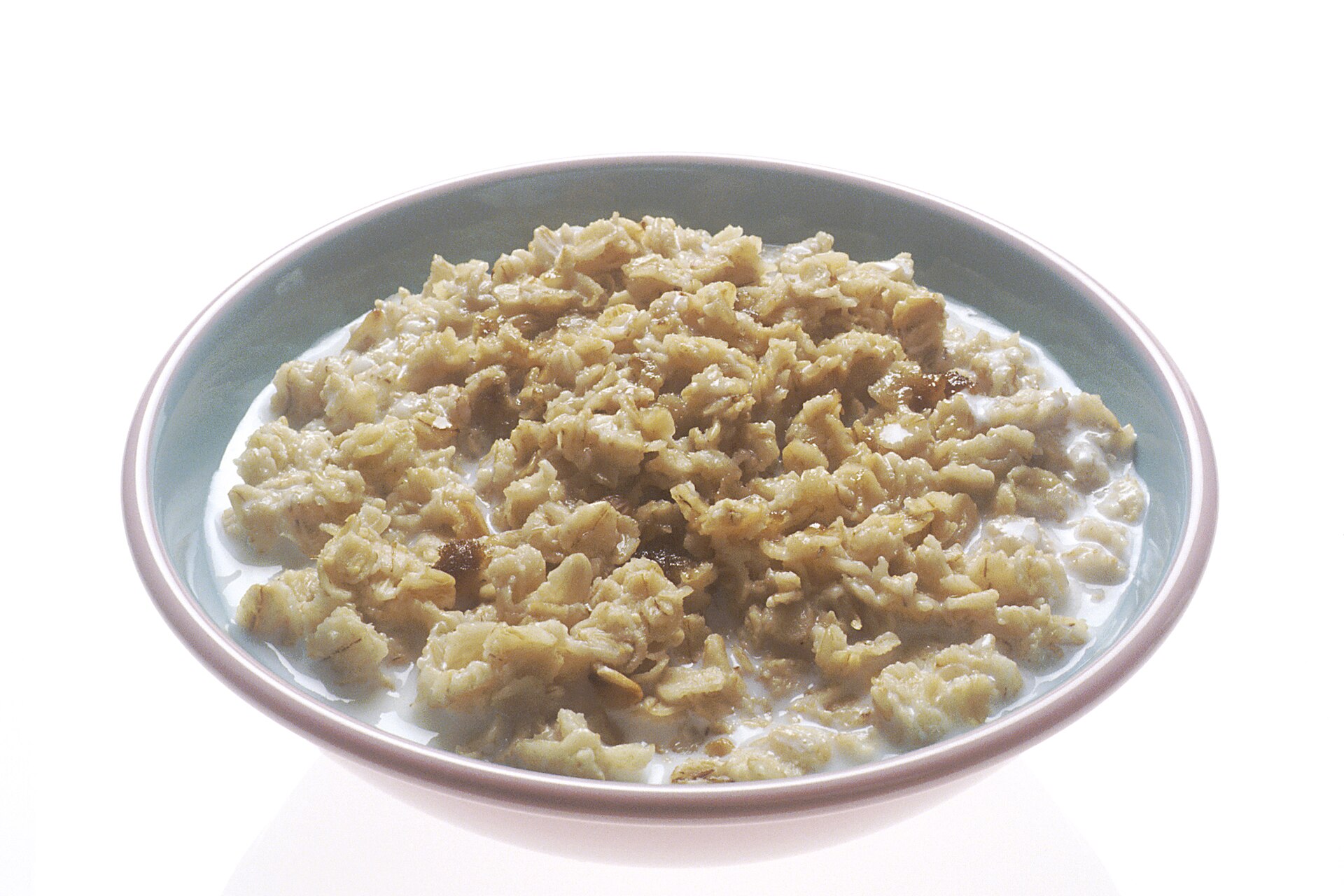
A Hejazi comfort dish: short-grain rice slow-cooked in chicken or lamb broth and milk until creamy, finished with ghee and served with the roasted meat on top. Popular across the Hejaz, especially in Taif and Jeddah.
Near the Prophet's Mosque, central Madinah
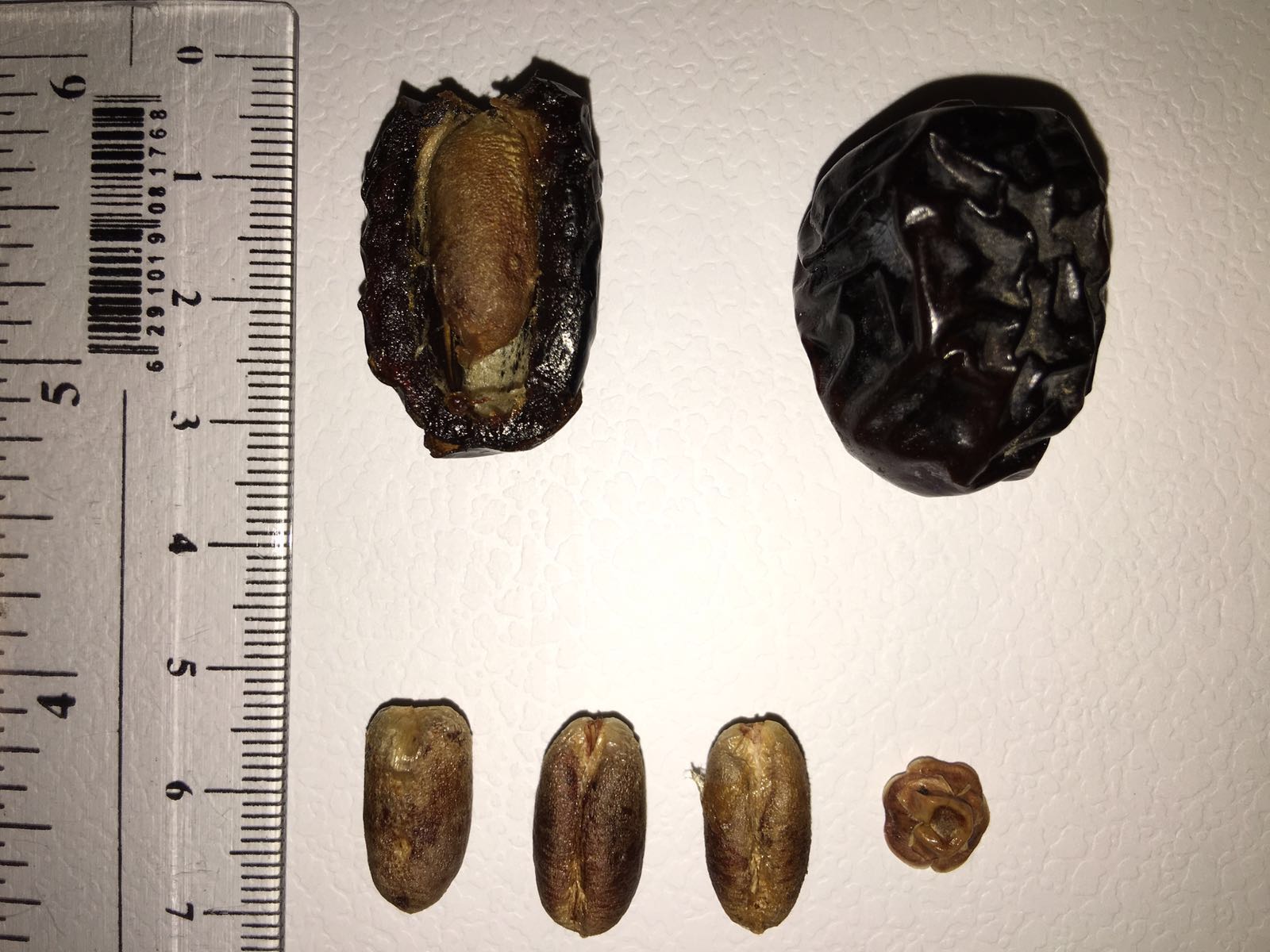
Stall after stall of dates — Ajwa, Sukkari, Safawi, Anbara and more — with tasting, plus date paste, nuts and gift boxes. Ask for each variety by name and taste before you buy.
Open in Google Maps (opens in a new tab)Streets around the Prophet's Mosque
Hotel buffets, food courts and simple restaurants serving Saudi, Turkish, South Asian, Indonesian and Middle Eastern food for pilgrims from every country. Busiest straight after each prayer.
Open in Google Maps (opens in a new tab)Along Quba Road, between the centre and Quba Mosque
Local restaurants, bakeries and juice shops along the road to Quba — good for mandi, kabsa, mutabbaq and fresh juice.
Open in Google Maps (opens in a new tab)Madinah, Saudi Arabia
Large hotels a few minutes' walk from the Prophet's Mosque and its northern gates. The most convenient for Muslim pilgrims who want to pray all five prayers at the mosque.
Open in Google Maps (opens in a new tab)Madinah, Saudi Arabia
Hotels and serviced apartments on the southern and western edges of the central area, close to the mosque, the Dates Market and the road to Quba.
Open in Google Maps (opens in a new tab)Madinah, Saudi Arabia
Newer hotels and apartments further out, quieter and roomier, with a car or taxi ride to the centre. A practical choice for families with a car, and for non-Muslim visitors.
Open in Google Maps (opens in a new tab)Madinah is calmer and gentler than many big cities — locals often say its people are known for kindness to visitors. Life follows the five daily prayers, when streets fill and empty around the Prophet's Mosque. Dress modestly everywhere (women usually wear an abaya and headscarf; men long trousers), keep public behaviour respectful, and greet people with "As-salamu alaykum". Pilgrims from every country meet here, so the markets and restaurants feel truly international.
Before Islam the oasis was called Yathrib, a farming town of date palms and wells settled by Arab and Jewish tribes. In 622 CE the Prophet Muhammad ﷺ migrated here from Makkah with his companions — the Hijrah, which marks the start of the Islamic calendar. The town took the name Madinat an-Nabi, "the City of the Prophet", and became the first capital of the Muslim community.
The Prophet ﷺ built his mosque at the heart of the city and lived beside it; he died in Madinah in 632 CE and is buried there, together with his companions Abu Bakr and Umar. The battles of Badr, Uhud and the Trench were fought to defend the young community, and the city remained the capital of the early caliphs until the capital moved away from Arabia.
For centuries Madinah has been a city of pilgrims and scholars. The Prophet's Mosque has been expanded many times — by Umayyad, Mamluk and Ottoman rulers and, on the largest scale, by the Saudi state — and the city grew around it with hotels, markets and the Islamic University. The Hejaz Railway reached Madinah in 1908; today the Haramain high-speed railway links it with Makkah and Jeddah.
Travel information
Check in to the central area, pray at the Prophet's Mosque and send salam to the Prophet ﷺ and his two companions. Walk the courtyards in the cool of the evening.
Morning Rawdah visit at your Nusuk time slot. Later, walk or ride to Quba Mosque to pray two rak'ahs, and stop at the date shops on the way back.
Masjid al-Qiblatayn, the Seven Mosques at the Trench, and Mount Uhud with the Martyrs' Cemetery — by taxi or a half-day ziyarah tour, starting early to avoid the heat.
Shop for Ajwa dates, prayer mats and perfume around the central area, pass Al-Ghamamah Mosque, and pray a last prayer at the Prophet's Mosque before leaving.
November to February for mild days and cool evenings. Summer is very hot. Ramadan and the weeks around Hajj are spiritually special but extremely busy.
By air: Prince Mohammad bin Abdulaziz International Airport (MED) is about 15–20 km north-east of the centre, with flights from Saudi cities and international routes from the Middle East, Asia, Africa and Europe. Taxis, ride-hailing apps and hotel transfers run to the central area.
By train: The Haramain high-speed railway connects Madinah with Makkah, Jeddah (city and King Abdulaziz Airport) and King Abdullah Economic City. Madinah station is outside the centre; take a taxi or app ride to your hotel. Book tickets in advance in busy seasons.
By road: Madinah is roughly 420–450 km north of Makkah by highway. Intercity buses (SAPTCO) and pilgrim coaches connect it with Makkah, Jeddah, Riyadh and other cities.
The central area around the Prophet's Mosque is best on foot. For Quba, Qiblatayn, Uhud and the Seven Mosques use taxis or ride-hailing apps (Uber, Careem and local apps), or a ziyarah tour — many hotels and agents run half-day tours of the historic sites. Quba Mosque is also reachable on foot from the centre (about 3 km) along Quba Road. City buses and hop-on hop-off sightseeing buses also run in some seasons.